

On this page
- Frown line treatment options at a glance
- What are frown lines?
- What causes frown lines?
- Does Botox work on frown lines?
- How much does Botox for frown lines cost?
- How do you get rid of frown lines without injections?
- Can an at-home device help frown lines?
- Frown lines around the mouth are a different wrinkle
- Your next step
Quick answer: Frown lines are the vertical lines between your eyebrows, also called 11 lines or glabellar lines. Repeated frowning and squinting crease the skin there, and as collagen drops with age the crease stops bouncing back. Botulinum toxin (Botox) is the best-studied treatment and lasts three to five months. Daily sunscreen and a nightly retinoid help early lines.
We read 11 studies and sources, from the 537-person trials that got Botox its FDA approval to a 12-week trial of an at-home device, so every number below links to where it came from. (I also leaned into the mirror and found two new tally marks between my eyebrows. My face has been keeping score. Of what, it will not say.)
Frown line treatment options at a glance
| Option | What the evidence shows | Worth knowing |
|---|---|---|
| Botulinum toxin (Botox) | 80% of people rated as having no or mild lines 30 days after treatment, in the 537-person approval trials | Labeled dose is 20 units, around $300. Lasts 3 to 5 months |
| Daxxify | A newer botulinum toxin; can last 6 to 9 months | Shorter track record than Botox |
| Dermal fillers | Fill the crease with volume instead of relaxing the muscle; results are immediate | Last 6 to 12 months |
| Retinoid cream | Improved fine wrinkles in randomized trials | Weaker on deep expression lines. Judge it at 3 months |
| Sunscreen and sunglasses | Prevention backed by dermatologists; squinting is repeated muscle contraction | The cheapest row on this table |
| At-home RF device | One independent 12-week split-face trial found modest wrinkle improvement | Upkeep, not a clinic result |
| Brow lift surgery | The longest-lasting option for deep lines visible at rest | General anesthesia, 10 to 14 days of recovery, costs thousands |
Sources: De Boulle 2010 review, American Academy of Facial Esthetics, WebMD, Newnan Family Medicine, Mukherjee 2006, AAD, 2022 split-face trial.
What are frown lines?
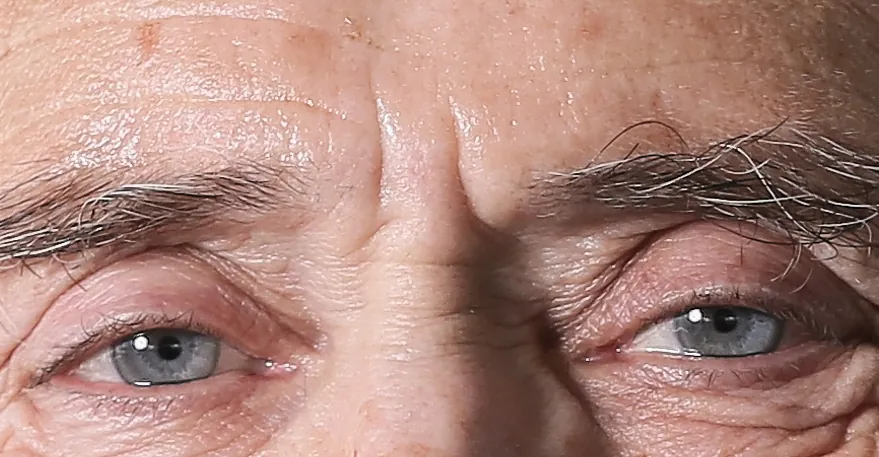
Frown lines are the two vertical creases between your eyebrows, right above the nose. Doctors call them glabellar lines, and most people call them 11 lines because that is exactly what they look like. They start as expression lines that show only when you frown, and they can become permanent creases with age.
WebMD defines them as “the vertical lines that appear between your eyebrows” (WebMD), which is the calmest possible description of a punctuation mark that moved onto my face without asking. Mine showed up sometime between two deadlines and a parking dispute. [Checks mirror.] Still there. Still judging.
“Your frown lines may be dynamic (meaning they only appear during certain facial expressions) or static (meaning they are visible all the time, even while the face is at rest).”
Westlake Dermatology
That dynamic-versus-static split matters, because the earlier you act, the more options work. Dynamic lines are the easy level. Static lines are the boss level, and nobody tells you when the level changed.
One housekeeping note so you read the right guide. The horizontal lines across your forehead are a different wrinkle with their own plan, covered in our forehead wrinkles guide, and the fan of lines beside your eyes belongs to our crow’s feet guide. This post owns the space between the brows. It is a small territory, and I govern it poorly.
What causes frown lines?
Frown lines form because small muscles between your eyebrows pull the brows together every time you frown, squint or concentrate. Each pull folds the skin in the same spot. Young skin springs back, but skin loses collagen and elasticity with age, so the fold slowly becomes a crease that stays. Sun damage, smoking and genetics speed the process up.
“When you make a facial expression, you contract the underlying muscles. If you repeatedly contract the same muscles for many years, these lines become permanent.”
American Academy of Dermatology, 11 ways to reduce premature skin aging
“Many years” sounds slow until you count your reps. Every squinted email, every bright windshield, every time I read a group chat with my whole forehead: one more tally mark for the scoreboard. Healthline lists the other accomplices: genetics, UV light breaking down collagen and elastin, stress, and smoking (Healthline). I cannot do anything about my DNA, but the squinting is, embarrassingly, a volunteer position.
If your lines seemed to show up overnight, there is usually a reason. Newnan Family Medicine points to stress, which makes you frown more, plus dehydration, smoking and rapid weight loss, which costs the face volume (Newnan Family Medicine). So a hard year can show up between your eyebrows. Mine did, and it did not even bring a souvenir.
Does Botox work on frown lines?
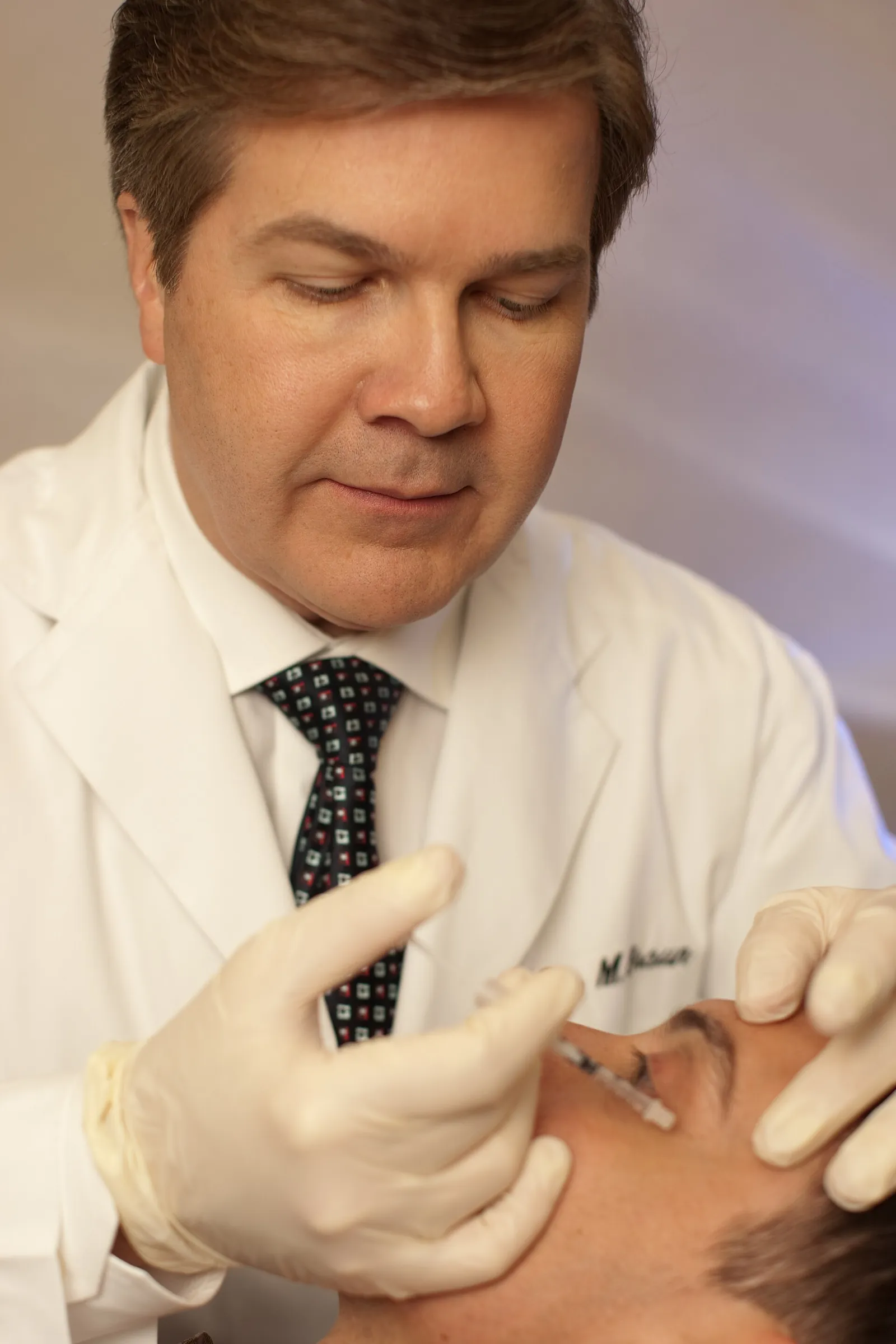
Yes, better than any other studied option. Botulinum toxin injections relax the muscles that pull your brows together, so the skin stops being folded. In the 537-person trials behind the 2002 FDA approval, 80 percent of people were rated as having no or mild lines 30 days after treatment (De Boulle 2010 review).
Frown lines between the eyebrows are the exact spot Botox was first approved to treat, and it is not a niche habit: the American Society of Plastic Surgeons counted 9,883,711 neuromodulator injections in 2024, “maintaining their spot as the top minimally invasive treatment” (ASPS). Nearly ten million. I can’t get ten people to agree on a restaurant.
The treatment itself is quick: the standard dose is 20 units spread over 5 small injection points (De Boulle 2010 review), and the American Academy of Dermatology says “most people see results within 3 to 7 days” (AAD). Side effects in the trials were usually mild and temporary, most often headache, and eyelid droop occurred in roughly half a percent of sessions in one long-term analysis (De Boulle 2010 review). Go to a qualified, experienced injector. That sentence gets no joke.
“patients can generally expect botulinum toxin type A treatment of their glabellar lines to last at least 3 months and sometimes longer”
Koenraad De Boulle and colleagues, Clinical Interventions in Aging
In those same pivotal trials, only about a quarter of people still counted as responders at day 120, so this is a subscription, not a purchase (De Boulle 2010 review). If repeat visits sound tiring, WebMD notes a newer option, Daxxify, can last six to nine months (WebMD). My gym membership should take notes on that kind of retention.
How much does Botox for frown lines cost?
Botox for frown lines typically costs about $180 to $375 per treatment in the United States. The American Academy of Facial Esthetics reports $11 to $18 per unit in most markets, and the labeled frown line dose is 20 units, which puts a typical visit near $300. Results last three to five months, so maintenance is several visits a year.
The per-unit quote, exactly as they put it: “In most U.S. markets, Botox costs about $11 to $18 per unit, with common treatments running $300 to $600.” For the area between the brows specifically, “The labeled dose is 20 units”, placing many treatments around $300 (American Academy of Facial Esthetics).
Now the arithmetic nobody puts on the brochure. Three to five months of duration means roughly two to four visits a year, which at $300 a visit lands between $600 and $1,200 annually. That math is ours, built from the two sources above, and it is the number to actually budget. I did the same exercise for my serum shelf once. [Closes spreadsheet. Opens window. Breathes.]
Fillers are the other injectable: they add volume to the crease instead of relaxing the muscle, and they typically last 6 to 12 months (Newnan Family Medicine). For deep lines that bother you at rest, WebMD covers the surgical route, a brow lift, which lasts years but needs general anesthesia, 10 to 14 days of recovery, and thousands of dollars (WebMD).
How do you get rid of frown lines without injections?
Daily sunscreen, sunglasses and a nightly retinoid are the no-needle steps with real evidence behind them. Retinoids improved fine wrinkles in randomized trials, though they are weaker on deep expression lines. Prevention does the most: dermatologists say repeated muscle contraction is what makes these lines permanent, and squinting counts as contraction.
Everyone googling how to get rid of frown lines wants the cream answer, so here is the honest version. Tretinoin is “the retinoid that is investigated more than any other retinoid” for skin aging, with randomized double-blind trials showing improvement in fine wrinkles (Mukherjee 2006). The catch: WebMD notes creams are “usually recommended for fine lines and are not as effective on deep wrinkles like frown lines” (WebMD). So a retinoid is a genuine early-lines move and an honest disappointment for deep ones. If you are choosing one, our retinal vs retinol guide sorts the strengths without the marketing fog.
Prevention is less glamorous and better supported. The AAD’s list: broad-spectrum SPF 30 sunscreen on all exposed skin every day, self-tanner instead of tanning, quitting smoking, and sunglasses, because “Wearing sunglasses can help reduce lines caused by squinting” (AAD). Sunglasses are how you take the chalk away from the scoreboard. Mine now live by the door, next to the keys I also lose.
Two things people ask about that we cannot back. Facial exercises are genuinely debated: Healthline notes some people think the repetitive motion sharpens frown lines while others believe exercises soften them (Healthline), and no trial settles it, so that is opinion territory on both sides. The same page lists home remedies like egg whites and avocado masks while admitting “they might not be clinically tested or medically approved”. I respect the honesty. I also once put an egg on my face for reasons I no longer defend, and the egg did not work.
Can an at-home device help frown lines?
Modestly, yes. In an independent 12-week randomized split-face trial, 32 women used an at-home radiofrequency device on one side of the face and an anti-aging cream on the other, and graders scored glabellar wrinkles among the signs tracked. The device side improved significantly more, but the effect is upkeep-sized, not a Botox result.
“Compared with the anti-aging cosmetic-treated facial side, the experimental side showed statistically significant improvements in wrinkles, skin radiance, color and thickness”
the 2022 randomized split-face trial, PubMed Central
If that category interests you, the needle-free option we cover most is the VEAUTY Dot: 144 electrodes that sit on the surface of the skin and never pierce it, sold as a cosmetic device, rated 4.8 out of 5 from 1,163 reviews on its own store. Those are customer reviews, not a clinical trial, and results vary. For frown lines specifically, the clinic options above have much stronger evidence; an at-home device is the slow, steady lane for people who want maintenance on the sofa instead of appointments.
Frown lines around the mouth are a different wrinkle
Quick scope check, because search engines mash these together. The lines that run from the corners of your mouth down toward your chin are marionette lines, not frown lines, and they behave differently and get treated differently. Our marionette lines guide covers that whole territory properly. This page stays between the eyebrows, where the tally currently reads two.
Frequently asked questions
Are frown lines and 11 lines the same thing?
Yes. Frown lines, 11 lines, elevens, worry lines and glabellar lines all describe the vertical creases between the eyebrows. The medical term is glabellar lines, after the glabella, the patch of skin between the brows.
Why am I suddenly getting frown lines?
Common triggers are stress, which makes you frown and squint more, plus smoking, dehydration and rapid weight loss, which reduces facial volume and makes existing creases show. Age is the background cause: less collagen means less bounce-back.
How many units of Botox do you need for frown lines?
The labeled dose for the area between the brows is 20 units, usually spread across five injection points. Men often need higher doses because the muscles are larger. The injector sets the final number after looking at your muscle strength.
How long does Botox take to work on frown lines?
Most people see results within 3 to 7 days, with the full effect at about two weeks. Results typically hold for three to five months, then fade gradually as muscle movement returns.
Do home remedies like egg whites work on frown lines?
No evidence supports them. Egg whites, avocado masks and oil massages appear on home remedy lists, but none have been clinically tested for frown lines. Sunscreen and a retinoid are the evidence-backed low-cost options.
Is there a permanent fix for frown lines?
Surgery lasts longest. A brow lift can smooth the area for many years, sometimes by removing the muscle that causes the furrow, but it involves general anesthesia and real recovery time. All injectables are temporary and need repeating.
Your next step
If your lines still fade when your face relaxes, start tonight: sunscreen and sunglasses by day, a retinoid at night, and judge the retinoid at three months. If the lines are visible at rest and bother you, book a consult with a qualified injector and ask about the standard 20-unit treatment. If you want the at-home maintenance route instead, compare at-home devices before you spend anything.

Written by the Trusted Skincare Editorial Team
We research at-home beauty devices and skin treatments and link every claim to a published study, a regulator or a named expert. Last updated Thursday 1 October 2026.
Sources
- WebMD: What To Know About Frown Lines
- Healthline: How to Get Rid of Frown Lines
- Newnan Family Medicine: Understanding Frown Lines and How to Smooth Them
- Westlake Dermatology: Frown Lines Treatment and Prevention Options
- De Boulle et al. 2010, Treating glabellar lines with botulinum toxin type A (Clinical Interventions in Aging)
- American Society of Plastic Surgeons: 2024 Procedural Statistics press release
- American Academy of Dermatology: Botulinum toxin therapy overview
- American Academy of Dermatology: 11 ways to reduce premature skin aging
- American Academy of Facial Esthetics: How Much Does Botox Cost?
- Mukherjee et al. 2006, Retinoids in the treatment of skin aging (Clinical Interventions in Aging)
- 2022 randomized split-face trial of a home radiofrequency device (PubMed Central)