
On this page
- Sebaceous filaments vs blackheads at a glance
- What are sebaceous filaments?
- Sebaceous filaments vs blackheads: how to tell them apart
- Why are sebaceous filaments so visible on my nose?
- How to get rid of sebaceous filaments
- Does salicylic acid work for sebaceous filaments?
- Do retinoids and niacinamide help sebaceous filaments?
- Do pore strips, hydrocolloid tape or oil cleansing work?
- Should you squeeze or extract sebaceous filaments?
- When should you see a dermatologist about sebaceous filaments?
- Your next step
Quick answer: Sebaceous filaments are thin, normal columns of oil and dead skin cells that line your pores and carry oil to the surface. They look like flat gray or tan dots, mostly on the nose, and they are not blackheads. You can’t remove them for good, because they refill in about 30 days, but salicylic acid, retinoids and niacinamide can make them less visible.
We read 24 studies and sources, from the 1976 paper that named sebaceous filaments to a 2026 laser case report, so every claim below links to where it came from. (I read most of them with my face three inches from a 10x magnifying mirror. It did not help.)
Sebaceous filaments vs blackheads at a glance
| Sebaceous filament | Blackhead | |
|---|---|---|
| What it is | A normal lining of oil and skin cells inside the pore | A clogged pore, and a type of acne |
| Color | Gray, light brown or yellow | Darker, often black |
| How it feels | Flat with the skin | Often a small raised bump |
| Oil flow | Keeps flowing to the surface | Blocked by a plug |
| Where it shows | Nose, chin, forehead and cheeks | Nose, chin, cheeks, back and chest |
| If squeezed | A waxy, threadlike strand comes out | A dark, waxy plug comes out |
| Can it go away? | No. It refills in about 30 days | Yes, it can clear with treatment |
Sources: Cleveland Clinic on sebaceous filaments, Cleveland Clinic on blackheads, Plewig and Wolff 1976, American Academy of Dermatology.
What are sebaceous filaments?
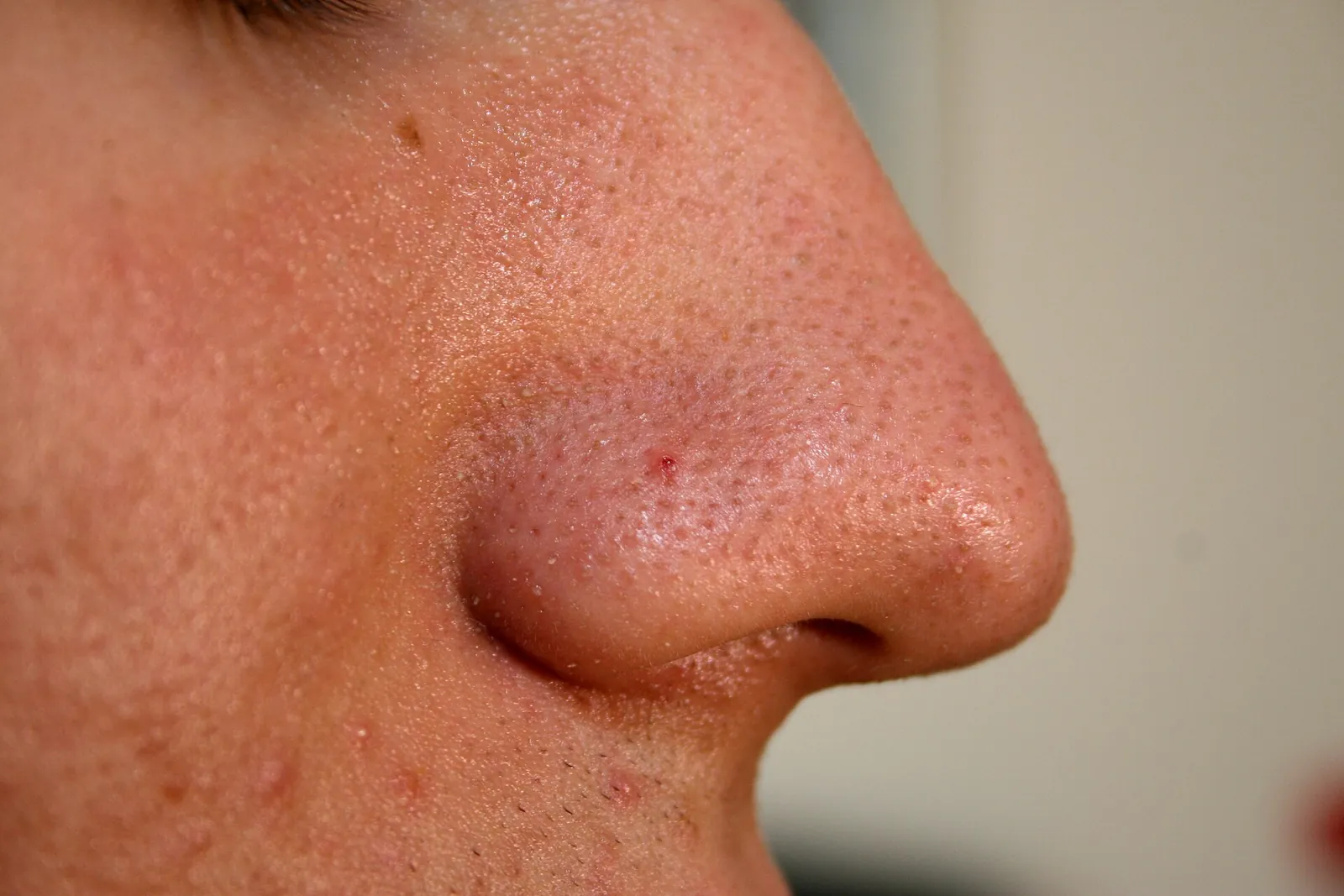
Sebaceous filaments are thin columns of oil (sebum) and dead skin cells that line the inside of your pores. They act like a wick, carrying oil from the oil gland up to the skin’s surface. Everyone has them. They are a normal part of healthy skin, not acne, and they show most on the nose, chin, forehead and cheeks.
Cleveland Clinic is blunt about it: “Every person has sebaceous filaments” (Cleveland Clinic). So the dots I spent one long Sunday declaring war on were, technically, plumbing. [Lowers tweezers slowly.]
The name comes from a 1976 paper by the dermatologists Plewig and Wolff. They found each filament is a tube of 10 to 30 layers of skin cells wrapped around oil, bacteria, cell fragments and a single hair (Plewig and Wolff 1976). Basically a tiny rolled-up sleeping bag with a hair tucked inside, which is a sentence I never expected to type at work.
“The filament draws sebum (oil) from deeper in the pore to the skin, like a straw allows you to sip your beverage from the bottom of a cup.”
Alicia Zalka, MD, board-certified dermatologist, in Real Simple
A 2021 dermatology paper adds that they are “usually found in normal healthy individuals predominantly on the nose” (Singh 2021). Normal. Healthy. Predominantly nose. Four words I’d like printed on a mug.
Sebaceous filaments vs blackheads: how to tell them apart
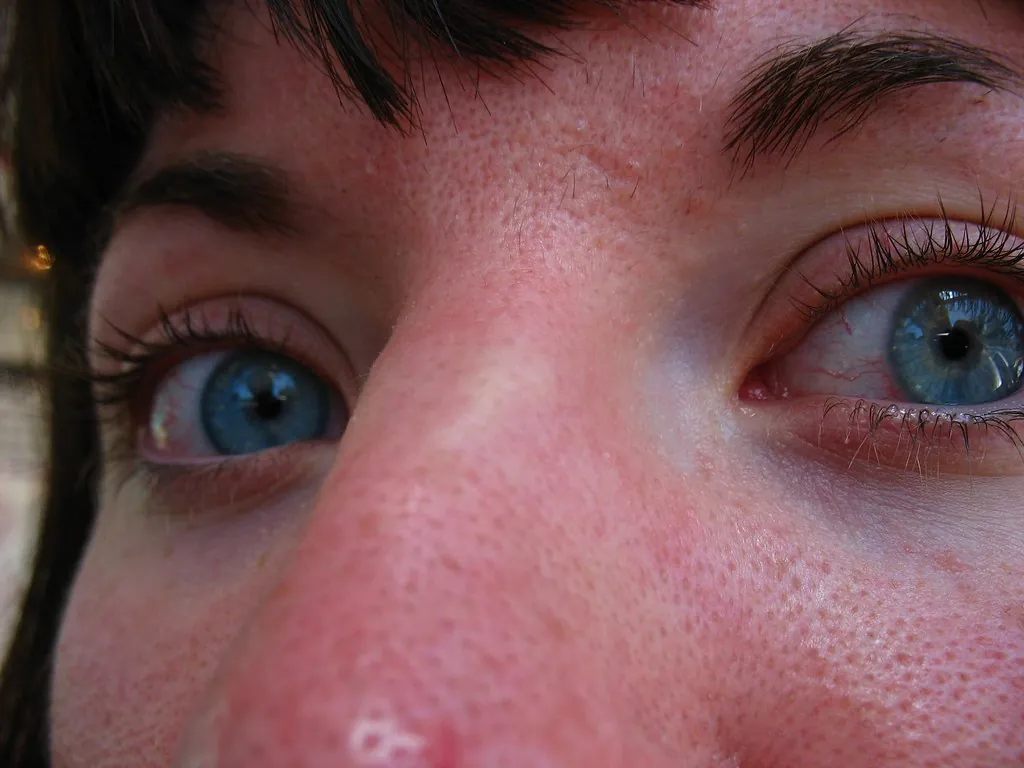
A sebaceous filament is flat, gray or tan, and lets oil keep flowing. A blackhead is a pore blocked by a plug of oil and dead skin, usually darker and often a small raised bump. Filaments are normal anatomy. Blackheads are a mild type of acne, and they can clear completely with treatment.
The color is the easiest tell. Cleveland Clinic says filaments are “usually smaller, flat and lighter in color”, typically “gray, light brown or yellow”, while a blackhead looks “like a dark speck of dirt” (Cleveland Clinic). It isn’t dirt: the dark look comes from light bouncing off the clogged pore (Cleveland Clinic on blackheads). Great news for everyone who has ever scrubbed one with the energy of someone cleaning an oven.
“The black dots aren’t dirt, so resist scrubbing.”
American Academy of Dermatology, How to treat different types of acne
If they’re skin-colored and closed, it’s a third thing. Small bumps with no dark dot at all are usually closed comedones, also called whiteheads. Our guide to closed comedones covers those, because I’m not squeezing three skin conditions into one heading (pun fully intended, and I’m not sorry).
Why are sebaceous filaments so visible on my nose?
Sebaceous filaments show most on the nose because the nose has large, oil-rich pores. The 1976 study found them most often in the center of the face and on the sides of the nose, in people past puberty “with large facial pores and seborrhea”, which is the medical word for oily skin. More oil and bigger pores mean more visible filaments.
That’s from Plewig and Wolff, and it explains why your nose gets all the attention. The nose is the main stage. The forehead is the understudy, and the chin runs the lighting. DermNet says oil glands on the forehead and chin can reach “400–900 glands per square centimetre” (DermNet), which is a lot of tiny straws for one face. [Does the math. Regrets doing the math.]
A 2006 study of 60 adults found that bigger pores went with more oil output, older age and being male, and oil was the strongest link (Roh 2006). In women, pores were also bigger around ovulation. So yes, your pores can change size with your cycle, and no, the magnifying mirror did not warn me about that either.
Cleveland Clinic adds three more reasons filaments look bigger: age (skin loosens in your 40s and 50s, and pores stretch with it), thicker hair follicles, and drying your skin out with too much sun or washing (Cleveland Clinic). And one more reason nobody lists: a 10x magnifying mirror makes every pore look like a crater on the moon. [Flips the mirror to the normal side. Feels instantly better.]
How to get rid of sebaceous filaments
You can’t get rid of sebaceous filaments for good, because they are part of the pore and refill within about 30 days. What you can do is make them smaller and lighter. Salicylic acid, retinoids and niacinamide have the best support, and a dermatologist can offer extractions, peels or prescription options for stubborn ones.
Here’s the honest scorecard. (I wanted a “miracle” row. There isn’t one. I checked twice.)
| Option | What the evidence shows | Worth knowing |
|---|---|---|
| Salicylic acid (BHA) | Oil-soluble, so it works inside the pore. Clinic peels cut nose oil significantly over 4 sessions in 25 people | Store products are 0.5% to 2%. The peels in that study were 30% |
| Retinoids (adapalene, tretinoin) | A teen’s filaments cleared in 6 weeks on tretinoin 0.025%. A man saw minimal change after 6 months on 0.05% | Two single-patient reports. Give it 6 to 8 weeks |
| Niacinamide 2% | Lowered oil output at 2 and 4 weeks in 100 Japanese adults. Lowered surface oil at 6 weeks in 30 white adults | Measured oil, not filaments directly |
| Pore strips and hydrocolloid tape | No trials on sebaceous filaments | Filaments refill in about 30 days |
| 1726-nm laser | One man’s nose improved at 4 weeks after a single session | A single 2026 case report |
Sources: Arif 2015, Zhang 2022, FDA acne ingredient rules, Mineroff 2023, Almufadhi 2026, Draelos 2006, AAD, Plewig and Wolff 1976.
Does salicylic acid work for sebaceous filaments?
Yes, salicylic acid is the best-supported over-the-counter option for sebaceous filaments. It is oil-soluble, so it mixes with the oil inside the pore instead of sitting on top, and it loosens the dead skin cells that make filaments look darker. Expect them to look smaller and lighter, not to disappear.
The oil-soluble part is the whole trick. A review of salicylic acid in dermatology explains it like this.
“SA is a lipid-soluble agent, in contrast with the α-hydroxy acids (such as glycolic acid), and is therefore miscible with epidermal lipids and sebaceous gland lipids in hair follicles.”
Tasleem Arif, Clinical, Cosmetic and Investigational Dermatology, 2015
Translation: glycolic acid works on the surface, and salicylic acid can get into the oily part of the pore. I had to read that sentence three times, and I still pictured a tiny scuba diver.
The strongest numbers come from clinic peels. In a 2022 study, 25 people with acne had four 30% salicylic acid peels, two weeks apart, and oil levels on the nose and chin dropped the most of any area (Zhang 2022). That’s much stronger than anything on a drugstore shelf, which the FDA caps at 0.5% to 2% for acne products (FDA). So a daily 2% product is the slow-and-steady version, and I say that as someone whose entire personality is slow and steady.
How to use it: a leave-on 2% toner or serum a few times a week, working up to daily if your skin is happy. Leave-on beats a wash that’s rinsed off after 30 seconds, though that’s practitioner consensus, not something a trial has tested on filaments. New York dermatologist Joshua Zeichner, MD, keeps it simple: “More is not better when it comes to treating sebaceous filaments” (The Zoe Report). Dry, peeling skin makes oil glands work harder, says Cleveland Clinic, and then we’re right back at the mirror.
Do retinoids and niacinamide help sebaceous filaments?
Yes, both can help, more slowly than salicylic acid feels. Retinoids speed up skin cell turnover and calm oil glands, and adapalene is sold without a prescription. Niacinamide 2% lowered oil output in a placebo-controlled trial. Give either one 6 to 8 weeks before you judge it.
Retinoids have two case reports on sebaceous filaments, and they disagree. A 16-year-old’s filaments cleared after six weeks of tretinoin 0.025% cream (Mineroff 2023). A 30-year-old man used tretinoin 0.05% for six months “with minimal improvement” (Almufadhi 2026). Same cream, opposite endings, like two people reading the same horoscope.
Dermatologists still like the odds. Dr. Zeichner calls retinol “your go-to ingredient if you have sebaceous filaments”, saying it “acts like a pipe cleaner to keep pores open” (The Zoe Report). I have never once cleaned a pipe, so I’m taking his word on the pipe part.
The American Academy of Dermatology says “You can buy one retinoid, adapalene, without a prescription”, and to “give treatment six to eight weeks to work” (AAD). Six to eight weeks is a long time to not stare at your nose. I lasted four days.
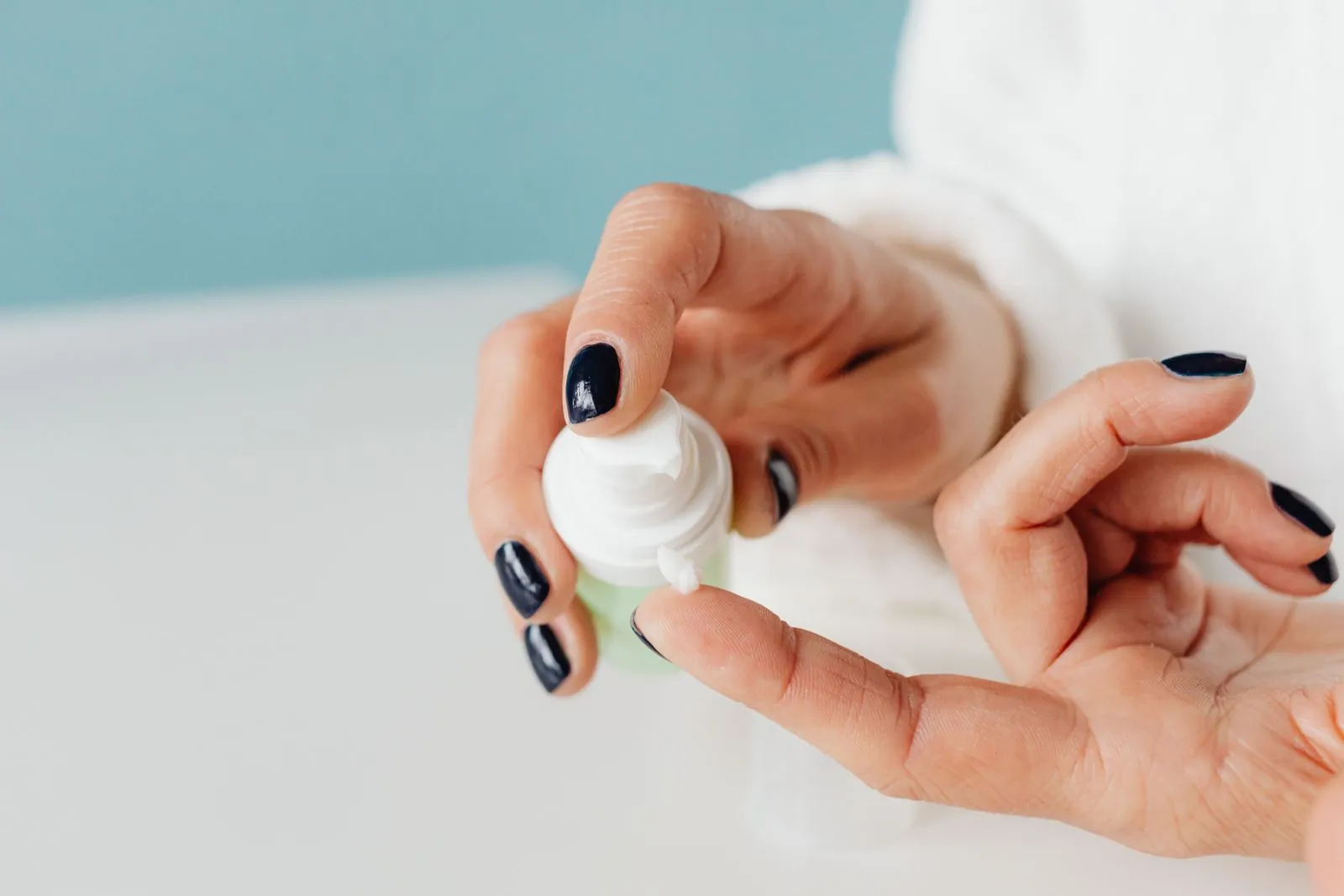
Niacinamide has a real trial behind it, though it measured oil, not filaments. In Japan, 50 people using a 2% niacinamide moisturizer had significantly lower oil output after 2 and 4 weeks than 50 people on a placebo (Draelos 2006). In a smaller US group of 30, surface oil dropped at 6 weeks, but oil output didn’t. Less oil should mean less for the filament to fill up with, which is logical, hopeful, and so far untested on filaments themselves.
Do pore strips, hydrocolloid tape or oil cleansing work?
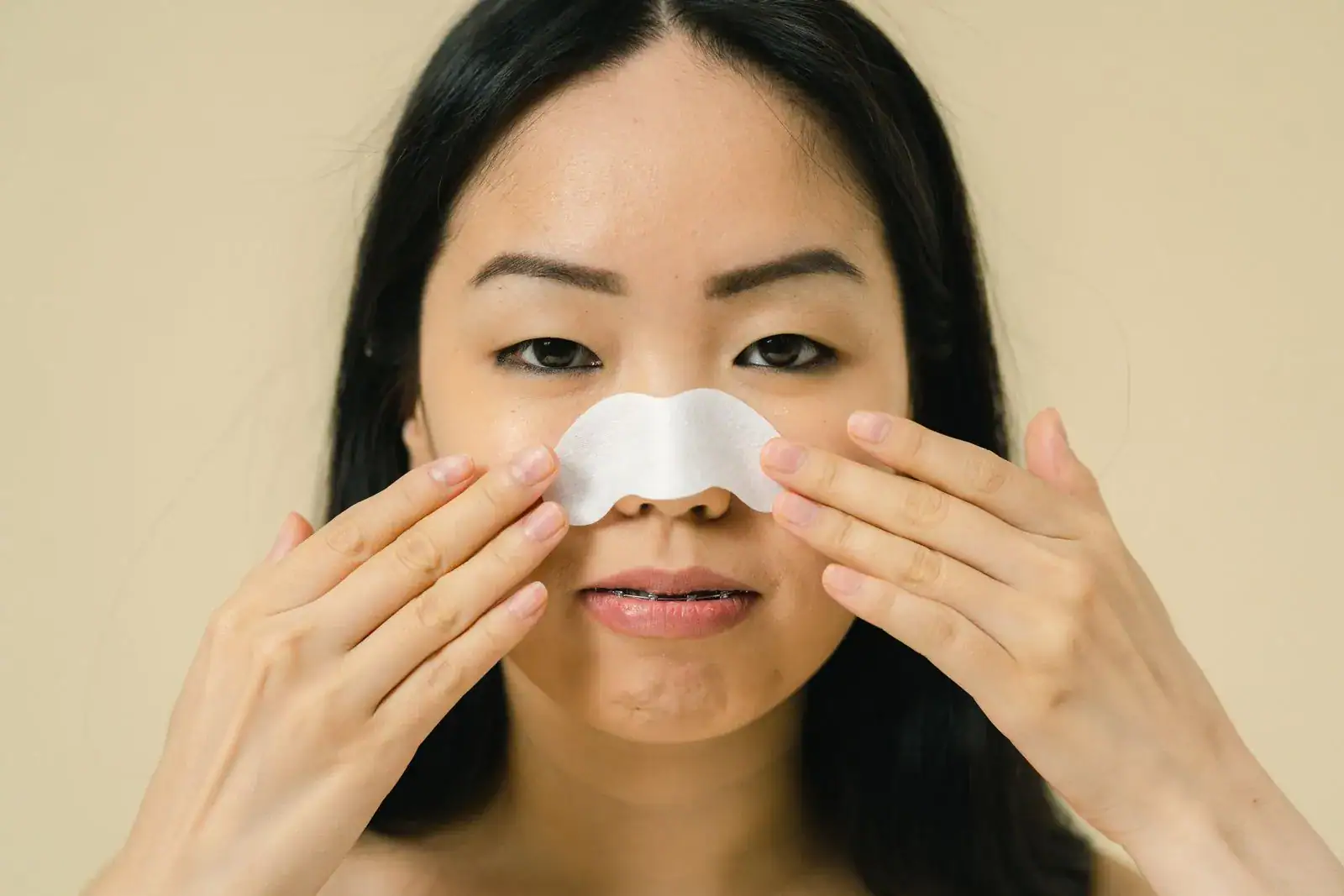
They can pull out or loosen the top of a filament for a day or two, but none of them stops it coming back, since filaments refill in about 30 days. No published trial has tested any of the three on sebaceous filaments. Pore strips can irritate skin, hydrocolloid tape is gentler, and oil cleansing is gentle but unproven here.
Pore strips are the classic. Cleveland Clinic warns they can remove sebaceous filaments, which “can dry out your skin and permit bacteria into your skin that can cause acne” (Cleveland Clinic). I’ll admit I once framed a used pore strip in my head as an achievement. It was not an achievement. It was a sticker.
“Pore strips can temporarily remove top layers of dead skin cells, but they won’t do anything to prevent the buildup of blackheads.”
Hadley King, MD, board-certified dermatologist, in mindbodygreen
Hydrocolloid tape is the social media remix: stick a sheet of pimple-patch material on your nose overnight, peel, gasp. Board-certified dermatologist Whitney Bowe, MD, said “using a hydrocolloid patch as a nose strip is actually much more gentle than a classic nose strip”, but warned you may be “changing the skin microbiome underneath that patch” in a way that “can potentially lead to worsening acne” (mindbodygreen). Gentler, then. Not a cure, and not a nightly ritual.
Oil cleansing runs on the “oil dissolves oil” idea, which is practitioner consensus, not tested on filaments. The nearest study is about sunscreen: in 20 people, a cleansing oil left 5.8% of a waterproof sunscreen behind, against 36.8% for a foaming cleanser, and only 1 person on the oil reported dry skin against 8 on the foam (Chen 2020). So it’s a gentle way to clean oily skin. Whether it shrinks filaments, nobody has measured, and I refuse to make up a number just because it would look nice here.
Should you squeeze or extract sebaceous filaments?
No, don’t squeeze sebaceous filaments at home. Squeezing only empties them for a few weeks, since the pore refills within about 30 days, and pressing with fingernails can redden, irritate or scar the skin. If you want them cleared for an event, a dermatologist can do a safe professional extraction.
“Sebaceous filaments are natural, and if you manage to squeeze out sebum, your pores will fill up again within 30 days.”
Cleveland Clinic
Schweiger Dermatology Group puts it even more flatly: “Never attempt to squeeze sebaceous filaments. It’s pointless and not worth the risk of damaging your skin” (Schweiger Dermatology). Pointless is a strong word, and it’s accurate, and I’ve still done it (with the magnifying mirror as my accomplice).
Here’s where the running mirror joke pays for itself. The easiest fix for filament-squeezing is putting the 10x mirror in a drawer, face down, and using a normal mirror at a normal distance, where filaments look like what they are: tiny, normal and mostly invisible to everyone but you. [Closes drawer. Leans on it for good measure.]
When should you see a dermatologist about sebaceous filaments?
See a dermatologist if over-the-counter products haven’t helped after two to three months, or if your “filaments” are raised, itchy, burning, or spreading beyond your nose and face. Several lookalikes need different treatment, and a dermatologist can tell them apart quickly, often with just a close look through a dermatoscope.
The main lookalikes, straight:
- Sebaceous hyperplasia: small yellow bumps up to 3 mm, usually on the forehead or cheeks of middle-aged and older people (DermNet).
- Trichostasis spinulosa: darker dots from trapped fine hairs, on the face and limbs (Mineroff 2023).
- Closed comedones: skin-colored bumps with no dark dot, covered in our closed comedones guide.
- Demodex mites: can cause plugged pores that look similar but burn, itch or irritate (Mineroff 2023).
A dermatologist can also go beyond the drugstore. Cleveland Clinic says they can prescribe medicines “that decrease the amount of oil your body produces” (Cleveland Clinic), and a 2026 case report used one session of a 1726-nm laser, which targets oil glands, on a man whose filaments hadn’t budged on tretinoin, with clear improvement at 4 weeks (Almufadhi 2026). That’s one patient, so it’s a lead, not a verdict. I, too, am one patient, and nobody should build a treatment plan on me.
Frequently asked questions
Do sebaceous filaments ever go away?
No. Sebaceous filaments are a normal part of every pore and refill within about 30 days after they are emptied. You can make them smaller and lighter with salicylic acid, retinoids and niacinamide, but not remove them for good.
Are sebaceous filaments bad for your skin?
No. They carry oil to the surface, which helps keep skin and hair moisturized. They only look more visible when you make more oil or your pores are larger.
Can you squeeze sebaceous filaments out?
It’s better not to. Squeezing only empties them for a few weeks and can irritate or scar the skin. A dermatologist can do a safe extraction if you need it.
Do pore strips remove sebaceous filaments?
Temporarily. A pore strip can pull out the top of a filament, but it refills within about 30 days, and strips can dry or irritate the skin.
How long does salicylic acid take to work on sebaceous filaments?
Give it 6 to 8 weeks of steady use. The American Academy of Dermatology uses the same window for treating blackheads and whiteheads.
Does oil cleansing get rid of sebaceous filaments?
No study has tested it. Cleansing oils are gentle and good at dissolving oily residue, but there is no evidence they shrink sebaceous filaments.
Your next step
Pick one proven ingredient, a 2% salicylic acid leave-on or an adapalene gel, and use it steadily for 6 to 8 weeks before you judge it. If your bumps are skin-colored with no dark dot, read our guide to closed comedones instead. If nothing changes after three months, book a board-certified dermatologist.

Written by the Trusted Skincare Editorial Team
We research at-home beauty devices and skin treatments and link every claim to a published study, a regulator or a named expert. Last updated Sunday 27 September 2026.
Sources
- Plewig and Wolff 1976, Sebaceous filaments (Archives for Dermatological Research)
- Cleveland Clinic: Sebaceous filaments
- American Academy of Dermatology: How to treat different types of acne
- Singh et al. 2021, Sebaceous filaments (Dermatology Practical and Conceptual)
- Mineroff et al. 2023, A case report of sebaceous filaments (Cureus)
- Almufadhi and Alosaimi 2026, Sebaceous filaments treated with a 1726-nm laser (JAAD Case Reports)
- Roh et al. 2006, Sebum output and facial pore size (British Journal of Dermatology)
- Draelos et al. 2006, 2% niacinamide and facial sebum
- Arif 2015, Salicylic acid as a peeling agent: a comprehensive review
- Zhang et al. 2022, 30% salicylic acid peels and facial sebum
- Chen et al. 2020, Water, cleanser or cleansing oil for removing sunscreen
- mindbodygreen: Can you use hydrocolloid as a pore strip?