
On this page
- Retinol purge vs breakout vs irritation at a glance
- What is a retinol purge?
- What is skin purging, and what causes it?
- Is the retinol purge real?
- What does a retinol purge look like?
- Skin purging vs breakout: how do you tell the difference?
- Is it a purge or irritation (retinoid dermatitis)?
- How long does a retinol purge last?
- How long does tretinoin purging last?
- How do you lower the odds of a retinol purge?
- When should you stop retinol and see a dermatologist?
- Your next step
Quick answer: A retinol purge is a short flare of small spots, such as whiteheads, blackheads and little red bumps, in the places you usually break out, soon after you start a retinoid. It usually settles within 4 to 8 weeks. Trials have measured it with prescription tretinoin. For over-the-counter retinol, it’s practitioner consensus, not measured.
We read 18 studies and sources, from a 2008 analysis of 4,550 people in tretinoin trials to the small print on the tube itself, so every claim below links to where it came from. (I also bought a wall calendar and a sheet of gold star stickers to track my retinol nights. The calendar has 30 squares. The sheet has 200 stars. I have never been more prepared for anything.)
Retinol purge vs breakout vs irritation at a glance
| Retinol purge | Breakout | Irritation (retinoid dermatitis) | |
|---|---|---|---|
| What it is | Clogs that were already forming come up faster | New clogged pores or inflamed spots | Irritated, dry outer skin |
| What sets it off | A retinoid, or an exfoliating acid (AHA or BHA) | Hormones, stress, or a pore-clogging product | Too much retinoid, too often, too soon |
| Where it shows | Your usual breakout zones | Anywhere, including brand-new areas | Where you applied it, worst near the eyes and lips |
| What it looks like | Lots of small, similar bumps: whiteheads, blackheads, small red bumps | Spots in mixed sizes and stages | Redness, peeling, dryness, stinging or burning |
| How long | Usually improves within 4 to 8 weeks | Comes and goes with its trigger | Peaks in weeks 1 to 2 in trials, then eases |
| What to do | Keep going, gently | Find the trigger and treat the acne | Cut back, moisturize, see a dermatologist if it lasts |
Sources: Del Rosso 2008, Leyden 2017, DermNet, theSkimm, InStyle, NBC Select.
What is a retinol purge?
A retinol purge is a temporary rise in small spots after you start a retinoid. Retinoids speed up how fast skin cells shed, so tiny clogs already forming under the surface, called microcomedones, come up sooner. It shows in your usual breakout zones and fades as those clogs clear. It’s a side effect, not a new problem.
A 2017 review calls the microcomedone “the precursor of all acne lesions” (Leyden 2017), which is a very dramatic job title for something you can’t even see. [Checks forehead. Sees nothing. Stays suspicious anyway.] Retinoids work on exactly that stage. In two microscope studies, 12 weeks of tretinoin cut microcomedones by 80% at 0.1% strength and by 35% at 0.025%, the same review reports. (Somebody looked at pores under a microscope for 12 weeks. I can’t look at my own for 12 seconds.)
So the spots a purge brings up were coming either way, just on a slower schedule. Your skin is clearing its inbox, and I say that with respect as someone who has never cleared one. Many of those clogs are whiteheads, also called closed comedones.
“All of the blockages that you have within the skin that naturally would come to the surface slowly, it speeds up that process,”
Joshua Zeichner, MD, board-certified dermatologist, in InStyle
What is skin purging, and what causes it?
Skin purging is the same flare from any ingredient that speeds up skin cell turnover: retinoids like retinol, retinal, adapalene and tretinoin, plus exfoliating acids such as glycolic, lactic and salicylic acid. A product that doesn’t speed turnover, like a moisturizer, sunscreen or foundation, can’t make you purge. New spots from those are a breakout.
“Any ingredients that cause cell turnover can cause purging, and that includes exfoliant acids like alpha- and beta-hydroxy acids”
Michele J. Farber, MD, board-certified dermatologist, in theSkimm
That’s the whole rule, and it’s shorter than my grocery list, which is mostly snacks with ambitions. Our AHA vs BHA guide covers the acids, and our retinal vs retinol guide sorts out the retinoid family (they all have nearly the same name, which I take personally). theSkimm suggests adding one of these actives at a time, so you know which one did what (theSkimm). I once started two in the same week and blamed the pillowcase.
Is the retinol purge real?
Partly proven. In three large trials of prescription tretinoin, more people with mild acne had a flare of inflamed spots at week 2 than people on a plain gel, 15.4% vs 8.7%. Tretinoin and adapalene labels warn about early worsening. Nobody has measured purging on over-the-counter retinol, so that part is practitioner consensus.
The best data comes from a 2008 look at three trials with 4,550 people. Before them, early flaring “has not been prospectively evaluated” (Del Rosso 2008), after more than 30 years of tretinoin use. Three decades on experience alone. I respect it; that’s my whole approach to houseplants.
“treatment with a 0.025% formulation of tretinoin used as monotherapy provoked acne flaring in a subset of subjects”
James Q. Del Rosso, DO, in The Journal of Clinical and Aesthetic Dermatology
Among people with mild acne, 15.4% on tretinoin alone had at least a 10% rise in inflamed spots at week 2, against 8.7% on the plain gel. People with moderate or severe acne didn’t flare more on tretinoin, and 23.8% of people with severe acne flared on the plain gel alone (Del Rosso 2008). That last number is the sneaky one: acne goes up and down on its own, even on a gel with nothing in it, which is also how my mood works around 4 p.m.
The drug labels agree, which I didn’t expect from anything printed that small. The tretinoin cream label says “During the early weeks of therapy, an apparent increase in number and exacerbation of inflammatory acne lesions may occur.” and blames deep, previously unseen spots (DailyMed tretinoin label).
The Differin gel label, for over-the-counter adapalene, says “during the early weeks of use, your acne may appear to worsen before it improves (this is normal)” (DailyMed Differin label). That’s the most encouraging thing a label has ever said to me. My shampoo just says to repeat.
[Switches to serious face.] The honest catch: every number above is prescription tretinoin or adapalene. No trial we found measured purging on over-the-counter retinol, which is weaker because skin has to convert it twice. A milder retinol purge makes sense, but it’s practitioner consensus, not a measured result. (If anyone runs that trial, my forehead is available. It has a very flexible schedule.)
What does a retinol purge look like?
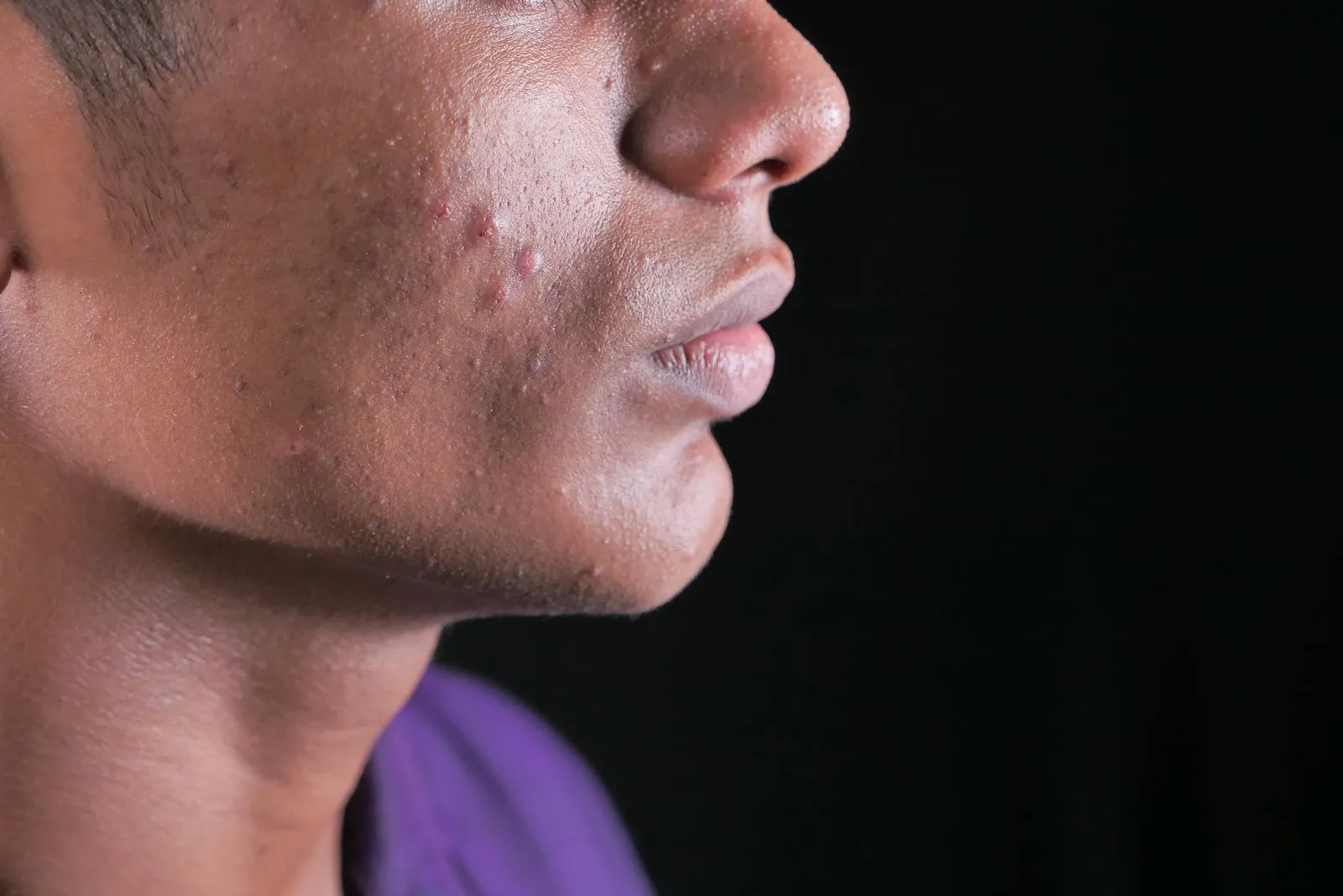
A retinol purge usually looks like a crop of small, similar bumps: whiteheads, blackheads, small red bumps and a few spots with a white or yellow head, in the areas where you normally break out, often the chin, forehead and cheeks. Dryness and peeling often come along at the same time, but that part is irritation.
“It all looks the same, like a sea of bumps as opposed to more hormonal acne where you’re getting fewer larger pimples or pimples in different stages,”
Joshua Zeichner, MD, in InStyle
I read “sea of bumps” and immediately pictured a tiny surfer, which is why nobody lets me write medical textbooks. Hadley King, MD, adds dry, peeling skin and redness to the list (InStyle), and Michele Farber, MD, adds that it tends to appear where a breakout was already brewing under the surface (theSkimm).
The hardest part is leaving them alone. A pimple patch on the bigger ones keeps fingers away, which is the whole game. [Puts hands in pockets. Takes them out to type. Puts them back.]
Skin purging vs breakout: how do you tell the difference?
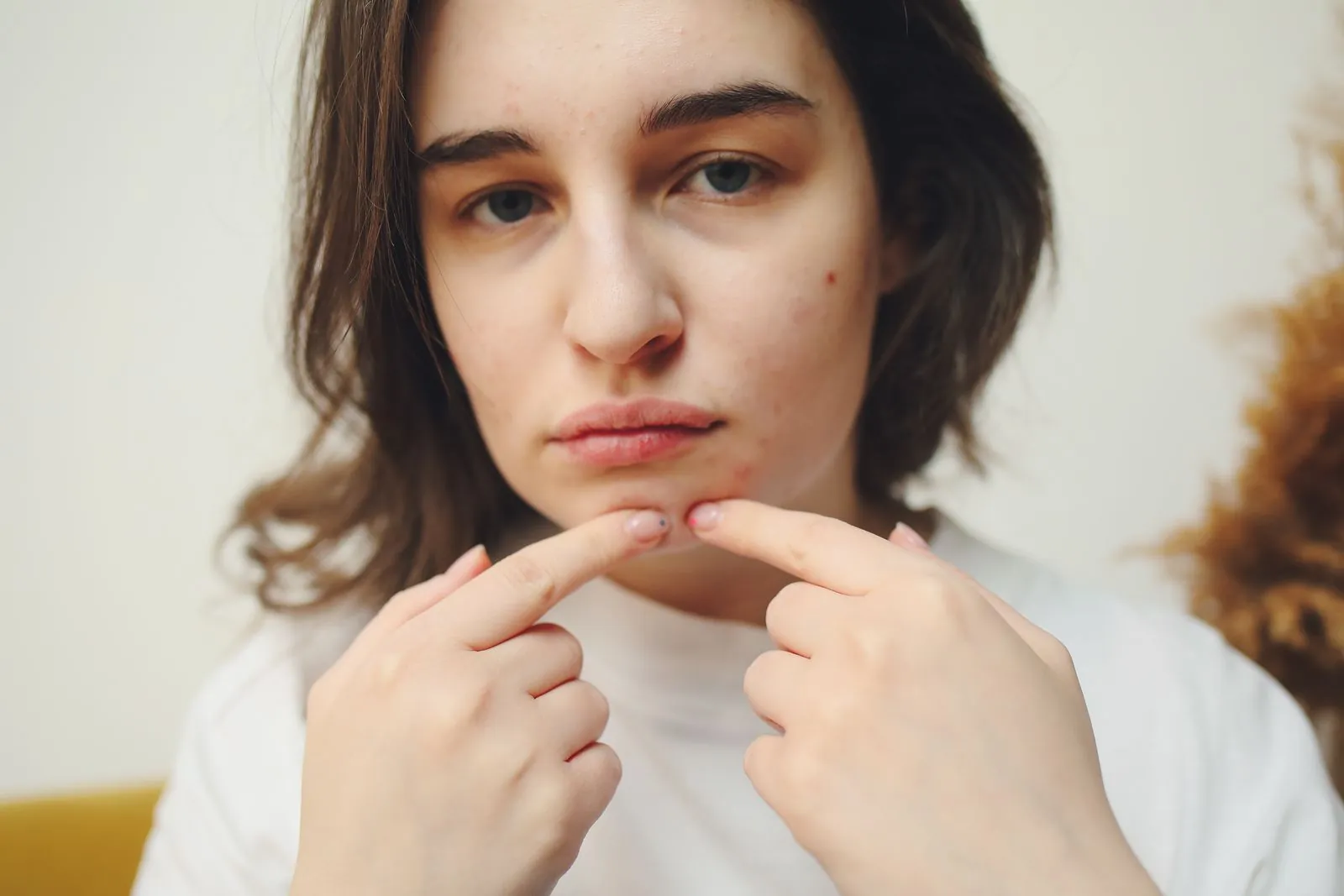
Check three things. Trigger: purging only follows a new retinoid or exfoliating acid. Location: a purge shows in your usual breakout zones, while spots in new places point to a breakout. Timing: a purge starts within weeks of the new product and improves by around week 6 to 8. A breakout keeps coming or spreads.
“A purge generally happens shortly after introducing a new acne ingredient, while a new breakout may occur with stress, your cycle, or introducing a new skin-care product like makeup, serum, or overly thick moisturizer”
Michele J. Farber, MD, in theSkimm
Jennifer Chwalek, MD, adds that if you don’t usually get acne and suddenly break out after a product, it may simply be too heavy for your skin (theSkimm). Some formulas are just too much for some faces, the way my holiday sweater is too much for most rooms.
One honest label: the location and timing rules are dermatologist advice, not trial data. Nobody has sorted spots by postcode. My calendar now has a second sticker, a question mark, for nights I can’t decide which column a new spot belongs in.
Is it a purge or irritation (retinoid dermatitis)?
Irritation, called retinoid dermatitis, shows as redness, dryness, peeling, stinging or burning where you applied the product, rather than new spots in your usual zones. It’s very common early on: in retinoid trials, irritation peaks in the first 1 to 2 weeks, then eases. Persistent burning, swelling or a rash means stop and ask a doctor.
“In clinical trials of retinoids, the peak of cutaneous irritation typically occurs within the first 1-2 weeks and subsides thereafter”
Leyden, Stein-Gold and Weiss, Dermatology and Therapy, 2017
How common? The same review cites a study of 324 people on tretinoin cream where 61% had some local side effect, and using other skin medicines at the same time raised the odds (Leyden 2017). Sixty-one percent. I have never been in a majority that big, and I once voted for pizza at an office lunch.
The retinoid matters. DermNet says “Adapalene is the least irritating topical retinoid, and tretinoin the most.” (DermNet) It also warns about applying close to the eyes or lips. Apparently my habit of dabbing everything right up to the lash line was not, in fact, thoroughness.
Deeper skin tones need extra care. Dermatologist Sonia Badreshia-Bansal, MD, warns that “With skin of color, irritation can trigger dark marks, known as hyperpigmentation” and says starting slowly and using moisturizer helps (AAD). [Serious face stays on for this one.]
If your face already stings before you’ve even started, our skin barrier repair guide comes first, and the retinoid can wait in the car.
How long does a retinol purge last?
Most sources put a retinol purge at about 4 to 6 weeks, and up to 8 weeks for some. Labels are the most specific: tretinoin’s says new blemishes can appear by three to six weeks, with improvement by 6 to 12 weeks. If spots keep spreading past about 8 weeks, it’s probably not a purge.
Here’s the rough shape, stage by stage:
- Weeks 1 to 2: irritation peaks in retinoid trials (Leyden 2017).
- Weeks 3 to 6: the tretinoin label says “BY THREE TO SIX WEEKS, some patients notice an appearance of new blemishes (papules and pustules).” (DailyMed tretinoin label).
- Weeks 6 to 12: the same label expects visible improvement by 6 to 12 weeks, and the AAD says to give acne treatment six to eight weeks (AAD).
- Month 3: the Differin label says results can take up to 3 months of daily use, and irritation usually lessens after 4 weeks (DailyMed Differin label).
Ask three dermatologists and you get three clocks: a week or two (Morgan Rabach, MD, in theSkimm), up to a month with a dermatologist visit past six weeks (Hadley King, MD, in InStyle), and improvement within four to six weeks (Mamina Turegano, MD, in NBC Select). That spread is also how long I take to return a library book.
This is where the gold star calendar finally earns its keep. I count squares from the first retinoid night, not from the first spot, because that’s when every clock above starts. Week 8 has a circle around it in glitter highlighter. (The highlighter was not in the budget. The stars made me greedy.)
How long does tretinoin purging last?
Tretinoin purging follows the same pattern but can feel stronger, because tretinoin is already the active form of vitamin A and is the most irritating retinoid. Its label says new blemishes may show by three to six weeks and results by 6 to 12 weeks. Adapalene works as well in trials and irritates less.
Consultant dermatologist Shendy Engelina says “The stronger the retinoid is, the higher the risk of skin purging or side-effects” (Dermatica). It fits the irritation data, but no trial we found compared purge rates between retinoids, so file it under practitioner consensus. My filing system is a kitchen drawer labeled MISC. It’s fine.
What trials do show is that adapalene gets similar results with less fuss. Across five trials with 900 people, adapalene 0.1% gel matched tretinoin 0.025% gel on total spots, worked faster at week 1 and was better tolerated throughout (Cunliffe 1998). Adapalene 0.1% is sold without a prescription in the US, which is the rare case where the easy option is also the well-tested one. That never happens to me with furniture.
How do you lower the odds of a retinol purge?
Start with the lowest strength you can find, every other night, at night only, using a pea-sized amount. Build up over a few weeks, add moisturizer, skip other exfoliating acids for now, and wear sunscreen daily. You may not avoid a purge entirely, but a slower start means less irritation, and irritation is what makes people quit.
“Many patients want to start right off with tretinoin, but I advise them to use the least-intense retinoid formula they can find, and use it every other night to start, slowly building up”
Tina Alster, MD, FAAD, board-certified dermatologist, American Academy of Dermatology
Zeichner starts patients every other night for two weeks, then two nights on and one off for two weeks, then every night (InStyle). My calendar now has a star in every other square, which looks less like a routine and more like a very polite checkerboard. A 2017 review agrees on every other day for the first 2 to 4 weeks, and adds a short-contact option: 30 to 60 minutes, then wash it off (Leyden 2017).
The moisturizer sandwich means moisturizer, then retinoid, then moisturizer again. The sandwich itself is dermatologist advice, not a tested method, but moisturizer helps: in 30 people on tretinoin or isotretinoin, a plain cream twice a day for 15 days significantly improved dryness, roughness and peeling on the treated half of the face (Laquieze 2006). I love a method named after lunch. It’s the only routine I’ve never skipped.
One active at a time. The Differin label says irritation is more likely with more than one acne medicine at once (DailyMed Differin label). Park the acid toner. Mine sulked, then forgave me.
Sunscreen every morning. Retinoids at night only, sun protection every day, says Alster (AAD). No bit here, just sunscreen.
Don’t stop and start. If it’s a mild purge, Zeichner argues for staying the course.
“And if you stop and then your skin calms down and you start using it again, you’re just going to go through the same experience.”
Joshua Zeichner, MD, in InStyle
That’s his clinical view, not a measured finding, and it’s for a purge, not real irritation. If it burns, cut back or stop, calendar or no calendar.
When should you stop retinol and see a dermatologist?
Stop and get checked if you have burning, stinging that doesn’t settle, swelling, a rash or hives, spots spreading to new areas, or painful deep bumps, or if things are still getting worse after about 8 weeks. Stop all retinoids if you’re pregnant or trying to be. The AAD says to give acne treatment six to eight weeks.
“if breakouts continue beyond eight weeks, spread to new areas or are accompanied by burning, itching or worsening redness, it’s more likely irritation or true acne”
Mamina Turegano, MD, board-certified dermatologist, in NBC Select
Both labels say to stop and see a doctor if irritation turns severe or persistent, and Differin’s adds: if nothing improves after 3 months of daily use (tretinoin label, Differin label).
If you’re pregnant or trying to be, the AAD says “Retinoids should not be used during pregnancy.” (AAD) Ask your obstetrician or dermatologist what you can use instead. No jokes in this paragraph.
As for the gold star calendar, the square that matters is week 8. It doesn’t get a star by default. It gets a decision: calmer and in the usual places means keep going, and worse or spreading means book the dermatologist. (Fine. It also gets a star. I’m not a monster.)
Frequently asked questions
Does everyone purge from retinol?
No. In the tretinoin trials, most people improved in the first two weeks, and extra flaring showed up only in some people with mild acne.
Can a moisturizer or sunscreen make your skin purge?
No. Purging comes only from ingredients that speed up skin cell turnover, like retinoids and exfoliating acids. New spots after a moisturizer, sunscreen or makeup are a breakout, often from a product that’s too heavy for your skin.
Should you stop retinol if you’re purging?
Usually not, if the spots are mild and in your usual areas. Drop to every other night and add a moisturizer. Stop and see a doctor if you have burning, swelling, a rash, or spots that spread or last past about 8 weeks.
Does purging mean retinol is working?
Not necessarily. A purge suggests the retinoid is speeding up skin turnover, but many people get results with no purge at all. Judge it at 8 to 12 weeks, not in the first two.
Can you purge again after a break from retinol?
Possibly. Dermatologists say restarting after a break can bring the adjustment phase back, so restart slowly, every other night. No trial has measured this.
Can you use retinol while pregnant?
No. The American Academy of Dermatology says retinoids should not be used during pregnancy. Ask your obstetrician or dermatologist which options are safe for you.
Your next step
If your new spots are small, in your usual places and started after a retinoid, drop to every other night, add a moisturizer and give it until week 8. If you’re burning, peeling badly or breaking out in new places, stop and see a dermatologist. Still choosing a retinoid? Our retinal vs retinol guide compares the options.

Written by the Trusted Skincare Editorial Team
We research at-home beauty devices and skin treatments and link every claim to a published study, a regulator or a named expert. Last updated Tuesday 29 September 2026.
Sources
- Del Rosso 2008, Retinoid-induced flaring in patients with acne vulgaris: does it really exist? (The Journal of Clinical and Aesthetic Dermatology)
- Leyden, Stein-Gold and Weiss 2017, Why topical retinoids are mainstay of therapy for acne (Dermatology and Therapy)
- Cunliffe et al. 1998, Adapalene 0.1% gel vs tretinoin 0.025% gel: a meta-analysis of five randomized trials (British Journal of Dermatology)
- Laquieze et al. 2006, Moisturizing cream as add-on to isotretinoin or tretinoin (Journal of Drugs in Dermatology)
- DailyMed: Tretinoin cream 0.025% prescribing information
- DailyMed: Differin gel (adapalene 0.1%) drug facts
- American Academy of Dermatology: Retinoid or retinol?
- American Academy of Dermatology: How to treat different types of acne
- DermNet: Topical retinoids
- theSkimm: Retinol purge 101, with three dermatologists
- InStyle: Survive the retinol purge with tips from dermatologists
- NBC Select: How to tell skin purging from breakouts