

On this page
Quick answer: Skin flooding is a routine that layers hydrating products on damp skin: a gentle cleanse, a mist, a hyaluronic acid or glycerin serum, then a moisturizer to seal it all in. It suits dry, dehydrated or barrier-stressed skin best. In very dry air, always finish with that sealing layer, or the trend can backfire.
We read 9 studies and sources, from a 2008 glycerin trial to three dermatologists weighing in on the trend, so every claim below links to where it came from. (I also owe a formal apology to a succulent named Dale. We’ll get to Dale.)
Skin flooding vs slugging vs a regular routine at a glance
| Skin flooding | Slugging | A regular routine | |
|---|---|---|---|
| What it is | Several thin hydrating layers applied to damp skin | One thick coat of petroleum jelly as the final step | Cleanser, one serum, moisturizer, sunscreen |
| The goal | Soak the outer skin layer with water, then seal it | Stop water escaping overnight | Steady upkeep with no fuss |
| Best for | Dry, dehydrated or barrier-stressed skin | Very dry skin, especially in winter | Most skin, most of the year |
| Breakout risk | Moderate if the layers are heavy | Higher on oily or acne-prone skin | Lowest |
| When to do it | At night, during dry spells | Occasional nights | Daily |
Sources: Westlake Dermatology, NBC Select, Cleveland Clinic.
What is skin flooding?
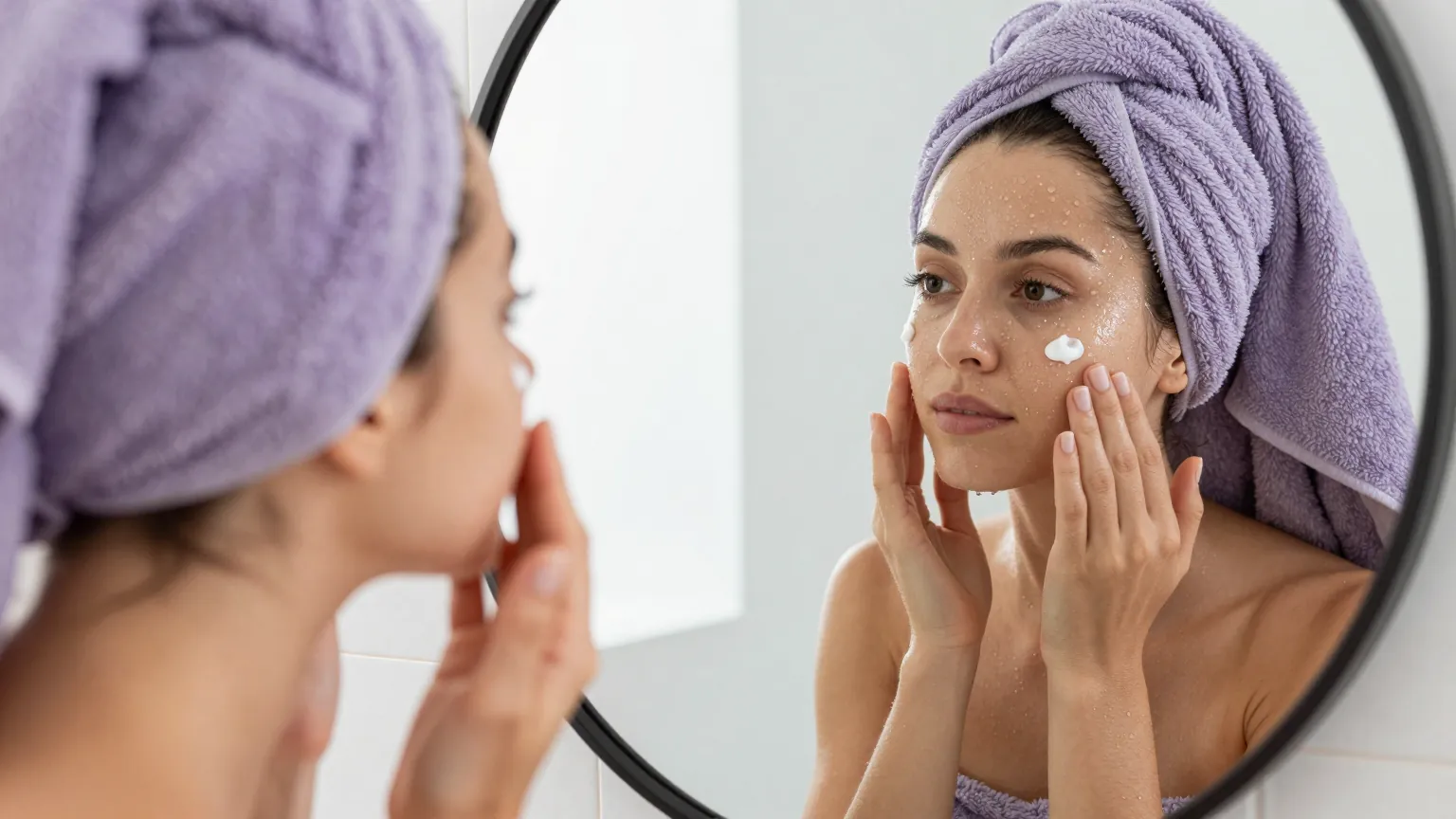
Skin flooding is a hydration-first skincare method, borrowed from Korean skincare routines and made famous on TikTok, where you layer several hydrating products on damp skin from thinnest to thickest: a toner or essence, then a humectant serum, then a moisturizer to lock everything in. The goal is plump, dewy, comfortable skin, not treating any one condition.
“It aims to hydrate the skin by stacking various hydrating products on top of each other”
Dr. Jimmy Sung, medical director at Tribeca Aesthetics, in NBC Select
The name is doing a lot of dramatic work here. Nobody is hosing anything down; you are applying three polite layers of water-based products and then putting a lid on them. Consultant dermatologist Dr. Alexis Granite traces the idea to Korean skincare and notes the damp-skin start matters because “it means your skin can more effectively draw moisture into its deeper layers” (Dr. Alexis Granite). The skincare pros at Bioelements add that the method itself is old news, recommended by estheticians for years before it got a trending hashtag (Bioelements). So TikTok did not invent hydration. It just gave it a weather event.
If the dewy finish is what pulled you in, you are circling the same glow as the glass skin look, which chases shine through hydration too. Flooding is basically glass skin’s practical cousin who owns a water bottle.
About Dale. Dale was my succulent, and I loved him the way the internet loves hydration: daily, generously, and against all printed instructions. [Lowers watering can.] Keep Dale in mind for the rest of this article. He is the whole thesis.
Does skin flooding actually work?
For dry, dehydrated or barrier-stressed skin, yes, within limits. Humectants such as hyaluronic acid and glycerin genuinely raise the water content of the skin’s outer layer, and a moisturizer on top slows that water from escaping. What flooding cannot do is beat one good serum and moisturizer by much, or fix deep wrinkles, sagging or dark spots.
The ingredient science is real, which is a relief, because I own four hydrating serums and needed this to work out. A 2022 review of topical hyaluronic acid reports that it can bind around 1,000 times its weight in water, and that in one randomized trial of 65 women, 0.1% hyaluronate formulas significantly improved hydration and elasticity after 60 days (Bravo et al. 2022). Glycerin has receipts too: in a randomized, double-blind, 4-week trial in 24 people, a glycerin-based cream significantly improved hydration of the outer skin layer and restored barrier function compared with the same cream minus the glycerin (Breternitz et al. 2008).
The damp-skin step has backing as well, though it comes from guidance rather than a trial. The American Academy of Dermatology tells dry-skin patients to “apply your moisturizer when your skin is still damp” after a shower or bath, to trap the water that is already sitting there (AAD). That is practitioner consensus, not a head-to-head study, but it is the consensus of people who look at dry skin all day.
Who sees the biggest payoff? Dermatologist Helyn Alvarez, MD lists very dry skin, compromised barriers, skin adjusting to retinoids or exfoliants, and skin dried out by climate (Westlake Dermatology). If your barrier is the problem, our skin barrier repair guide covers the full rebuild, and if a new retinoid has your face flaking like pastry, flooding pairs nicely with the survival advice in our retinol purge guide. The same dermatologist is blunt about the ceiling: hydration improves temporary fine lines, dullness and mild roughness, and it does not correct deep wrinkles, skin laxity, hyperpigmentation or acne scars. In other words, flooding is a glass of water, not a renovation. I still drink the water.
The skin flooding routine, step by step
The order is the entire trick, and it runs thin to thick. Here is the five-step version the dermatologists land on (Dr. Alexis Granite, NBC Select):
- Cleanse with a gentle, non-stripping cleanser.
- Leave skin damp, or mist it. Damp, not dripping.
- Apply a hydrating toner or essence, if you use one.
- Apply a humectant serum with hyaluronic acid or glycerin.
- Seal with moisturizer. Very dry skin can add a thin balm or petroleum jelly layer at night.
“The general rule is to apply products from thinnest to thickest consistency”
Melanie Abeyta, aesthetic nurse practitioner, in NBC Select
That thin-to-thick rule is practitioner consensus rather than lab data, but it has simple logic behind it: a rich cream applied first acts like a raincoat, and nothing waters a garden through a raincoat. Abeyta also recommends doing the whole thing at night, when skin repairs itself and the layers can absorb in peace (NBC Select). This suits me, because at night nobody can see me pat my own face like I am consoling it.

Give each layer a minute to sink in before the next. Rush it and the layers roll into little crumbs on your skin, a move called pilling that Dr. Granite warns gets likelier with every extra product, especially silicone-heavy ones (Dr. Alexis Granite). Ask me how I know. [Picks product crumbs off chin with dignity.]
Skin flooding products: what you actually need
Short list: one gentle cleanser, one humectant serum, one moisturizer. A hydrating toner or essence is a nice optional opener, and a balm or petroleum jelly is the optional closer for very dry skin. The ingredients doing the heavy lifting are hyaluronic acid, glycerin, squalane and ceramides (NBC Select).
Notice what is not on the list: five more serums. The flooding aisle would love to sell you a separate product for every layer, and I would love to buy them, which is exactly why I am not allowed in that aisle unsupervised.
“If one well-formulated serum and moisturizer provide sufficient hydration, adding three more humectant serums will not deliver three times the benefit.”
Helyn Alvarez, MD, Westlake Dermatology
Most hydrating serums lean on the same two or three ingredients anyway, so stacking four of them is buying the same glass of water in four fancy bottles (Westlake Dermatology). If you want a cheat code for labels: a humectant grabs water, an emollient smooths the gaps, and an occlusive is the lid that keeps everything from evaporating (Purnamawati et al. 2017). One of each, applied thin to thick, is a complete flood. My bathroom shelf did not get that memo, and at this point the shelf and I are in couples counseling.
Who should skip skin flooding?
Nobody has to swear off hydration, but oily and acne-prone skin should flood lightly: heavy layers and occlusive top coats can trap oil and debris in pores. Sensitive skin should add one new layer at a time. And keep the full stack away from nights built around strong exfoliating acids, which do not need company.
“Excessive layering of heavy or occlusive products can lead to clogged pores and breakouts”
Melanie Abeyta, aesthetic nurse practitioner, in NBC Select
If you are acne-prone, pick lightweight, non-comedogenic products and skip the balm-or-petroleum-jelly finisher entirely, since that last layer is the one most likely to seal trouble in (NBC Select). Dermatologist Helyn Alvarez specifically flags new breakouts along the cheeks or jawline as a sign the routine is too heavy (Westlake Dermatology). Dale also showed no outward complaints right up until he did. I am just saying the signs arrive late.
On exfoliating acids: flooding is a hydration night, not an everything night. If your routine includes glycolic or salicylic acid, keep those on their own evenings, and our AHA vs BHA guide explains which acid belongs in your lineup at all. That separation is practitioner consensus rather than trial data, but stacking an acid under four hydrating layers mostly guarantees you cannot tell which product caused the sting. [Puts on tiny detective hat.] Simplify the suspect list.
Can skin flooding backfire in dry air?
Yes. Humectants pull water from wherever it is easiest to get, and in very dry air that can mean pulling water up from deeper skin layers and losing it to evaporation at the surface. Dermatology reviews recommend pairing humectants with an occlusive or moisturizer for exactly this reason. The rule is simple: never leave a humectant layer unsealed.
This is the part of the trend almost nobody mentions, and it has a real source. A peer-reviewed moisturizer review notes that humectants can actually increase water loss by drawing moisture up from the deeper skin, where it then evaporates, which is why they are formulated and used together with occlusives (Purnamawati et al. 2017). Dermatologist Helyn Alvarez gives the practical version: “In low-humidity environments, applying multiple humectants without properly sealing them can leave skin feeling tighter or drier.” (Westlake Dermatology). Your serum is a sponge, basically, and a sponge left out in the desert does not stay a success story.
The fix costs nothing: finish every flood with your moisturizer, and in truly dry climates or deep winter, a thin occlusive layer on top. The same review reports that petrolatum at just a 5% concentration can cut water loss through the skin by more than 98% (Purnamawati et al. 2017). That number is the whole argument for the lid.
Watch for the signs you have over-flooded: skin that stays tacky for hours, new congestion, stinging from products you used to tolerate, or no extra glow from extra layers (Westlake Dermatology). Dale displayed every one of these, botanically speaking, and I responded with more water. [Long pause.] Dale II lives on my desk now, watered on Thursdays only, and he is thriving in a way that frankly feels pointed. Moderation: annoying, effective.
Frequently asked questions
Is skin flooding the same as slugging?
No. Skin flooding layers several thin hydrating products on damp skin, ending with moisturizer. Slugging is one thick coat of petroleum jelly over your finished routine to stop overnight water loss (Cleveland Clinic). Very dry skin can combine them by ending a flood with a thin occlusive layer.
How often should you do skin flooding?
There is no tested schedule. Experts treat it as situational: useful in winter, in dry climates, after peels or while adjusting to retinoids, rather than a permanent nightly requirement (Westlake Dermatology). Start a few nights a week and let your skin’s comfort decide.
Is skin flooding good for oily or acne-prone skin?
It can be, done lightly. Use lightweight, non-comedogenic products, add layers gradually and skip heavy occlusives, which can trap oil and trigger breakouts (NBC Select). New bumps along the cheeks or jawline are the signal to drop a layer.
Should skin flooding be done morning or night?
Night is the expert pick, since skin repairs itself during sleep and layers can absorb without sun, sweat or makeup on top (NBC Select). A shorter morning version, serum plus moisturizer on damp skin, works under sunscreen.
Can I use retinol with skin flooding?
Yes, and flooding is often recommended while skin adjusts to a retinoid, because the extra hydration offsets dryness and flaking (Westlake Dermatology). Apply the retinoid between the serum and moisturizer steps, and keep exfoliating acids on separate nights.
Does skin flooding help with wrinkles?
Only the temporary fine lines caused by dehydration. Hydration plumps the skin’s surface, which softens those lines for hours to days, but it does not correct deep wrinkles, sagging or sun damage (Westlake Dermatology).
Your next step
Try the five steps tonight: cleanse, leave your skin damp, add one humectant serum, seal with moisturizer, and judge the result in the morning. If your skin stays tight, flaky or reactive no matter how much hydration you give it, the barrier itself probably needs help first. Our guide below covers how to repair it.

Written by the Trusted Skincare Editorial Team
We research at-home beauty devices and skin treatments and link every claim to a published study, a regulator or a named expert. Last updated Thursday 1 October 2026.
Sources
- Westlake Dermatology: Skin Flooding and the Law of Diminishing Returns in Skincare
- NBC Select: What is skin flooding? Experts explain
- Dr. Alexis Granite: What is Skin Flooding?
- Bioelements: Skin flooding, the esthetician’s guide
- Purnamawati et al. 2017: The Role of Moisturizers in Addressing Various Kinds of Dermatitis (Clinical Medicine and Research)
- Bravo et al. 2022: Benefits of topical hyaluronic acid for skin quality and signs of skin aging (Journal of Cosmetic Dermatology)
- Breternitz et al. 2008: Placebo-controlled, double-blind, randomized, prospective study of a glycerol-based emollient (British Journal of Dermatology)
- American Academy of Dermatology: Dermatologists’ top tips for relieving dry skin
- Cleveland Clinic: Slugging, does this skin care trend work?