

On this page
- Glass skin at a glance: what helps and what’s hype
- What is glass skin?
- Is glass skin realistic, or is it just lighting?
- How do you get glass skin?
- What does a glass skin routine look like, step by step?
- Which glass skin products actually matter?
- Who should skip the glass skin trend?
- Are glass skin injections worth it?
- How long does it take to get glass skin?
- Your next step
Quick answer: Glass skin is a K-beauty term for skin so smooth, hydrated and even that it reflects light like a pane of glass. You can get closer with a gentle cleanser, a humectant serum, a moisturizer matched to your skin type, gentle exfoliation and daily sunscreen. Pores never disappear, and many glass skin photos online get help from lighting and filters.
We read 17 studies and sources, from a 4.5-year sunscreen trial in Australia to the FDA approval of a “skin smoothness” injection, so every claim below links to where it came from. (I also taped a photo of a glazed donut to my bathroom mirror as a vision board. It is currently the only thing in that bathroom with glass skin. The donut is winning.)
Glass skin at a glance: what helps and what’s hype
| Step or product | What the evidence shows | Worth knowing |
|---|---|---|
| Hyaluronic acid serum | 0.1% hyaluronic acid creams improved hydration and elasticity vs placebo in 76 women over 60 days | Only the low molecular weight versions reduced wrinkle depth |
| Glycerin | Improves hydration of the skin’s outer layer and barrier function (review) | Cheap, and already in most moisturizers |
| Ceramides | Barrier lipids that products add to support barrier function (review) | A review, not a head-to-head trial |
| Niacinamide 5% | Fewer fine lines, spots and red blotchiness, better elasticity, in 50 women over 12 weeks | One small split-face trial |
| Daily sunscreen | No detectable increase in skin aging over 4.5 years in 903 adults | The best-proven step on this list |
| AHA exfoliant | Smooths the surface, but raises sun sensitivity | FDA advises sunscreen while using it and for a week after |
| Essences, sheet masks, 10-step kits | We found no trials testing them for the glass look | Practitioner consensus: pleasant, optional |
| Skin booster injection | One brand FDA-approved in 2023 for cheek smoothness, results through six months | Most trial patients had short-lived injection-site side effects |
Sources: Pavicic 2011, Fluhr 2008, Meckfessel and Brandt 2014, Bissett 2005, Hughes 2013, FDA on alpha hydroxy acids, AbbVie on Skinvive.
What is glass skin?
Glass skin is a Korean beauty term for skin that looks so smooth, hydrated and even that it seems to reflect light like a pane of glass. The phrase went viral in 2017. It describes a look, not a skin type or a medical condition, and it comes from steady hydration and barrier care rather than any single product.
Refinery29 described it in September 2017 as “a perfectly smooth and intensely hydrated complexion with an all-over sheen” (Refinery29), which is also a fair description of my donut. The same piece traced it to an 11-step Korean routine. Eleven steps. I have trouble with the two-step process of finding my keys and then leaving.
“this combination of ultra-smooth texture and super translucency can be hard to achieve with products alone”
Alicia Yoon, founder of Peach & Lily, in Refinery29
That quote came from someone who sells K-beauty products, which makes it the most honest sentence in the whole trend. [Reads it again. Nods slowly. Puts the shopping cart down.] Hold on to it, because the rest of this guide is basically that sentence with footnotes.
Is glass skin realistic, or is it just lighting?
Partly lighting. Glass skin is a real look on smooth, well-hydrated skin, but no routine removes pores, and many photos online get help from ring lights, filters and editing. Studies show skin reads as radiant when light both bounces off the surface and glows evenly from inside, and good lighting can fake both in seconds.
“What you see online is often enhanced by filters, lighting tricks, and even editing.”
Jane Yoo, MD, dermatologist and Mohs surgeon, New York
Here’s the science of the sheen, and it’s more interesting than I expected (low bar, I know). A 2020 study in the International Journal of Cosmetic Science showed people photos of the same face in three finishes: radiant, oily and shiny, and matte. The radiant whole-face version was rated younger and more attractive than both the oily shine and the matte face (Ikeda 2020). So we’re not imagining it. Our brains really do like a glow.
The same paper explains why, citing earlier work. Light that bounces straight off the surface reads as oily and shiny, light that scatters back from inside the skin reads as translucent, and skin with plenty of both “appeared radiant and appeared dull when both were low” (Ikeda 2020). In other words, glass skin is two kinds of light arriving at once. I tested this by pointing my phone flashlight at the donut photo. The donut looked incredible. I looked like a witness in a true crime documentary.
Pores stay. That’s fine. The American Academy of Dermatology promises that “With the right skin care, you can make pores less noticeable”, not invisible (AAD). It adds that pores look larger when they’re clogged, when skin is irritated, and when skin sags with age. If the dots on your nose are flat and gray, they’re probably sebaceous filaments, which are normal, and no amount of essence will evict them. (Believe me. I sent a strongly worded essence.)
How do you get glass skin?
To get glass skin, build five steady habits: a gentle cleanser, a humectant serum such as hyaluronic acid or glycerin on damp skin, a moisturizer matched to your skin type, a chemical exfoliant a few nights a week, and broad-spectrum sunscreen every morning. Expect a few weeks for real change, not an overnight reveal.
Humectants pull water into the skin’s outer layer. In a 60-day trial, 76 women used 0.1% hyaluronic acid cream around one eye and a plain cream around the other, and every hyaluronic acid version improved skin hydration and elasticity (Pavicic 2011). Only the smaller-molecule versions reduced wrinkle depth, which is the kind of fine print I usually skip and then regret. Glycerin, the unglamorous cousin in almost every moisturizer, improves outer-layer hydration and barrier function too (Fluhr 2008). It has never once had a fancy dropper, and it’s fine with that.
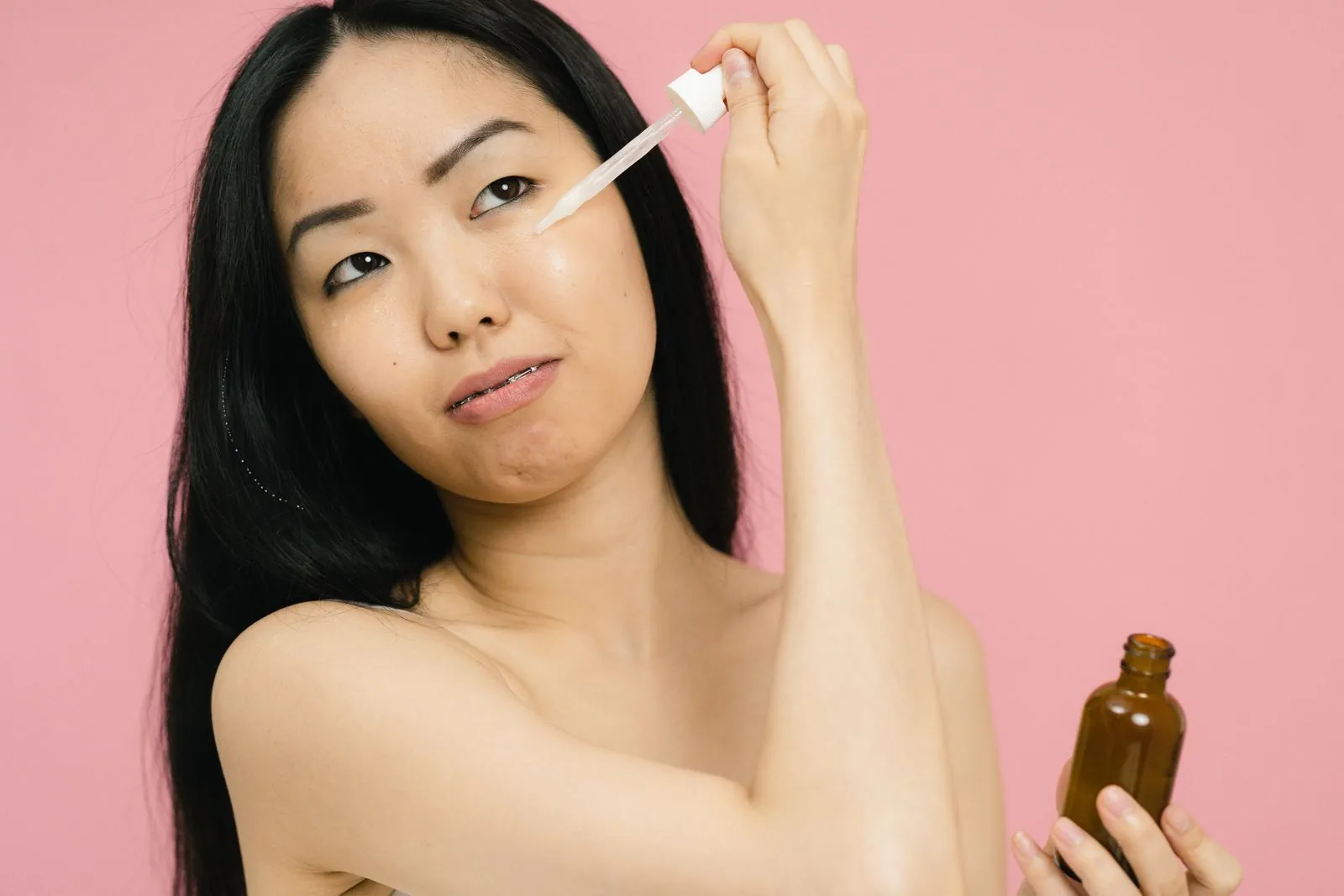
Timing matters more than price. The AAD says to moisturize while skin is still damp, because “the moisturizer is more effective because it traps water in the skin and keeps it from evaporating” (AAD). So the free trick is doing it within a minute of washing. I used to towel off, check three apps, answer a text, and then moisturize a face as dry as a cracker. [Shows self out.]
Barrier lipids keep it there. Ceramides are the fats that hold the skin’s outer layer together, and moisturizers add them to support barrier function (Meckfessel and Brandt 2014). A barrier that leaks water will never look glassy, whatever you layer on top, which is why our guide to repairing your skin barrier is the unglamorous first step. It’s the foundation. Nobody posts a foundation. (The building kind.)
What does a glass skin routine look like, step by step?
A simple glass skin routine is four steps each morning and night. Morning: gentle cleanser, hydrating serum, moisturizer, then broad-spectrum SPF 30 or higher. Night: cleanser, a chemical exfoliant a few nights a week, the same serum, then moisturizer. Essences, toners and sheet masks are optional extras with no trials behind the glass look.
Exfoliate gently, and not every night. A chemical exfoliant smooths the surface so light bounces off more evenly, and our AHA vs BHA guide covers which acid suits which skin. The AAD’s warning is blunter than any brand’s.
“While some people believe that this improves the appearance of their skin, it’s not for everyone. If not done properly, it could do more harm than good.”
American Academy of Dermatology
The AAD also warns against over-exfoliating, which leaves skin red and irritated, and says people with darker skin tones should avoid strong chemical or mechanical exfoliation because it can leave dark spots (AAD). Red and irritated is the opposite of glass. I once exfoliated three nights in a row and spent the weekend looking like a warning label. Some people add dermaplaning for a smoother surface, and our guide to dermaplaning at home covers when that’s a good idea. If bumps are the real problem, our skin texture guide sorts out which kind you have.
Sunscreen after acids isn’t optional. The FDA asks makers of alpha hydroxy acid products to warn users: “Use a sunscreen, wear protective clothing, and limit sun exposure while using this product and for a week afterwards” (FDA). A week afterwards. The acid leaves, but it leaves a note.
Essences, toners and sheet masks are the fun part. Vogue’s glass skin routine runs double cleanse, exfoliator, toner and essence, serum, moisturizer and sunscreen, with three to six products per step (Vogue). They can feel lovely, and a sheet mask is a great excuse to lie down. But we found no trials showing they add a glass finish beyond what a serum and moisturizer do, so treat them as practitioner consensus and pleasure, not proof. I own four sheet masks. I’ve used one. The other three are emotionally supporting a drawer.

Which glass skin products actually matter?
The glass skin products with the best evidence are boring: a humectant serum, a moisturizer with glycerin or ceramides, and a broad-spectrum sunscreen of SPF 30 or higher. Niacinamide is a reasonable extra. Essences, sheet masks and 10-step kits feel lovely, but we found no trials testing them for the glass look, so spend on the basics first.
Sunscreen is the one with a 4.5-year trial. In Nambour, Australia, 903 adults were split into daily sunscreen users and people who used it when they felt like it, and after 4.5 years the daily group had 24% less skin aging (Hughes 2013).
“The daily sunscreen group showed no detectable increase in skin aging after 4.5 years.”
Hughes and colleagues, Annals of Internal Medicine, 2013
No detectable increase. In 4.5 years, I have detectably increased my number of phone chargers, and my tolerance for reality TV. The trial graded aging by the texture of the skin’s surface, and a rough surface is exactly what scatters light the wrong way, so sunscreen is secretly the most glass-skin product you own. It just has terrible marketing.
Niacinamide is the reasonable extra. In a 12-week split-face trial, 50 women put 5% niacinamide on one side of the face and a plain cream on the other, and the niacinamide side showed fewer fine lines, fewer spots, less red blotchiness, less sallowness and better elasticity (Bissett 2005). That’s one small trial, so it’s promising, not settled. For slow texture change, the AAD also says a product “with retinol or retinyl palmitate may help” make pores look smaller (AAD), and our retinal vs retinol guide explains which to try. That’s two actives. Not twelve. My shelf heard that and went quiet.
Who should skip the glass skin trend?
If your skin is oily or acne-prone, skip the heavy-layering version of glass skin. Stacking rich creams and oils can clog pores, and the AAD advises people treating acne to avoid astringents, toners and exfoliants that dry and irritate. People with darker skin tones should avoid strong exfoliation, which can leave dark spots.
The classic glass skin advice is to layer, and then layer again. Christine Hall, MD, a London aesthetics doctor, told Vogue the routine “centers around maximizing hydration of the skin” with product after product, and she said it applies “no matter what your skin-type is” (Vogue). The AAD sees oily skin differently: “For some people, too much moisturizer can clog pores and lead to acne” (AAD). Its advice for oily skin is a light gel, or sometimes no moisturizer at all. Two experts, two answers, and me in the middle holding a tub of night cream like a hostage.
“It’s like a huge revelation that your nose probably never needs moisturizer.”
Rebecca Kazin, MD, board-certified dermatologist, American Academy of Dermatology
That’s for combination skin, where the AAD suggests treating your face like two faces: moisturize the dry parts and skip the oily ones (AAD). If you’re treating breakouts, the AAD’s acne tips say to “Avoid products that can irritate your skin, including astringents, toners, and exfoliants” (AAD). For you, glass skin is a smooth, calm, non-comedogenic routine with a light gel, not a seven-layer dip. (I have made a seven-layer dip. I have not made it for my face. Yet.)
Are glass skin injections worth it?
In-clinic glass skin treatments are often skin boosters: tiny injections of hyaluronic acid placed just under the surface. One brand, Skinvive, was FDA-approved in May 2023 to improve cheek smoothness in adults over 21, with results lasting through six months. It needs a trained injector, and most trial patients had short-lived injection-site side effects.
Allergan Aesthetics’ announcement says the gel improves skin quality “by smoothing the skin and increasing hydration”, and that 83% of trial patients (103 of 124) were satisfied with how healthy their facial skin looked at six months, up from 38% before treatment (AbbVie). Those are the maker’s own trial numbers, not an independent review. The same release lists redness, lumps or bumps, swelling, bruising, tenderness and itching at the injection sites, usually mild.
Clinic glass skin menus vary. One Connecticut plastic surgery practice describes its version as a “customized combination of injectables placed just beneath the surface” (Dr. Ellen Mahony), so ask exactly what’s in the syringe and whether it’s FDA-approved for that use. This is a medical procedure, so book a board-certified dermatologist or plastic surgeon, not a pop-up. [Takes off the comedy wig for this paragraph. Puts it back on after.]
How long does it take to get glass skin?
Hydration usually shows first, often within days of a steady serum and moisturizer routine, though no trial we found timed it. Texture and tone changes take weeks: the hyaluronic acid trial ran 60 days and the niacinamide trial ran 12 weeks. Sunscreen’s payoff was measured over 4.5 years, so glass skin is a long game.
Acure’s glass skin guide makes the same point without the studies: “Glow comes from consistency, not complexity” (Acure). Jane Yoo, MD, adds that “using too many products can overwhelm your skin, leading to irritation and breakouts” (Jane Yoo, MD). So the fastest route is the shortest routine you’ll actually repeat. Mine is five products. It was going to be eleven. My bathroom counter filed a formal complaint.
As for the donut, it’s still taped to the mirror, but I wrote a new caption under it in marker: HYDRATED, NOT GLASS. It’s a much kinder goal, and honestly, the donut was never going to wear sunscreen. [Pats the donut. Turns off the flashlight. Leaves the pores exactly where they are.]
Frequently asked questions
Is glass skin a Korean trend?
Yes. Glass skin comes from Korean beauty culture, which focuses on hydration and skin barrier care. The term went viral internationally in 2017.
Can you get glass skin with oily or acne-prone skin?
You can get healthier, smoother skin, but skip heavy layering. Use a gentle cleanser, a light gel moisturizer, non-comedogenic products and sunscreen, and see a dermatologist for acne treatment.
Does glass skin mean having no pores?
No. Everyone has pores, and no product removes them. Gentle cleansing, non-comedogenic products, sunscreen and retinol can make them less noticeable.
What’s the difference between glass skin and dewy skin?
Dewy usually describes a fresh, slightly moist finish, often from makeup or moisturizer. Glass skin describes the skin itself: smooth, even and hydrated enough to reflect light with little or no makeup.
Is hyaluronic acid enough for glass skin?
Not on its own. Hyaluronic acid adds water to the skin’s outer layer, but it works best under a moisturizer that keeps the water in, with daily sunscreen on top.
Do you need a 10-step routine for glass skin?
No. A four-step routine of cleanser, serum, moisturizer and sunscreen covers the steps with the best evidence. Too many products can irritate skin.
Your next step
Start with the smallest version: a gentle cleanser, a hyaluronic acid or glycerin serum on damp skin, a moisturizer that suits your skin type, and SPF 30 or higher every morning. Give it about eight weeks, the length of the hyaluronic acid trial, before you add anything else. If your skin stings or feels tight, fix your barrier first.

Written by the Trusted Skincare Editorial Team
We research at-home beauty devices and skin treatments and link every claim to a published study, a regulator or a named expert. Last updated Tuesday 29 September 2026.
Sources
- Refinery29: Why glass skin is the latest Korean beauty obsession (2017)
- Ikeda et al. 2020, facial radiance and attractiveness (International Journal of Cosmetic Science)
- Pavicic et al. 2011, topical hyaluronic acid of different molecular weights (Journal of Drugs in Dermatology)
- Fluhr et al. 2008, glycerol and the skin (British Journal of Dermatology)
- Meckfessel and Brandt 2014, ceramides in skin and skincare (Journal of the American Academy of Dermatology)
- Bissett et al. 2005, topical niacinamide and aging facial skin (Dermatologic Surgery)
- Hughes et al. 2013, sunscreen and prevention of skin aging (Annals of Internal Medicine)
- FDA: Alpha hydroxy acids
- American Academy of Dermatology: What can treat large facial pores?
- American Academy of Dermatology: How to safely exfoliate at home
- American Academy of Dermatology: How to pick the right moisturizer for your skin
- AbbVie: Skinvive by Juvederm receives FDA approval (2023)