

On this page
- Bunny lines vs frown lines vs crow’s feet at a glance
- What are bunny lines?
- The mirror test: is it bunny lines or frown lines?
- Why do bunny lines show up after frown-line Botox?
- Does Botox work for bunny lines, and how many units?
- What does bunny lines Botox gone wrong look like?
- How much does Botox for bunny lines cost?
- What helps bunny lines that stay at rest?
- Is there a needle-free at-home option for the skin side?
- Your next step
Quick answer: Bunny lines are the diagonal creases on the sides of your nose when you scrunch, smile or squint. They come from the nasalis muscle, so they are dynamic lines, and small doses of botulinum toxin, about 2 to 5 units per side, are the standard treatment, lasting 3 to 4 months. Once they stay at rest, sunscreen, a retinoid and skin treatments help.
We read 18 studies and sources, from a 2013 sunscreen trial to a 2026 anatomy paper, so every claim below links to where it came from. (I also made the face at the coffee counter this morning, when oat milk turned out to be extra. Full scrunch. Lines everywhere. The barista saw.)
Bunny lines vs frown lines vs crow’s feet at a glance
| Bunny lines | Frown lines (the 11s) | Crow’s feet | |
|---|---|---|---|
| Where | Diagonal creases on the upper sides of the nose, near the bridge | Vertical lines between the eyebrows | Fan of lines at the outer corners of the eyes |
| Muscle behind them | The nasalis, with help from its neighbors | Corrugator and procerus | Orbicularis oculi |
| Show up when you | Scrunch, squint, sniff or laugh | Frown or concentrate | Smile or squint |
| FDA-approved Botox use? | No, off-label | Yes | Yes |
| Standard treatment | Small botulinum toxin doses | Botulinum toxin | Botulinum toxin |
| Once they stay at rest | Sunscreen, retinoid, fillers, resurfacing | Same | Same |
Sources: Yi and Kim 2026, American Academy of Dermatology on botulinum toxin, Cleveland Clinic on wrinkles, our frown lines guide and crow’s feet guide.
What are bunny lines?
Bunny lines are the small diagonal wrinkles that appear on the upper sides of your nose, near the bridge, when you scrunch, squint, laugh or sniff. They are dynamic wrinkles, made by the transverse part of the nasalis muscle pulling the thin skin there into folds. With years of repetition, sun and thinning skin, they can stay visible at rest.
“Bunny lines are fine, oblique wrinkles that appear on the upper lateral nasal bridge when smiling or squinting.”
Kyu-Ho Yi and Soo-Bin Kim, Journal of Cosmetic Dermatology 2026
The name comes from the nose-twitch a rabbit does, which is the cutest thing anyone has ever said about a wrinkle. Mine do not look like a rabbit. Mine look like a person who just learned the oat milk surcharge. The same paper says the creases “result from contraction of the transverse part of the nasalis muscle, sometimes assisted by the levator labii superioris alaeque nasi” (Yi and Kim 2026), and yes, I googled how to say that second muscle. [Says it. Says it again, slower. Gives up.]
Here’s the part the clinic pages skip. A 2025 study dissected 39 cadavers and scanned 13 volunteers mid-scrunch, and found the lines sit over a muscle-free patch they named the bunny triangle, so “conventional BoNT injection into bunny line wrinkles is likely to target connective tissue rather than a muscle, potentially producing suboptimal results” (Ahn et al., Clinical Anatomy). The crease is a tablecloth, and four muscles are tugging the corners. I have hosted that dinner. Nobody won.

The mirror test: is it bunny lines or frown lines?
Scrunch your nose as if you smelled something bad and hold it. The diagonal creases running from the inner corners of your eyes down the sides of your nose are bunny lines. Now relax and frown hard instead. The vertical lines between your brows are frown lines. Smile wide: the fans at the outer eye corners are crow’s feet. Each has its own muscle and its own injection map.
The oat milk face is, conveniently, the exact test. [Makes it. Holds it. Loses feeling in one nostril.] Diagonal on the nose means this article. Vertical between the brows means our frown lines guide, which lives next door and has better lighting. Horizontal lines across the forehead are a third thing again, covered in our forehead wrinkles guide, because apparently my face is a filing cabinet.
Why do bunny lines show up after frown-line Botox?
Because relaxing the frown muscles between the brows shifts the work to their neighbors. When the corrugator and procerus go quiet, the nasalis takes over the scrunch, so faint nose lines become obvious ones. Injectors call it compensation or recruitment. The usual fix is a small dose in the nasalis at the next visit, not more between the brows.
“Too much Botox in the area between the eyebrows can actually cause bunny lines. By paralyzing the muscles of the brow, other muscles around the nose work to compensate during facial expression.”
Timothy McGee, MD, board-certified plastic surgeon, Westlake Dermatology
So the face is a group project, and when one member stops showing up, the nasalis does everyone’s slides. (I have been both members. I am not proud of either.) The honest label: this is practitioner consensus, repeated by nearly every injector we read, and we found no controlled trial that counted how often it happens or in whom.
It is also temporary. Mulberry House Clinic in the UK says it straight: “Bunny lines caused by Botox will gradually fade away as the effects of the injections wear off”, and puts that at 3 to 4 months (Mulberry House Clinic).
Harley Street Skin Clinic adds that some people have a nasalis that is “overactive even at rest”, so a few of us arrived pre-scrunched (Harley Street Skin Clinic). [Raises hand. Lowers it. The nose stays raised.]
Does Botox work for bunny lines, and how many units?
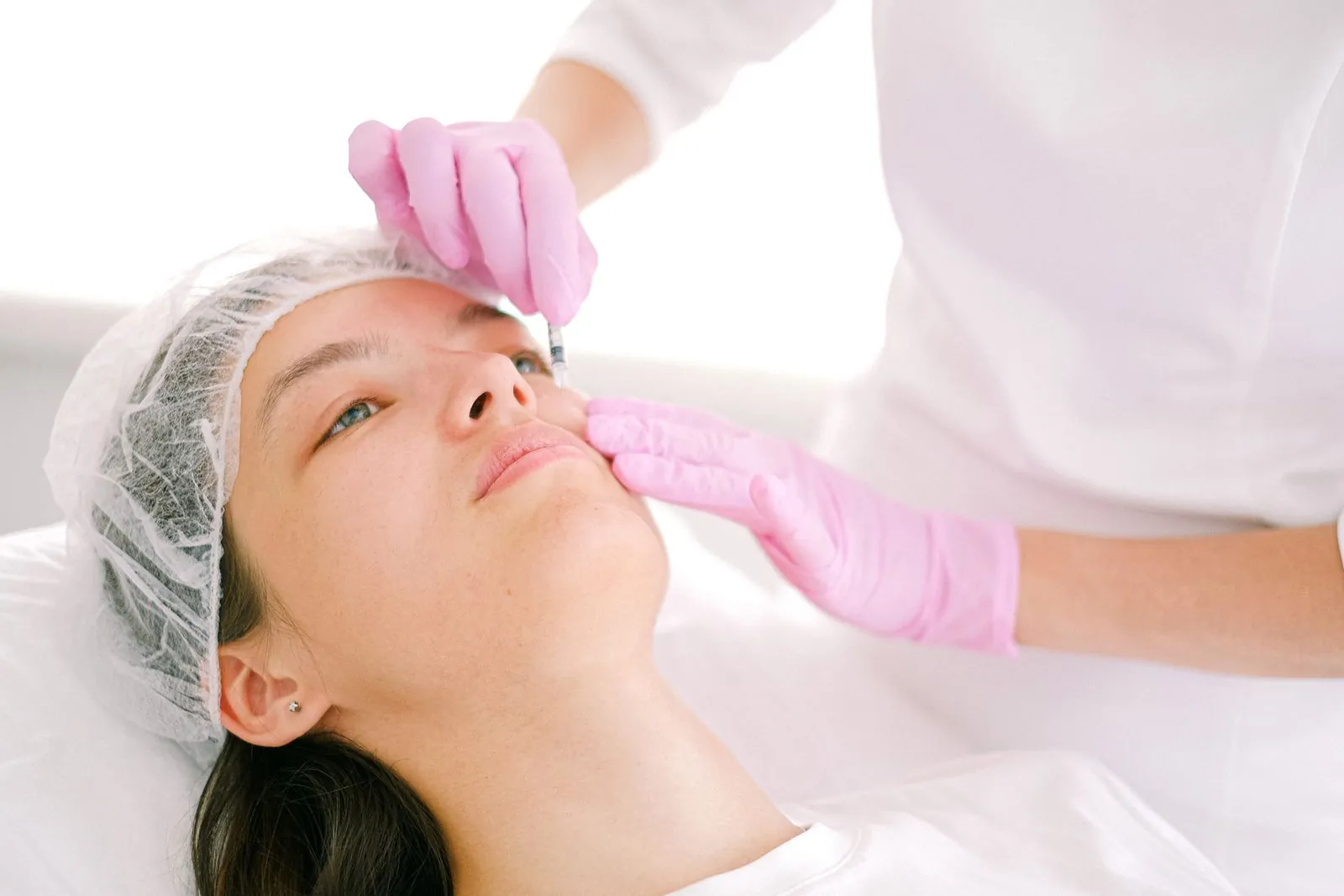
Yes. Botulinum toxin is the standard treatment for bunny lines and the one with the strongest evidence, because it relaxes the muscle that makes them. Typical doses are small, about 2 to 5 units of Botox per side, or 10 to 20 units of Dysport in total, with softening in 3 to 7 days and results that last about 3 to 4 months.
In the United States this is an off-label use. The American Academy of Dermatology lists the FDA-approved cosmetic uses as frown lines between the eyebrows and crow’s feet (AAD), and the nose is not on the list. Off-label is legal and routine, but it means the dose is injector convention, not a number on a label. Which is why every clinic quotes a slightly different one, like a group of friends remembering the same night out.
“In my experience, two small units per side yield great results, with a natural look lasting 3-4 months.”
Dr Mike Tee, Harley Street Skin Clinic
A San Diego clinic lands a touch higher: “Effective treatment of bunny lines usually takes approximately eight units of Botox, with four units on each side of the nose” (SDBotox). For Dysport, a 2017 practice review puts the total at 10 to 20 units, given as “a single midline injection high on the nasal dorsum or 2 injections on the lateral aspect of the nasal wall” (Kassir et al. 2017). Eight units is not much. My coffee order has more components.
The newer anatomy changes the where, not the how much. Yi and Kim argue for 1 to 2 units per point along the border of the nasalis, placed shallow, about 1.5 to 2.0 mm deep, rather than straight into the crease (Yi and Kim 2026). Ask your injector to watch you scrunch before they mark anything. (You will have to do the face on purpose, in front of a professional, under a bright light. I believe in you.)
Here’s the timeline, which clinics agree on more than they agree on units:
- Day 3 to 7: softening starts. The AAD says most people see results within 3 to 7 days (AAD).
- Day 10 to 14: full effect. This is when a fair before-and-after photo is taken: scrunch hard, and the diagonals should be faint or gone while your nose still moves and your smile looks like your smile (Cleveland Clinic).
- Month 3 to 4: wearing off. “On average, the effects of Botox last about three to four months” (Cleveland Clinic).
The good before-and-after photos are boring, and boring is the goal.
What does bunny lines Botox gone wrong look like?
The most common problem is toxin reaching the muscles that lift the upper lip, which sit just below and deeper than the nasalis. That shows as a heavy or droopy upper lip, an uneven smile, or a nostril that sits lower than its partner. It is temporary and fades as the toxin wears off, usually within 3 to 4 months.
The 2017 review spells out the risk and the reason injectors stay high and shallow on the nose: “Excessive chemodenervation of these muscles may lead to upper lip ptosis” (Kassir et al. 2017). Yi and Kim add that large doses pushed into the crease itself can spread to nearby elevators and cause lip asymmetry, a dropped nostril rim or lower-eyelid weakness, which is their whole argument for small border injections (Yi and Kim 2026).
Cleveland Clinic lists the usual side effects as pain, swelling, bruising, headache and temporary drooping eyelids, mostly mild and gone in a day or two (Cleveland Clinic). Call your provider immediately for vision changes, trouble swallowing, shortness of breath, slurred speech, or weakness in an untreated area.
There is no antidote, so the plan is to wait it out and change the dose or placement next time. Tell your injector exactly what you noticed and when.
How much does Botox for bunny lines cost?
Bunny lines are one of the cheapest areas to treat because the dose is tiny. One San Diego clinic prices the treatment at $50 to $180, charging $14 per unit of Botox. For context, the American Society of Plastic Surgeons puts the average cost of a botulinum toxin treatment at $435, which usually covers larger areas. Expect to repeat it three or four times a year.
“On average, treatment costs range between $50 and $180.”
SDBotox, on Botox for bunny lines
That $435 figure is the ASPS’s own statistic for the whole category (American Society of Plastic Surgeons), so a nose-only visit should sit well under it, unless you add the brows and the crow’s feet, which is how every “just the nose” conversation ends. Prices move by city, injector and brand, and per-unit pricing can hide a minimum charge, so ask for the total before anyone opens a vial. I ask for the total before I open a menu. We all have our systems.
What helps bunny lines that stay at rest?
Once the creases show with a relaxed face, they are static lines: the skin has thinned and folded in the same spot for years, and relaxing the muscle alone will not iron them out. The evidence-backed basics are daily sunscreen and a retinoid. For the etched-in version, clinics add thin fillers, laser resurfacing or a localized peel.
The AAD puts the cause in one sentence: “If you repeatedly contract the same muscles for many years, these lines become permanent”, and it recommends sunglasses to cut the squinting that drives them (AAD). Sunglasses. For wrinkles. The one anti-aging product I already own and leave in the car.
“Skin aging from baseline to the end of the trial was 24% less in the daily sunscreen group than in the discretionary sunscreen group”
Hughes et al., Annals of Internal Medicine 2013, via Europe PMC
That was 903 adults over 4.5 years, and the daily group “showed no detectable increase in skin aging” (Hughes et al. 2013). For the lines already there, a 2025 meta-analysis of eight trials and 1,361 patients concluded that topical tretinoin “is a safe and effective treatment for fine and coarse facial wrinkles resulting from photodamage” (Huang and Lee 2025). Tretinoin needs a prescription in the US; our retinal vs retinol guide covers the over-the-counter versions, and our fine lines guide covers the static-line routine from the top. Both say weeks to months. Neither says by Friday. I checked twice.
For deeper grooves, Westlake Dermatology describes thin hyaluronic acid fillers such as Belotero, “specifically formulated to treat fine lines”, used to subtly smooth wrinkles around the nose (Westlake Dermatology). A 2024 case report from Brazil treated deep static nose lines with a small phenol-croton peel on the nose alone, noting that toxin “may not work to treat deep, static lines”, with redness that lasted 2 to 4 months (Nogueira et al. 2024). That is one patient, in one clinic, so file it under “exists”, not “proven”. Same drawer as my gym membership.
Lines from the mouth corners toward the chin are a different wrinkle with a different muscle; our marionette lines guide handles those. The nose stays here, scrunched, waiting for its oat milk.
Is there a needle-free at-home option for the skin side?
For the skin, not the muscle, and the distinction matters. Bunny lines are dynamic, so botulinum toxin remains the standard treatment with the strongest evidence, and nothing you use on the sofa relaxes the nasalis. An at-home radiofrequency device addresses texture and static lines in the skin over it, which is a smaller, slower job.
The independent evidence for that category is modest but real. In a 12-week randomized split-face trial, 32 women used an at-home RF device on one side of the face and an anti-aging cream on the other, and the device side “showed statistically significant improvements in wrinkles, skin radiance, color and thickness” (the 2022 split-face trial). That trial scored forehead, glabellar and crow’s feet wrinkles, not the nose, so treat it as evidence for the category, not for this exact crease.
If that lane interests you, the needle-free option we cover most is the VEAUTY Dot: 144 electrodes that sit on the surface of the skin and never pierce it, sold as a cosmetic device, rated 4.8 out of 5 from 1,163 reviews on its own store. Those are customer reviews, not a clinical trial, and results vary. It is the slow, steady upkeep for the skin side, and the muscle side still belongs to a good injector. (The barista still thinks I was reacting to the price. I was. Both things can be true.)
Frequently asked questions
What are bunny lines?
Bunny lines are the small diagonal wrinkles on the upper sides of the nose, near the bridge, that appear when you scrunch, squint or laugh. They are made by the nasalis muscle. Over time they can become visible even when your face is relaxed.
Why did I get bunny lines after Botox?
When the frown muscles between the brows are relaxed, nearby muscles, especially the nasalis, take over the expression and the nose lines show more. Injectors treat it with a small dose in the nasalis. It fades as the original treatment wears off, about 3 to 4 months.
How many units of Botox for bunny lines?
Clinics report about 2 to 5 units of Botox per side, 4 to 10 in total, or 10 to 20 units of Dysport. The use is off-label in the US, so the dose is your injector’s call based on how strongly your nose moves.
How long does bunny lines Botox last?
About 3 to 4 months. Softening starts in 3 to 7 days and the full effect shows at 10 to 14 days. Repeat treatments are needed to keep the result.
Does Botox for bunny lines hurt?
The needle is very fine and the dose is small, so most people describe a quick sting or pinch. Mild redness, swelling or a small bruise at the site can follow and usually settles within a day or two.
Can you get rid of bunny lines naturally?
You can slow them and soften the static version with daily sunscreen, sunglasses and a retinoid, which have trial evidence. Nothing applied to the skin relaxes the muscle, so the lines that appear on expression will still appear.
Your next step
Do the mirror test, then decide which line you are actually treating. If the diagonals only show when you scrunch, a small nasalis dose from an experienced injector is the proven route, and the cost is low. If they are there at rest, start daily sunscreen and a retinoid now, read our frown lines guide for the 11s next door, and ask a dermatologist about fillers or resurfacing for the etched-in version.

Written by the Trusted Skincare Editorial Team
We research at-home beauty devices and skin treatments and link every claim to a published study, a regulator or a named expert. Last updated Wednesday 7 October 2026.
Sources
- Yi and Kim 2026, Where Should We Inject Botulinum Toxin for the Bunny Lines? (Journal of Cosmetic Dermatology)
- Ahn et al. 2025, Anatomical etiology of bunny lines based on cadaveric dissection and ultrasonographic evaluation (Clinical Anatomy)
- Kassir et al. 2017, The Practical Use of AbobotulinumtoxinA in Aesthetics (Aesthetic Surgery Journal)
- American Academy of Dermatology: Botulinum toxin therapy overview
- American Academy of Dermatology: 11 ways to reduce premature skin aging
- Cleveland Clinic: Botox (botulinum toxin) injections
- Cleveland Clinic: Wrinkles
- Hughes et al. 2013, Sunscreen and prevention of skin aging: a randomized trial (Annals of Internal Medicine)
- Huang and Lee 2025, Tretinoin for photodamaged facial skin: systematic review and meta-analysis
- Nogueira et al. 2024, Static nose bunny lines treated with a super-localized phenol-croton peel (Journal of Cosmetic Dermatology)
- American Society of Plastic Surgeons: Botulinum toxin cost
- 2022 randomized split-face trial of an at-home radiofrequency device