
On this page
- Sun spots vs melasma vs freckles at a glance
- What are sun spots on your face?
- What causes sun spots on skin?
- Melasma vs sun spots: how do you tell them apart?
- Sun spot or skin cancer: when should you get a spot checked?
- How do I remove sun spots?
- Do sun spots on arms and body skin fade the same way?
- How long does it take to fade sun spots on your face?
- Your next step
Quick answer: Sun spots on face and body skin, also called age spots or solar lentigines, are small, flat, tan to dark brown marks caused by years of UV exposure. They are harmless and very common after 40. Daily SPF 30 stops new ones, retinoids and vitamin C fade them over months, and lasers or IPL clear them fastest.
We read 11 studies and sources, from a 1992 New England Journal of Medicine trial to a 2025 review of 41 clinical trials, so every claim below links to where it came from. (I also found three new spots on my left cheek, connected them with an eyebrow pencil, and named the constellation Gary. Gary and I are in a committed relationship now.)
Sun spots vs melasma vs freckles at a glance
| Sun spot | Melasma | Freckle | |
|---|---|---|---|
| What it is | A flat patch of clumped pigment from years of UV exposure | A pigment condition driven mostly by hormones | A small inherited pigment spot that darkens in the sun |
| Looks like | Small tan-to-brown spots with clear edges, in mixed sizes | Larger blotchy patches, usually mirrored on both sides of the face | Tiny light brown dots, often from childhood |
| Where | Face, backs of hands, forearms, shoulders, chest | Cheeks, forehead, chin, upper lip | Face and anywhere the sun hits |
| Fades without sun? | No, it stays | Sometimes, after pregnancy or stopping the pill | Yes, often fades in winter |
| First move | Daily SPF 30, then a fader | See a dermatologist, treatments differ | Nothing needed |
| Squeeze-the-budget option | Sunscreen plus one retinoid or vitamin C product | Sunscreen while you wait for the appointment | Sunscreen |
Sources: Mayo Clinic on age spots, AAD on melasma, Advanced Dermatology PC on sunspots, Cleveland Clinic on liver spots.
What are sun spots on your face?
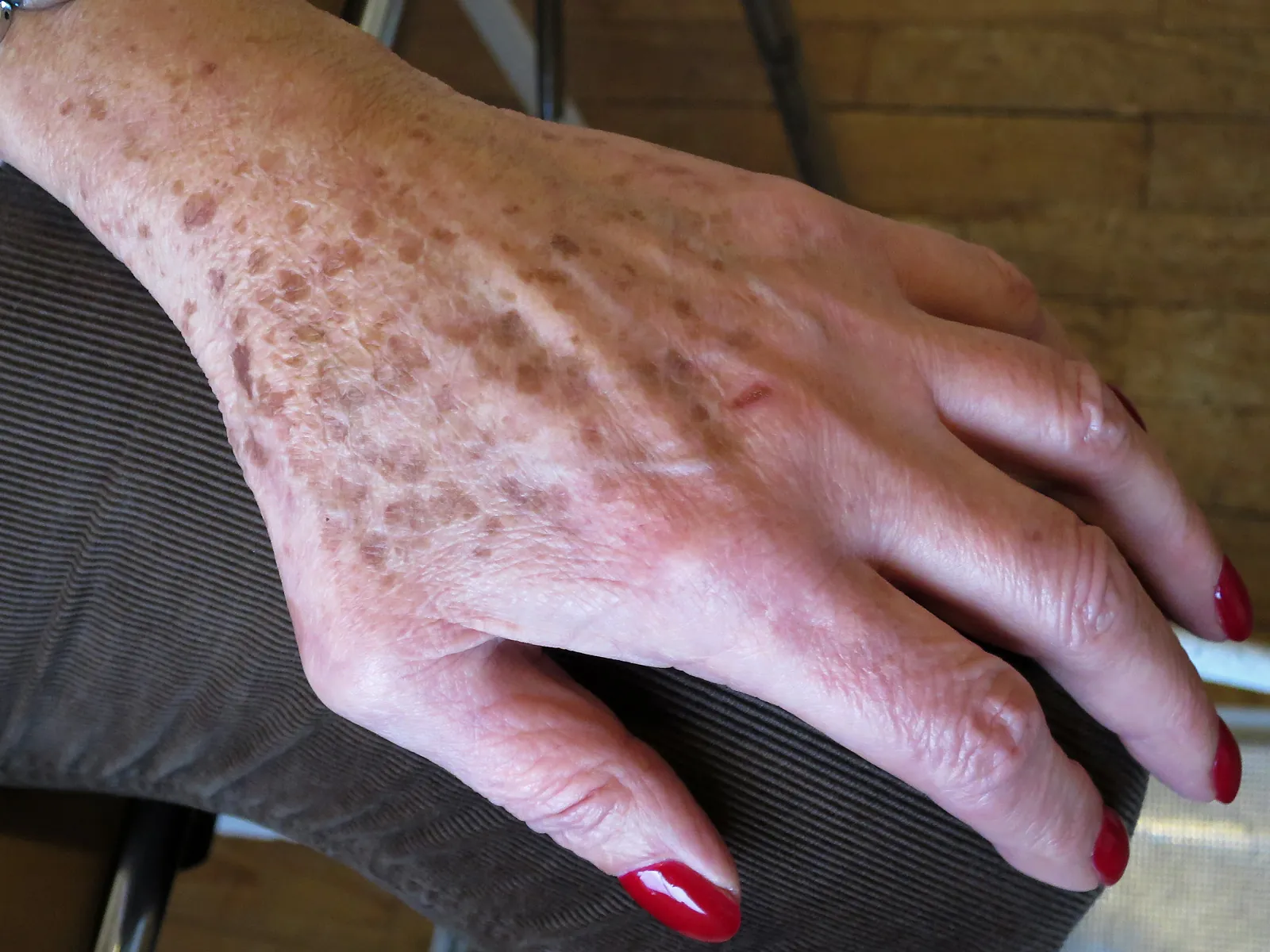
Sun spots are small, flat, tan to dark brown areas of extra pigment on skin that has seen years of sun. Dermatologists call them solar lentigines, and they also go by age spots and liver spots. They range from freckle-sized to about half an inch across, and they are harmless.
“Age spots are small, flat dark areas on the skin. They vary in size and usually appear on areas exposed to the sun, such as the face, hands, shoulders and arms.”
Mayo Clinic, Age spots overview
Every name they go by is doing its own little scam. The name age spots blames your birthday, when the sun did it. The name liver spots blames an innocent organ: Cleveland Clinic says “Although they are called liver spots, these skin patches have nothing to do with your liver except for having a similar color, which may be tan to dark brown” (Cleveland Clinic). The liver has been taking this slander since before I was born. [Pours one out for the liver.]
They are also spectacularly common. A 2025 systematic review notes they affect “more than 90% of individuals older than 50 years, particularly those with fair skin” (Mardani 2025). So if you have them, you are not falling apart, you are in the overwhelming majority. I would say join the club, but you already paid dues every summer without knowing it.
One more thing worth hearing straight from Mayo Clinic, because it reframes the whole topic.
“True age spots don’t need treatment, but they are a sign the skin has received a lot of sun exposure and are an attempt by your skin to protect itself from more sun damage.”
Mayo Clinic, Age spots overview
What causes sun spots on skin?
UV light speeds up production of melanin, the pigment that gives skin its color. After years of sun exposure, that melanin can clump together or get made in overdrive in one small patch, and the patch shows up as a sun spot. Tanning beds cause the same damage, and fair skin and past sunburns raise the risk.
The part that got me: it is not last month’s beach day, it is the running total (Mayo Clinic). Every school sports day, every just-popping-out-for-a-minute that became three hours, every drive with one arm resting on the window. Your skin kept the ledger the entire time, like a tiny accountant who never takes vacation. [Looks at Gary. Gary looks back. We both know which summers did this.]
The sneaky detail is that spots can also keep arriving years after the sun exposure that ordered them, because the damage sits in the skin before it shows. Healthline puts the bottom line kindly: “Sunspots are harmless and noncancerous but can be treated for cosmetic purposes” (Healthline). Harmless, noncancerous, and still somehow the first thing I find in any mirror with ambitions. Rough texture often tags along with the spots too, since the same UV damage causes both, and our skin texture guide covers that half of the problem.
Melasma vs sun spots: how do you tell them apart?
Sun spots are small, defined spots scattered unevenly wherever sun has hit for years. Melasma shows up as larger, blotchy patches that usually appear symmetrically on both cheeks, the forehead or the upper lip, and it is driven mostly by hormones, such as pregnancy or birth control pills. The two need different treatment plans.
“Melasma is so common during pregnancy that it’s sometimes called the “mask of pregnancy.””
American Academy of Dermatology, Melasma overview
Symmetry is the biggest tell. The AAD says melasma “typically feels flat and appears on both sides of your face”, and can show as “tan, brown, grayish brown, or bluish gray patches and freckle-like spots” on “the cheeks, forehead, chin, and even above the upper lip” (AAD). Sun spots have no such manners. They land wherever the sun clocked you, one side, both sides, your hands, no pattern, like confetti thrown by someone who was not really trying.
Why it matters: melasma can get worse with some treatments that work fine on sun spots, and heat-based procedures are a riskier bet with it. That is a decision for a dermatologist, not a shopping cart. If your pattern looks like the right-hand face below, book the appointment first and spend money second, which is the only context where I have ever given that advice.
Sun spot or skin cancer: when should you get a spot checked?
Most sun spots are harmless, but an early melanoma can be mistaken for one. Get any new, changing or odd-looking spot checked by a dermatologist, and have your skin looked at once a year. True sun spots are flat, uniform in color within each spot, and do not itch, hurt or bleed.
This section stays serious, because the stakes are real. Dermatologists use the ABCDE checklist for melanoma, and these five lines are the AAD’s own wording (AAD, ABCDEs of melanoma):
- A is for Asymmetry. “One half of the spot is unlike the other half.”
- B is for Border. “The spot has an irregular, scalloped, or poorly defined border.”
- C is for Color. “The spot has varying colors from one area to the next, such as shades of tan, brown or black, or areas of white, red, or blue.”
- D is for Diameter. “While melanomas are usually greater than 6 millimeters, or about the size of a pencil eraser, when diagnosed, they can be smaller.”
- E is for Evolving. “The spot looks different from the rest or is changing in size, shape, or color.”
Mayo Clinic adds that a spot deserves a doctor’s eyes if it is black, growing, bleeding, has an irregular border or shows an unusual mix of colors (Mayo Clinic).
“If you notice any new spots on your skin, spots that are different from others, or spots that are changing, itching or bleeding, make an appointment to see a board-certified dermatologist”
American Academy of Dermatology, ABCDEs of melanoma
A dermatologist can usually tell by looking, and can do a quick biopsy if anything is uncertain (Cleveland Clinic). A clear answer takes one short appointment, and a yearly skin check catches anything early, when it is most treatable.
How do I remove sun spots?
Start with sunscreen every morning, since new UV exposure both creates spots and undoes fading. Then add one proven fader at night, a retinoid or vitamin C, and give it three to six months. For faster results, a dermatologist can clear spots with IPL, laser or cryotherapy in a handful of sessions.
“Effective treatment for dark spots and patches begins with sunscreen.”
American Academy of Dermatology, How to fade dark spots
Here is the honest scorecard, with actual trial numbers, which none of the top-ranking articles on this topic bothered to include. (I checked. It was a long evening. My tea went cold twice.)
| Option | What the evidence shows | Worth knowing |
|---|---|---|
| Sunscreen, SPF 30+ daily | Prevention, and the base every study builds on | Reapply every 2 hours outdoors. Spots come back without it |
| Tretinoin 0.1% (prescription) | 83% of patients saw facial spots lighten over 10 months vs 29% on a plain cream (58 people) | Lightening started by month 1. Faded spots stayed gone 6+ months after stopping |
| Vitamin C serum | Blocks tyrosinase, the enzyme that makes melanin. Little direct sun spot trial data | Gentle, layers well with sunscreen. Expect modest, slow change |
| IPL (light pulses) | 74.6% to 90% success across trials | Usually 3 to 5 sessions. Spots darken, then flake off |
| Laser (picosecond, Q-switched) | 67.9% to 93% success for picosecond; often 1 or 2 sessions needed | The fastest route. Days to weeks of healing per session |
| Cryotherapy (freezing) | 37% to 71.4% success | Best for one or two isolated spots. Can scar or leave light patches |
| Chemical peels (TCA) | 12% to 46% success | Weakest of the pro options in the review |
Sources: Rafal 1992, NEJM, Mardani 2025 systematic review, Telang 2013 on vitamin C, Advanced Dermatology PC, Healthline.
On the at-home rungs: the tretinoin trial above is the classic, and the over-the-counter retinoid family works the same pathway at gentler strengths, which is practitioner consensus rather than something trialed head-to-head on sun spots. Our retinal vs retinol guide sorts out which strength to actually buy, so you do not stand in the aisle doing the squint I do. Vitamin C earns its slot by blocking the melanin assembly line (Telang 2013), and glycolic acid can help the surface pigment turn over faster. That is four products maximum, and I say that as someone whose shelf currently holds eleven.
One warning, dead straight. Hydroquinone, the old gold-standard lightener, is prescription-only in the US: the FDA ordered over-the-counter versions off the market in September 2020 and warns about side effects “including ochronosis which may be permanent”, a blue-black discoloration (FDA). The AAD also warns that some imported lightening creams have been found with unlisted steroids or mercury (AAD). If a cream promises bleaching-level results without a prescription, that is not a bargain, that is a red flag with free shipping.
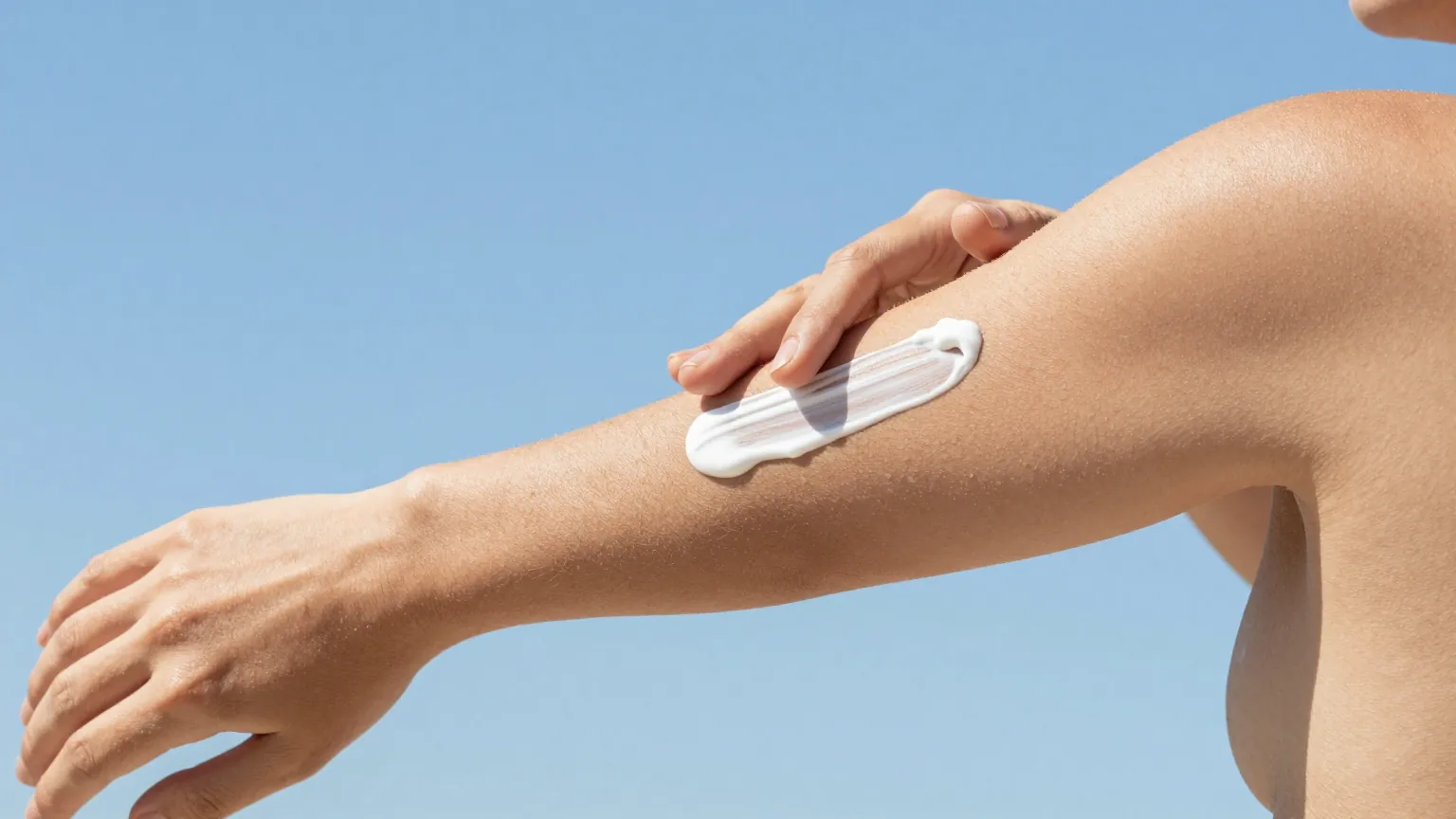
And yes, sunscreen is genuinely the first rung, not the boring disclaimer before the good stuff. New spots form and old ones re-darken with every unprotected hour, which is why every professional treatment comes with the same homework (Advanced Dermatology PC). I now apply SPF 30 to Gary each morning personally, dot by dot, like I am sunscreening a very small celebrity. He has never once thanked me. Sunglasses while you are at it, because the squinting that comes from skipping them is half the story in our crow’s feet guide.
Do sun spots on arms and body skin fade the same way?
Yes, the same approach works on sun spots on arms, hands, shoulders and chest: daily sunscreen plus a retinoid or vitamin C, with professional options for stubborn spots. Body skin renews more slowly than facial skin, so expect fading to take longer there, and keep expectations modest on the hands.
The best evidence covers this directly. In the 1992 trial, patients treated spots on the face and arms, and the authors reported “The results for lesions of the upper extremities were similar” (Rafal 1992). Translation: your forearms are invited to the party. They have simply been standing closest to the window this whole time.
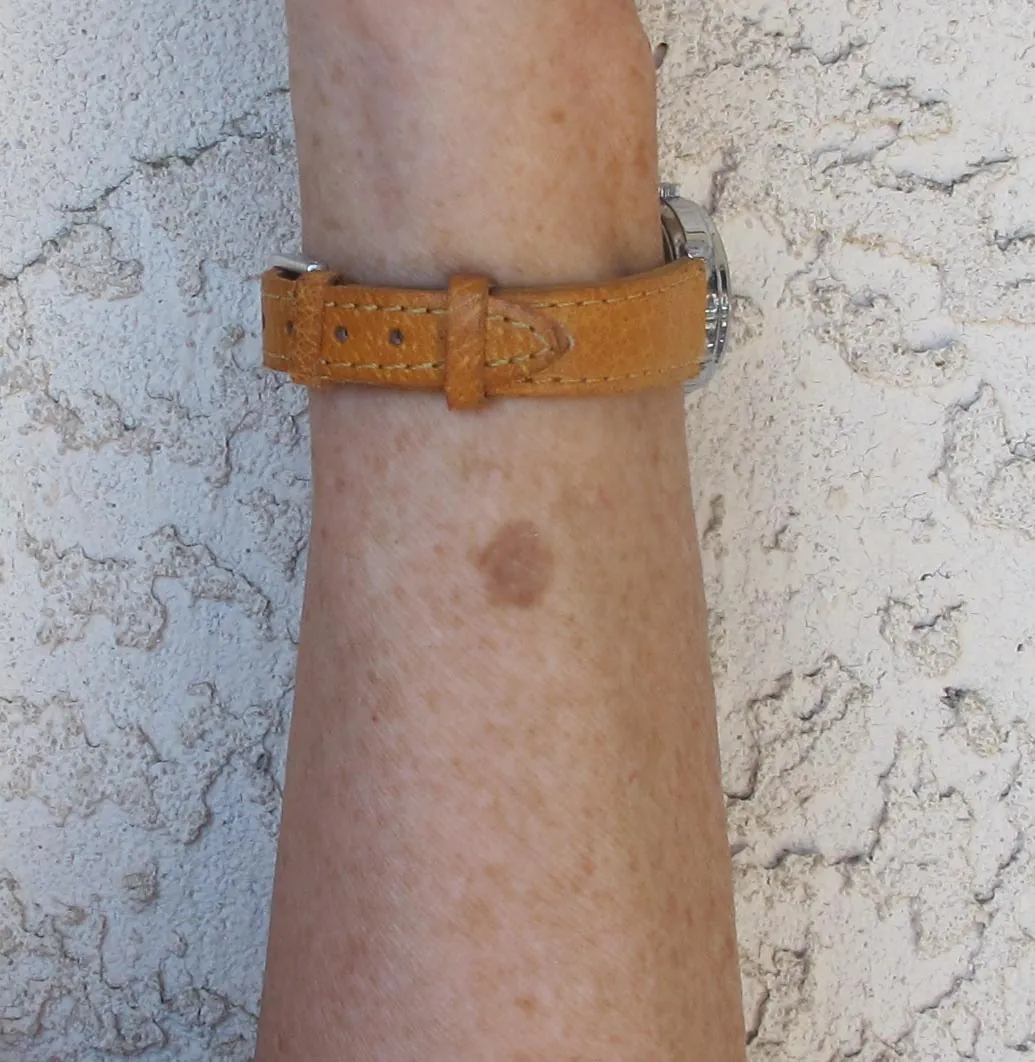
Hands and forearms collect the most spots for a reason nobody thinks about: they get sun on every drive, every walk, every coffee carried back to the office, and nobody sunscreens them twice a day. Mine have logged more unprotected sun hours than my face and my car dashboard combined. The fix is unglamorous: rub the leftover morning sunscreen down your hands and arms, every day, forever. [Writes it on a sticky note. Immediately loses the sticky note. Writes it here instead, where I cannot lose it.]
How long does it take to fade sun spots on your face?
Plan in months. With sunscreen plus a nightly fader, the AAD’s guidance for dark spots is that a spot a few shades darker than your skin usually fades in 6 to 12 months, and the tretinoin trial saw real lightening begin around month 1. Professional treatments work in weeks: IPL in about 3 to 5 sessions, laser often in 1 or 2.
The AAD’s timeline for dark spots and patches is the most useful sentence in this whole topic: “A spot that is a few shades darker than your natural skin color will usually fade within 6 to 12 months” (AAD). Deep pigment can take years, which is the skincare equivalent of a sourdough starter. You did not want a hobby with a timeline. You have one anyway.
If you want it faster, the 2025 review of 41 trials is blunt: “Laser therapy appears more effective than other modalities, with an acceptable safety profile” (Mardani 2025), and Cleveland Clinic notes many people need only one or two laser sessions (Cleveland Clinic). Speed costs money, patience costs months, and both beat the third option, which is squinting at your cheek every morning collecting data. I ran that third study for two years. No results, terrible funding.
Month three of the slow route is where I am now, and Gary is noticeably dimmer, which the eyebrow-pencil constellation map confirms. [Updates the map solemnly. One star, fading from the sky.] I started this article planning his farewell party, and instead I will say the honest thing: the ledger closes slowly, but with sunscreen on top, it closes.
Frequently asked questions
Are sun spots the same as age spots and liver spots?
Yes. Sun spots, age spots, liver spots and solar lentigines are all names for the same flat, harmless patches of sun-induced pigment. The medical name is solar lentigo.
Do sun spots go away on their own?
No. Unlike freckles, which fade without sun exposure, sun spots stay unless they are treated. Sunscreen stops new ones, and retinoids, vitamin C or professional treatments fade existing ones.
Can a sun spot turn into skin cancer?
True sun spots are benign and do not turn into skin cancer, but having many means your skin has had heavy UV exposure, which raises skin cancer risk overall. An early melanoma can also look like a sun spot, so any spot that changes, itches or bleeds needs a dermatologist.
What is the best over-the-counter product for sun spots?
A nightly retinoid has the strongest related trial evidence, with vitamin C, azelaic acid, kojic acid and glycolic acid as the AAD’s other suggested ingredients. Pair any of them with daily SPF 30 or nothing will hold.
Do sun spots come back after laser or IPL?
They can. New spots form and treated areas can re-darken with unprotected UV exposure, so daily sunscreen, hats and avoiding peak sun are what protect the result you paid for.
Is hydroquinone still available for sun spots?
Only by prescription in the US. The FDA removed over-the-counter hydroquinone from the market in 2020 and warns against unapproved lightening creams, some of which contain harmful ingredients.
Your next step
Put a broad-spectrum SPF 30 next to your toothbrush and use it every morning, starting tomorrow. Then pick one nightly fader and commit to it for three months before judging, and our retinal vs retinol guide will help you choose the right strength. If any spot is new, changing, itching or bleeding, book a dermatologist first.

Written by the Trusted Skincare Editorial Team
We research at-home beauty devices and skin treatments and link every claim to a published study, a regulator or a named expert. Last updated Thursday 1 October 2026.
Sources
- Mayo Clinic: Age spots (liver spots), symptoms and causes
- Healthline: How to remove sunspots on your face
- Advanced Dermatology PC: Sunspots, causes, prevention and treatment
- Cleveland Clinic: Liver spots
- American Academy of Dermatology: How to fade dark spots
- American Academy of Dermatology: Melasma overview
- American Academy of Dermatology: ABCDEs of melanoma
- Rafal et al. 1992, topical tretinoin for liver spots (New England Journal of Medicine)
- Mardani et al. 2025, treatment of solar lentigines, systematic review of 41 trials (Journal of Cosmetic Dermatology)
- Telang 2013, vitamin C in dermatology (Indian Dermatology Online Journal)
- FDA: OTC skin lightening products containing hydroquinone