
On this page
- Blackheads vs whiteheads vs sebaceous filaments at a glance
- What are blackheads?
- What causes blackheads?
- Is it a blackhead or a sebaceous filament?
- How do you get rid of blackheads?
- Does salicylic acid work on blackheads?
- Do pore strips work on blackheads?
- Should you squeeze blackheads, and what if you already did?
- How do you get rid of deep blackheads, and why do they come back?
- Blackheads on the nose, cheeks, ears and back
- How long does it take to get rid of blackheads?
- Your next step
Quick answer: To get rid of blackheads, use one pore-clearing ingredient every day for 8 to 12 weeks: adapalene 0.1% gel (sold without a prescription in the US), a 2% salicylic acid leave-on, or azelaic acid. Add a gentle cleanser and non-comedogenic products. Do not squeeze them. Deep or stubborn blackheads can be extracted by a dermatologist, but new ones keep forming unless the daily ingredient stays.
We read 21 studies and sources on how to get rid of blackheads, from a 1989 azelaic acid trial to the American Academy of Dermatology’s guide to squeezing, so every claim below links to where it came from. (My bathroom has one overhead bulb that I have named the Interrogation Lamp. Under it, every pore on my nose looks like a crime scene. We’ll get to that.)
Blackheads vs whiteheads vs sebaceous filaments at a glance
| Blackhead | Whitehead | Sebaceous filament | |
|---|---|---|---|
| What it is | A pore plugged with oil and dead skin, open at the top | The same plug, sealed under a thin layer of skin | The normal oil-carrying lining of a pore, not a plug |
| Color | Black or dark brown dot | White or skin-colored bump | Gray, tan or yellowish, flat |
| Raised? | Slightly, with a visible dark center | Yes, a small bump | No, sits flat in the pore |
| Where | Nose, chin, cheeks, back, chest, ears | Forehead, chin, cheeks | Nose, forehead, chin, cheeks |
| Comes back? | Yes, unless a daily ingredient is used | Yes, same | Always. Refills in about 30 days |
| What clears it | Adapalene, salicylic acid, benzoyl peroxide, azelaic acid, extraction | Same, minus extraction at home | Nothing removes them for good. Salicylic acid and retinoids shrink them |
Sources: Cleveland Clinic on blackheads, Cleveland Clinic on sebaceous filaments, DermNet on comedonal acne, AAD on types of acne.
What are blackheads?
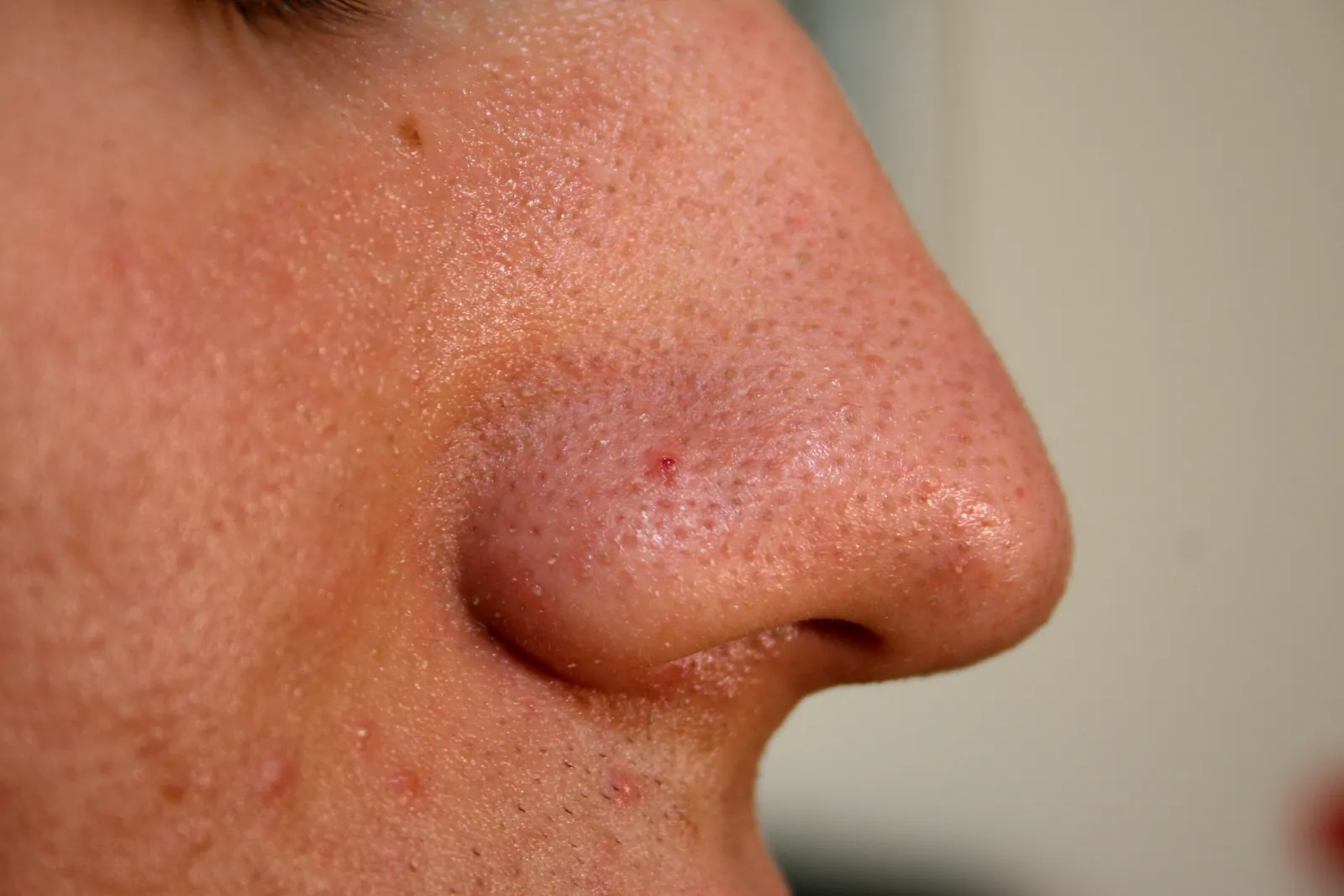
Blackheads are pores plugged with oil (sebum) and dead skin cells, where the top of the plug stays open to the air. The medical name is open comedones. They are the mildest form of acne, do not hurt, and show up most on the nose, chin and cheeks, plus the back, chest and sometimes the ears.
“If the pore fills with debris but stays open, you’ll see a blackhead. The black dots aren’t dirt, so resist scrubbing. It will only worsen your acne.”
American Academy of Dermatology, How to treat different types of acne
So that’s the first myth gone, and I’d like a moment of silence for the loofah I bought in 2019. DermNet says open comedones are “black because of surface pigment”, melanin, “rather than dirt” (DermNet).
Cleveland Clinic adds that “an irregular light reflection off the clogged follicle” makes the dot look darker than it is (Cleveland Clinic). In plain words: the plug contains skin pigment, and once the top meets air it oxidizes and darkens, the way a cut apple goes brown on the counter. (My apple does that in four minutes. My nose took fifteen years. We’re both overachievers.)
The whitehead cousin is the same plug with the lid on. If the pore closes over, nothing oxidizes and you get a small white bump, which has its own guide here: closed comedones, what they are and how to clear them. Same traffic jam, different roof. And they’re everywhere: Cleveland Clinic says “up to 10% to 20% of adults have blackheads too” (Cleveland Clinic), which I find comforting in a way my loofah never was.
What causes blackheads?
Blackheads form when a pore sheds too many sticky dead skin cells while the oil gland underneath makes extra oil, so the two pack into a plug. Hormones called androgens drive the oil, which is why blackheads peak in the teens and flare before periods. Heavy products, humidity, smoking and squeezing all make them more likely.
Cleveland Clinic lists four root causes: more sebum, abnormal keratin (the protein in dead skin cells), more androgen hormones, and more acne bacteria on the skin (Cleveland Clinic). Four causes, and not one of them is washing too softly. [Puts loofah in the bin. Takes it out. Puts it in the recycling, which feels kinder.]
DermNet’s trigger list is where my habits get called out by name (DermNet):
- Skin that stays too wet: before a period, under heavy moisturizers, or in humid weather.
- Certain ingredients: oily pomades, isopropyl myristate, propylene glycol and some cosmetic dyes.
- Damage to the pore: squeezing, abrasive washing, peels or laser treatments.
- Smoking: comedonal acne is more common in smokers.
- Diet: milk and high-sugar foods “may contribute”, which is a maybe, not a verdict.
Notice that squeezing is on the causes list: the thing you do to get rid of a blackhead helps make the next one. I’d call it ironic, but the Interrogation Lamp doesn’t do irony. It just hums.
Is it a blackhead or a sebaceous filament?
Most of the tiny dots on a nose are sebaceous filaments, not blackheads. They are the normal oil-carrying lining of each pore, and they look gray, tan or yellowish, sit flat, and refill within about a month no matter what you do. Blackheads are darker, slightly raised, and have a visible plug.
Cleveland Clinic draws the line: sebaceous filaments are “usually smaller, flat and lighter in color”, and if you squeeze one out “your pores will fill up again within 30 days” (Cleveland Clinic). So the nose dots that come back every month are not failing treatment. They’re plumbing. (I spent two years treating my plumbing. It was very patient with me.)
The twist is that the two are related: Healthline notes “a blackhead can form from a sebaceous filament” (Healthline), which is why the same ingredients shrink both. If your dots are flat and gray, read our sebaceous filaments guide first, then come back here for the dark, raised ones. I’ll wait. I have a lamp.
How do you get rid of blackheads?
Use a retinoid or an acid every day and give it 8 to 12 weeks. The American Academy of Dermatology recommends a retinoid (adapalene 0.1% is sold without a prescription) plus a benzoyl peroxide wash. A 2% salicylic acid leave-on or 20% azelaic acid are the alternatives. Extraction by a dermatologist clears what’s there now but doesn’t stop new ones.
“To unclog pores, dermatologists recommend using a retinoid. You can buy one retinoid, adapalene, without a prescription. You’ll also want to use a benzoyl peroxide wash.”
American Academy of Dermatology, How to treat different types of acne
Here’s the scorecard, with real trial numbers. (I searched for a row called one pore strip, Sunday night, done forever. The literature declined to comment.)
| Option | What the evidence shows | Worth knowing |
|---|---|---|
| Adapalene 0.1% gel | Cut non-inflamed lesions (blackheads and whiteheads) 46% vs 33% for tretinoin 0.025% at 12 weeks, in 323 people | Over the counter in the US since 2016, from age 12. Most experts say stop in pregnancy |
| Salicylic acid 2% | 51% much improved or clear at 12 weeks vs 43% on adapalene, no significant difference, in 500 people | One brand’s gel, one trial in China. US drugstore limit is 2% |
| Benzoyl peroxide 2.5% to 5% | Lesion counts down about 65% at 12 weeks and about 80% at a year, in 458 people | Bleaches towels. Blackheads have no bacteria, so it works mainly by peeling |
| Azelaic acid 20% | Matched tretinoin 0.05% on comedones over 6 months with fewer side effects, in 289 people | Thought to be safe in pregnancy. Drugstore versions are often weaker than 20% |
| Dermatologist extraction | Removes the blackheads you have now, including deep ones | Does not stop new ones. The AAD calls it rarely a first choice |
Sources: Shalita 1996, Ye 2024, Kawashima 2017, Katsambas 1989, Galderma, AAD on pimple popping, AAD on acne in pregnancy, FDA acne ingredient rules.
Adapalene is the one to start with. It went over the counter in July 2016 as “the first new, FDA-approved active ingredient to be introduced to the OTC acne category in over three decades” (Galderma), and in the 323-person trial it “was significantly more effective in reducing acne lesions and was better tolerated than tretinoin gel 0.025%” (Shalita 1996). Three decades for one new ingredient. My phone has updated eleven times since I started this paragraph.
Retinoids also do the one thing nothing else on the list does. The AAD guideline says “retinoids are the core of topical therapy for acne because they are comedolytic, resolve the precursor microcomedone lesion, and are anti-inflammatory” (Leyden 2017, a review funded by Galderma, which makes Differin). The microcomedone is the plug before it’s big enough to see, so a retinoid clears the ones you can see and the ones in the queue. [Looks at the queue. The queue looks back.]
Benzoyl peroxide is the honest maybe. The AAD recommends the wash, but WebMD points out that “blackheads don’t contain bacteria, so benzoyl peroxide — a powerful antibacterial against most other forms of acne — may or may not help” (WebMD). The Japanese trial did see non-inflamed lesions fall with the rest (Kawashima 2017), so it’s not useless, just not the star. It is the undisputed champion of ruining pillowcases.
Azelaic acid is the gentle pick, and the pregnancy pick: in 289 people with comedonal acne, the 20% cream “was equally effective as 0.05% tretinoin cream in reducing the number of comedones” with fewer side effects (Katsambas 1989). If you’re pregnant or trying, the AAD says most experts recommend stopping adapalene and tretinoin, while azelaic acid is thought to be safe (AAD). Ask your obstetrician first. That’s the one sentence in this post I will not joke near.
Does salicylic acid work on blackheads?
Yes. Salicylic acid is oil-soluble, so it can get into the oily pore and loosen the dead skin cells that form the plug. In a 500-person trial, a 2% salicylic acid gel did about as well as adapalene over 12 weeks. US drugstore products top out at 2%, and a leave-on gets more time to work than a wash.
That trial found 51.01% of people on the salicylic acid gel much improved or clear at 12 weeks, against 43.10% on adapalene, and concluded “Both 2% SSA and Adapaline gel were equally effective in the treatment of mild to moderate acne vulgaris” (Ye 2024). The catch: it tested one brand’s supramolecular gel in China, so your drugstore toner is a cousin of that product, not a twin. (I learned the word supramolecular for this post. I have used it at two dinners. Nobody has asked me back.) Our AHA vs BHA guide explains why this oil-soluble acid reaches the plug while glycolic acid stays on the surface.
More is not better. New York dermatologist Joshua Zeichner, MD, warns that “Ingredients like salicylic acid may help exfoliate dead cells and remove excess oil from the skin, but if used too frequently or applied too roughly, can cause skin irritation” (Allure). Start three nights a week, and if your face stings when you smile, you need the skin barrier repair guide more than another acid. I have been the person stinging when I smile.
Do pore strips work on blackheads?
Pore strips pull out whatever sits at the very top of the pore: some oil, some dead skin, the tip of a blackhead, and a lot of sebaceous filaments that were never blackheads. The pore refills within weeks because the oil gland underneath is untouched. They are a cosmetic quick fix, not a treatment, and they can irritate skin.
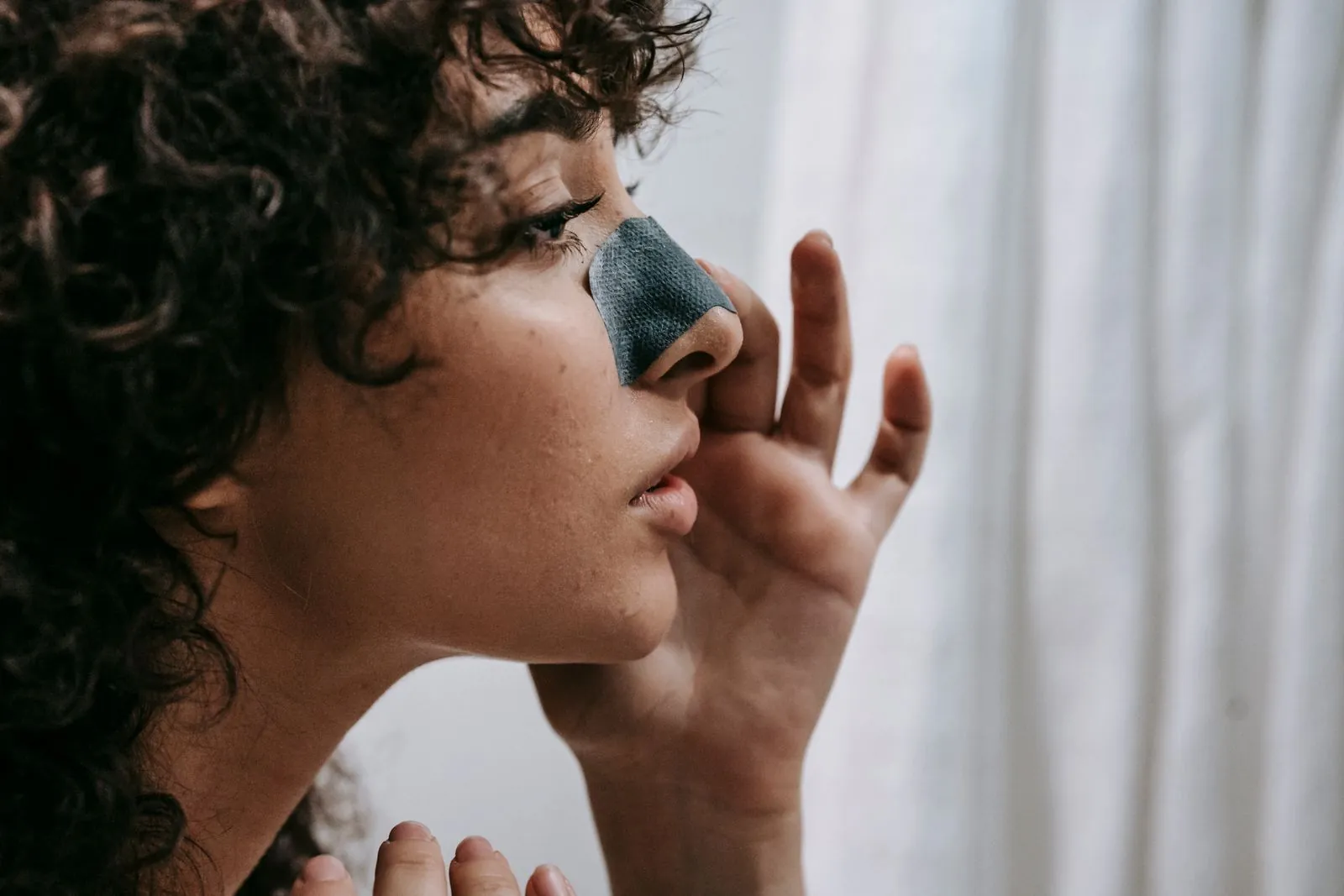
“Pore strips are supposed to remove blackheads, but they can also remove sebaceous filaments.”
Cleveland Clinic
That’s the trick behind the satisfying strip. Those little gray spikes standing up on the adhesive are mostly the normal pore lining, which Cleveland Clinic says “will fill up again within 30 days” (Cleveland Clinic). Curology is blunter about the mechanism: “Pore strips typically stick to and rip off the top layer of your skin cells” (Curology). So you’re paying for an exfoliation and a trophy. I have held a used strip up to the Interrogation Lamp like a jeweler. I’m not proud. I’m not un-proud either.
If you love them, keep them as a Sunday treat and skip them in the first weeks of a retinoid, when skin is at its most irritable. That part is practitioner consensus, not a trial result.
Should you squeeze blackheads, and what if you already did?
No. Squeezing can push the plug deeper, tear the pore wall, let in bacteria from your fingers, and leave marks or scars. If you’ve already squeezed one, wash the area gently, don’t go back for a second try, keep it clean, and leave it alone for a few days. A hydrocolloid patch can protect it if the skin is broken.
“You may even push the blackhead further into your skin, which can cause painful irritation.”
Cleveland Clinic
The AAD adds the part nobody thinks about at 11 p.m.: “When you pop pimples yourself, you also run the risk of getting an infection from the bacteria on your hands” (AAD). Hands that just scrolled a phone. The phone that has been on the kitchen counter. I’ll stop there, for both of us.
[Takes off the funny hat.] If you already did it, here is the after-care. It’s practitioner consensus rather than a trial, because nobody runs trials on people who ignored the advice:
- Wash the spot with a gentle cleanser and lukewarm water. No scrubbing, no toner, no second squeeze.
- If the skin is broken, a hydrocolloid patch keeps fingers and bacteria off it overnight. Our guide to how pimple patches work explains why that’s a bandage, not a blackhead treatment.
- Leave it for a week. Esthetician Renee Rouleau’s rule for the stubborn ones is “My general rule is three strikes and you’re out” (Allure). If it didn’t come out, it wasn’t ready.
- Start the daily ingredient so the next one never gets big enough to tempt you.
I own a comedone extractor. I bought it at 1 a.m. It lives in a drawer with a label maker I also never use, and the two of them are, I think, happy together.
How do you get rid of deep blackheads, and why do they come back?
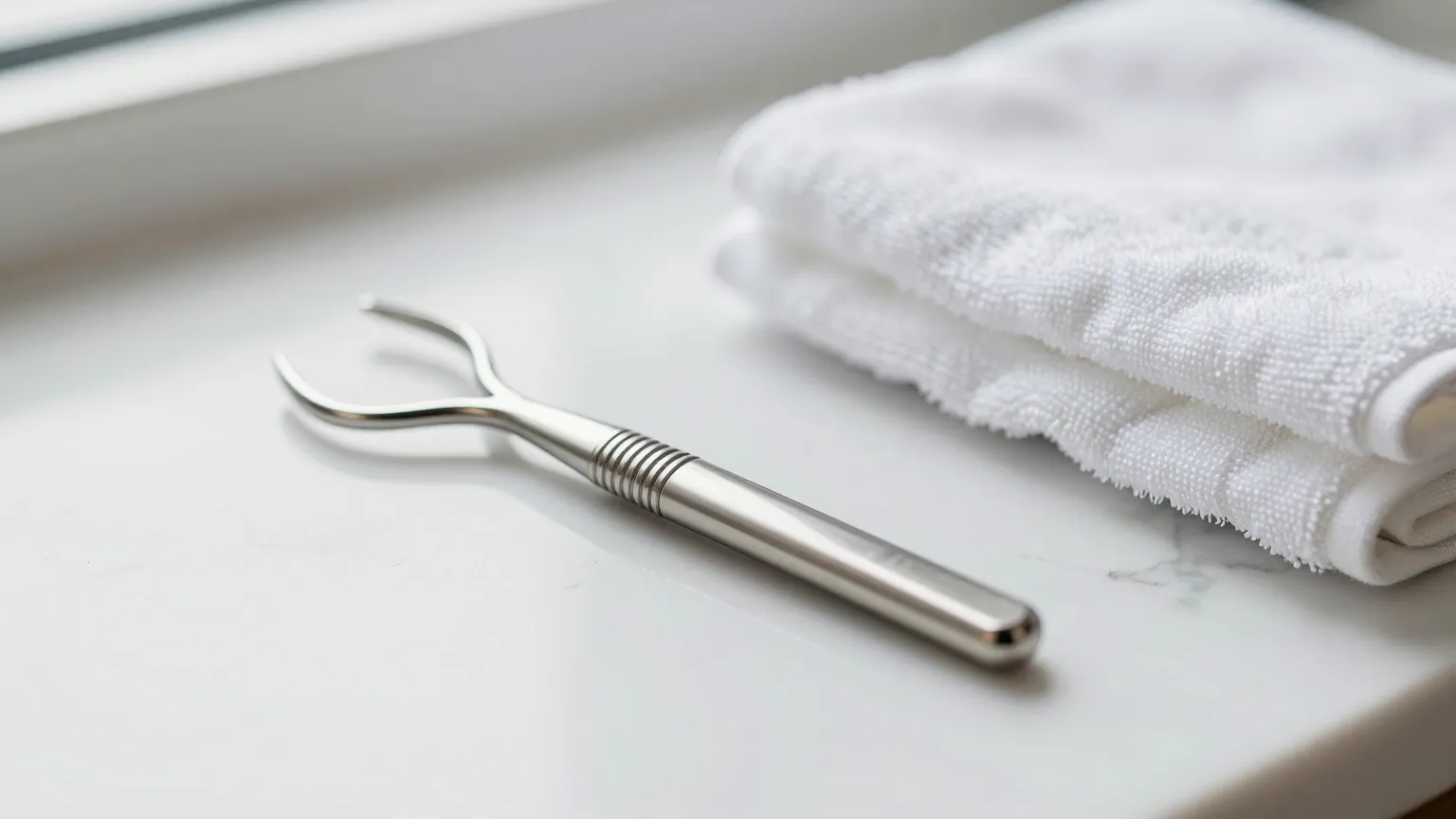
Deep blackheads should be removed by a dermatologist or licensed esthetician, who presses a small metal loop evenly around the plug so the whole thing comes out. They come back because the oil gland and the shedding problem that made them are still there, so extraction is a reset and a daily retinoid is the long-term fix.
“Deep, embedded blackheads are less likely to go away on their own.”
Cleveland Clinic
Cleveland Clinic describes the tool: “a small tool with rigid metal loops on the ends (blackhead or comedo extractor) to apply even pressure” (Cleveland Clinic). Even pressure is the whole trick, which is why my 1 a.m. extractor and I were never going to work out. The AAD says extraction is “rarely a first choice because it takes time and can be expensive” (AAD).
Here’s why they return even after a perfect extraction. The AAD says it plainly: “Blackheads and whiteheads can return, so you’ll need to follow a skin-care plan to prevent new blemishes” (AAD). Blackheads are less a stain and more a subscription. (I have four subscriptions I forgot to cancel. This is the only one I’m choosing to keep.)
DermNet goes further: “Treatment needs to be continued long-term (sometimes for many years)” (DermNet). The same page lists a “giant comedo”, a cyst “in which there is a clear blackhead-like opening in the skin”. One huge blackhead that never changes is a dermatologist visit, not a drugstore run.
Blackheads on the nose, cheeks, ears and back
The nose has the densest oil glands, so it gets the most blackheads and the most sebaceous filaments. Cheek blackheads in older adults are often sun-related. Ear blackheads come from hair products, earbuds and skipped washing. Back blackheads respond to a benzoyl peroxide wash left on for a few minutes plus adapalene.
“Everyone has blackheads on their noses and often on their chin since these areas have the highest concentration of oil glands in the body”
Joshua Zeichner, MD, in Allure
Nose. Everyone. Dr. Zeichner’s next line in that piece is that if you own a magnifying mirror, throw it away, and the Interrogation Lamp would like it noted that it has never once been asked to leave. The nose is also where sebaceous filaments live, so re-read that section before you declare war.
Cheeks. Cheek blackheads are less common than nose ones, and in older adults DermNet’s “solar comedones” from sun damage are a likely culprit (DermNet). Sunscreen is the prevention, which is annoying, because sunscreen is the answer to everything and I still forget it. Our acne face map covers what cheek breakouts can and can’t tell you.
Ears. The skin in and around the ear has oil glands too, and it’s usually skipped. Healthline’s advice is practical: “Wash and clean items that touch your ears weekly. These include earbuds, pillow cases, cell phones, and other items your ears are regularly exposed to” (Healthline). Salicylic acid on a cotton swab works there, and extraction is a dermatologist job because you can’t see what you’re doing. I tried. There was a mirror, a second mirror, and a lamp. There was no dignity.
Back. The AAD says “Studies show that benzoyl peroxide works best if left on the back for two to five minutes” before rinsing, because back skin is thicker, and adapalene 0.1% gel on top helps it work better (AAD). Shower after workouts and buy a lotion applicator for the back unless you are a gymnast. I am not a gymnast.
How long does it take to get rid of blackheads?
Plan on 8 to 12 weeks of daily use before you judge any ingredient, and three to four months for a full clear. The American Academy of Dermatology says give treatment six to eight weeks before seeing a dermatologist, and the trials above all ran 12 weeks. Retinoid irritation peaks in the first one to two weeks and then settles.
The 2017 retinoid review notes that irritation typically peaks in the first one to two weeks and subsides after that (Leyden 2017), which is exactly the window where most people quit. (I quit twice. The second time I told the lamp it was the lamp’s fault.) Some people also see extra bumps in those first weeks, often called purging. Our retinol purge guide explains how to tell a purge from a reaction.
The AAD gives the rest of the timeline: “you may start to see results in six to eight weeks. Complete clearing can take three or four months” (AAD). So the honest plan is week 2 to survive, week 8 to judge, month 4 to admire. If your skin still feels bumpy after that, the skin texture guide covers the other causes.
As for the Interrogation Lamp: I replaced the bulb with a warm one at week ten. The blackheads were fewer, which was the adapalene, and the ones left stopped testifying, which was the bulb. I recommend both. [Switches lamp off. Switches it on. Leaves it on. It’s fine now.]
Frequently asked questions
Can you get rid of blackheads permanently?
Not permanently, no. Blackheads come back when a daily ingredient stops, because the oil gland and the shedding problem are still there. A retinoid or salicylic acid used steadily keeps them away, and that is the realistic version of “gone”.
Is it safe to squeeze a blackhead?
Dermatologists say no. Squeezing can push the plug deeper, tear the pore, introduce bacteria from your hands and leave marks or scars. A dermatologist or esthetician can extract them safely with a sterile loop tool.
What is the fastest way to get rid of blackheads?
Professional extraction removes existing blackheads in one visit. For home use, adapalene 0.1% gel or 2% salicylic acid are the fastest proven options, and both still take 8 to 12 weeks of daily use to show full results.
Do pimple patches work on blackheads?
No. Hydrocolloid patches absorb fluid from open or weeping spots. A blackhead is a dry plug with nothing to absorb, so a patch only protects the area after you’ve squeezed it.
Why do I get blackheads on my cheeks?
Cheeks have fewer oil glands than the nose, so cheek blackheads often point to pore-clogging products or, in older adults, sun damage (solar comedones). Switch to non-comedogenic products, wear sunscreen, and use the same daily ingredient as for the nose.
How do you get rid of blackheads in your ears?
Wash in and around the ears daily, clean earbuds and phones weekly, and apply a salicylic acid product with a cotton swab. Leave extraction to a dermatologist, since you can’t see the area and the skin tears easily.
Your next step
Pick one proven ingredient, adapalene 0.1% gel or a 2% salicylic acid leave-on, and use it every day for 8 to 12 weeks before you judge it. Stop squeezing, and book a dermatologist for the deep ones. If the dots on your nose are flat and gray, read our sebaceous filaments guide first, because those are not blackheads.

Written by the Trusted Skincare Editorial Team
We research at-home beauty devices and skin treatments and link every claim to a published study, a regulator or a named expert. Last updated Wednesday 7 October 2026.
Sources
- American Academy of Dermatology: How to treat different types of acne
- American Academy of Dermatology: Pimple popping, why only a dermatologist should do it
- American Academy of Dermatology: Back acne
- Cleveland Clinic: Blackheads
- Cleveland Clinic: Sebaceous filaments
- DermNet: Comedonal acne
- Shalita et al. 1996, adapalene 0.1% vs tretinoin 0.025% (Journal of the American Academy of Dermatology)
- Ye et al. 2024, 2% salicylic acid gel vs adapalene gel (Journal of Cosmetic Dermatology)
- Kawashima et al. 2017, benzoyl peroxide 2.5% and 5% over 52 weeks (Journal of Dermatology)
- Katsambas et al. 1989, 20% azelaic acid vs tretinoin (Acta Dermato-Venereologica)
- Leyden, Stein-Gold and Weiss 2017, why topical retinoids are the mainstay of acne therapy (Dermatology and Therapy)
- Allure: How to get rid of blackheads the right way (Zeichner, Rouleau, Chin)