
On this page
- Dry skin vs dehydrated skin at a glance
- What is dehydrated skin?
- Dry vs dehydrated skin: what is the difference?
- What does dehydrated skin look like?
- Does the pinch test work for dehydrated skin?
- What causes dehydrated skin?
- Can oily skin be dehydrated?
- Does drinking more water hydrate your skin?
- How do you treat dehydrated skin?
- When is it a damaged skin barrier instead?
- Your next step
Quick answer: Dehydrated skin is skin that is short on water in its outer layer, not short on oil. It looks dull, feels tight after washing, and shows fine crinkly lines on the forehead and under the eyes. Any skin type can get it, including oily skin. Fix it by stopping what pulls water out, adding a humectant like glycerin, and sealing it in with moisturizer.
We read 21 studies and sources, from a 1992 petroleum jelly experiment to a 2015 trial that had 49 women drink two extra liters a day, so every claim below links to where it came from. (I also bought a 2-liter water jug with motivational hour markers down the side. It is 9 p.m. The jug says 11 a.m. We are not speaking.)
Dry skin vs dehydrated skin at a glance
| Dry skin | Dehydrated skin | |
|---|---|---|
| What it is | A skin type: your oil glands make less sebum | A skin state: the outer layer is short on water |
| Who gets it | Often runs in families, more common after 40 and in nearly everyone over 60 | Anyone, any skin type, including oily |
| How it feels | Rough, flaky, tight most of the year | Tight after washing, dull, sometimes oily and tight at once |
| Tell-tale sign | Flakes and scaling, often on the shins and hands | Fine crinkly lines on the forehead and under the eyes that come and go |
| Does it change? | Slowly, with age and season | Quickly, with weather, showers and products |
| What fixes it | Richer creams and ointments that replace the oils, long term | A humectant on damp skin, then a moisturizer over it, for about a week |
Sources: Healthline, CeraVe, AAD on the causes of dry skin, DermNet on dry skin.
What is dehydrated skin?
Dehydrated skin is a temporary state in which the outer layer of your skin, the stratum corneum, holds too little water. It is not a skin type. Oily, dry, normal and combination skin can all be dehydrated. The skin looks dull, feels tight after washing, and shows fine lines that soften once the water comes back.
“Dry skin is a skin type that is caused by a lack of sebum production, whereas dehydrated skin is a temporary state caused by a lack of water in the skin.”
CeraVe, the brand’s dry or dehydrated skin guide
The stratum corneum is the top layer of flattened dead cells, a brick wall on the surface of your face, which is a fact I bring up at parties and then stand alone with my drink. Water sits inside those cells, held by small water-grabbing molecules called natural moisturizing factor (Purnamawati et al. 2017), and it leaves through the wall all day by what ISDIN’s dermatology team calls “transepidermal water loss (TEWL)” (ISDIN). [Pauses to admire a nine-syllable phrase for leaking.] When more leaves than arrives, the top layer shrinks a little, and that is the 7 a.m. tightness, towel on head, nowhere to put your opinions.
Dry vs dehydrated skin: what is the difference?
Dry skin is a skin type: your oil glands make less sebum than average, so the skin is rough, flaky and tight most of the year. Dehydrated skin is a skin state: the outer layer is short on water right now, in any skin type, and it changes with the weather, your shower and your products. One lacks oil. The other lacks water.
Healthline puts the split in one line.
“While dehydrated skin lacks water, dry skin lacks natural oils (also called sebum).”
Healthline, medically reviewed by Cynthia Cobb, DNP
The oil side is mostly age and genes: the American Academy of Dermatology says “By your 40s, the amount of sebum your body makes drops dramatically” (AAD on the causes of dry skin), and DermNet notes that nearly everyone over 60 has dry skin (DermNet). Dry skin is a slow tide. Dehydrated skin is forgetting your umbrella: fast, fixable, and entirely my own doing. The two also overlap, which the labels skip. Bioderma calls dry skin “a particular skin type that is lacking both water and lipids” (Bioderma), so a dry type can be dehydrated on top, and an oily type underneath the shine. The question is not which one you are. It is which one it is this week. [Writes that on the jug. The jug has no room. The jug is full of affirmations.]
What does dehydrated skin look like?
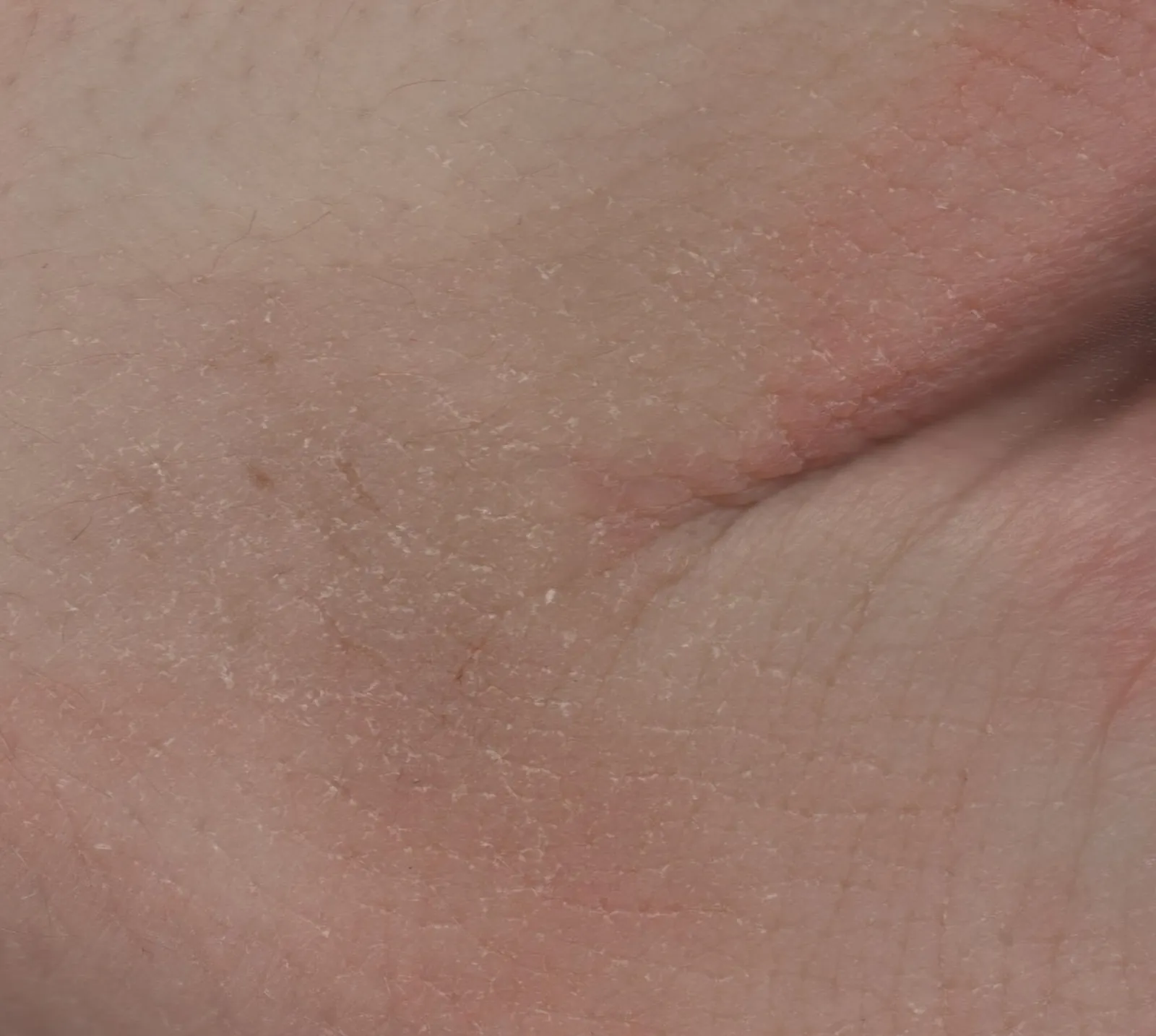
Dehydrated skin looks dull and feels tight, especially right after washing. The classic signs are fine, crinkly lines across the forehead and under the eyes that were not there a month ago, darker under-eye shadows, makeup that settles into creases by lunch, and skin that can feel oily and tight at the same time.
CeraVe’s description is the one I would print out: a “tired-looking appearance, with darker shadows and under-eye circles”, with fine lines that get dehydration “sometimes also confused with premature skin aging” (CeraVe). Tired-looking is also me before coffee, so read the first half with context.
The dehydration lines. These are the ones that send people to a filler clinic in a panic. Board-certified dermatologist Mitchel P. Goldman, MD, explains where they live.
“Dehydration lines appear when your skin is thirsty for moisture. They’re typically found on the forehead, under the eyes, and on the cheeks. Unlike true wrinkles, these lines often vanish with proper hydration.”
Mitchel P. Goldman, MD, Cosmetic Laser Dermatology
Dermatologist Leslie Baumann, MD, agrees that “dehydration lines are temporary and will go away once you properly rehydrate your skin” (Skin Type Solutions). The honest test is time. Hydrate for a week, and the crinkles that fade were dehydration. The ones that stay are fine lines, with their own guide and, sadly, their own timeline. (I checked my forehead in the elevator mirror, the car mirror and the back of a spoon. The spoon was kindest. I now travel with a spoon.)
Does the pinch test work for dehydrated skin?
No, not for skin hydration. The pinch test, called skin turgor in medicine, checks for body fluid loss: a nurse pinches the back of your hand or forearm and watches how fast it flattens. It reads deeper tissue and age-related elasticity, not water in the outer skin layer. A slow bounce on your cheek proves nothing about your serum needs.
MedlinePlus, the US National Library of Medicine’s encyclopedia, files the pinch under skin turgor: “Reduced skin turgor is a sign of fluid loss” and “Commonly the lower arm or abdomen is checked” (MedlinePlus). Arm. Belly. Nobody in medicine is pinching cheeks. [Pinches cheek anyway. Pinches the other cheek as a control group. Learns nothing.] It also fades with age: Healthline’s skin turgor page says “an older person’s skin may take 20 seconds to return to normal, even if they aren’t dehydrated” (Healthline on skin turgor). So the cheek pinch measures body fluid and birthday count, neither of which tells you whether your top layer wants a serum. That is logic plus practitioner consensus, not a trial, because nobody has run a trial on cheek-pinching, which I find both reassuring and a little disappointing.
A better home check, still only consensus: wash, pat dry, apply nothing, wait 30 minutes. goGLOW says that if the tightness “dissipates after applying a hydrating product” you are probably dehydrated (goGLOW). Tight and flaky either way means the dry type or a damaged barrier, covered below. The only real measurement is a hydration probe pressed to the skin, which I am not buying, because I already travel with a spoon.
What causes dehydrated skin?
Dehydrated skin happens when water leaves the outer layer faster than it is replaced. The usual drivers are dry indoor air from heating or air conditioning, long hot showers, harsh cleansers, over-exfoliating with acids or scrubs, starting a retinoid, cold wind, sun, and skipping moisturizer. Drinking too little water plays a smaller part than the marketing suggests.

Dry air is the big one. The AAD says “During the winter, indoor heating or cozying up to a fireplace can rob skin of moisture, making skin dry and chapped” (AAD on dry skin), and DermNet adds air conditioning and fan heaters (DermNet). My radiator has two settings, off and Sahara, and I have chosen Sahara since October. The AAD’s fix is specific: “If you use a portable humidifier, place it in your bedroom and run it while you sleep” (AAD tips for dry skin).
Hot water is the second. The AAD’s first dry skin tip is to “Limit baths and showers to five to ten minutes, using warm water” (AAD tips for dry skin). I know. I treat the shower as a thinking room. The thinking is now shorter. Then there is what you put on it: the AAD warns that “Exfoliating can be drying to the skin” and to “Be careful not to over-exfoliate, as this could lead to skin that is red and irritated” (AAD on exfoliating at home), the polite version of using a glycolic toner and a salicylic serum on the same night because both bottles were pretty. Retinoids do the same in the first weeks; our retinol purge guide covers riding that out. Not on anyone’s list, officially: your water bottle. The jug and I will discuss this shortly.
Can oily skin be dehydrated?
Yes. Oil and water are two separate systems. Oily skin makes plenty of sebum but can still be short on water in its outer layer, often because harsh foaming washes, acids and alcohol toners strip it out. The result feels greasy and tight at the same time, and skipping moisturizer to fight the shine makes both problems worse.
CeraVe says “it’s possible for dehydrated skin on your face to feel both oily and dry at the same time” (CeraVe). It is the skincare version of being hungry and full. The trap is the reaction: the AAD warns that “using a face wash that is too harsh can irritate your skin and trigger increased oil production”, and says “it is still important to apply moisturizer to keep your skin hydrated” (AAD on oily skin). So: gentle wash, water-based humectant, light oil-free moisturizer, not a fourth mattifying product. I say this as someone who owns four mattifying products. They are decorative now.
Does drinking more water hydrate your skin?
A little, and mostly if you drink very little now. In a 2015 study, 49 women added about 2 liters of water a day for 30 days. Skin hydration went up, most in the lowest drinkers, but water loss through the skin did not change. Drinking water helps your body. It does not replace a moisturizer.
Here is the jug’s moment. The study split 49 women aged 22 to 34 by their total daily water (drinks, food and metabolism combined) at 3.2 liters, added roughly 2 liters a day for a month, and measured the skin with a probe. The extra water “significantly modified superficial and deep skin hydration, especially in Group 1”, the lower drinkers, while the barrier “revealed no relevant changes regarding epidermal barrier and TEWL” (Palma et al. 2015). So the jug is partly vindicated. [Jug does a lap of honor. Jug is heavy. Lap is cut short.] The fine print: no control group, everyone was young, and 3.2 liters of total water is already more than many people manage. Nobody has shown that glass nine does anything glass eight did not. Cleveland Clinic’s rule for the body is “If you feel thirsty, you’re already dehydrated” (Cleveland Clinic on dehydration). Drink to that, then spend the rest of your effort on the outside of your face, where a moisturizer does in a minute what the jug does in a month.
How do you treat dehydrated skin?
Treat dehydrated skin in three moves over about a week: stop what pulls water out (hot showers, acids, scrubs, foaming washes), add water back with a humectant such as glycerin or hyaluronic acid on damp skin, then seal it with a moisturizer or a thin layer of petroleum jelly at night. Most people feel the tightness ease within days.
Days 1 to 2: stop. Shorten showers, turn the water down, and park every acid, scrub and retinoid for the week. Swap a foaming wash for what the AAD asks for, “Gentle, fragrance-free skin care products” (AAD tips for dry skin). This is the hardest step because it involves doing less, and I am constitutionally unable to do less. I bought a jug to do less.
Days 2 to 7: add. Humectant on damp skin, morning and night. Glycerin is the boring one with the best receipts: in a randomized, double-blind trial of 24 people with eczema, four weeks of a glycerin cream improved hydration and “epidermal barrier function was restored” against the same cream without it (Breternitz et al. 2008). Hyaluronic acid is the famous one, “with the ability to bind 1000 times its volume in water” (Bravo et al. 2022). Damp is not a style note: the AAD says to “apply your moisturizer when your skin is still damp after taking a shower or bath” (AAD tips for dry skin). The full layering order, mist to serum to cream, is in our skin flooding guide.
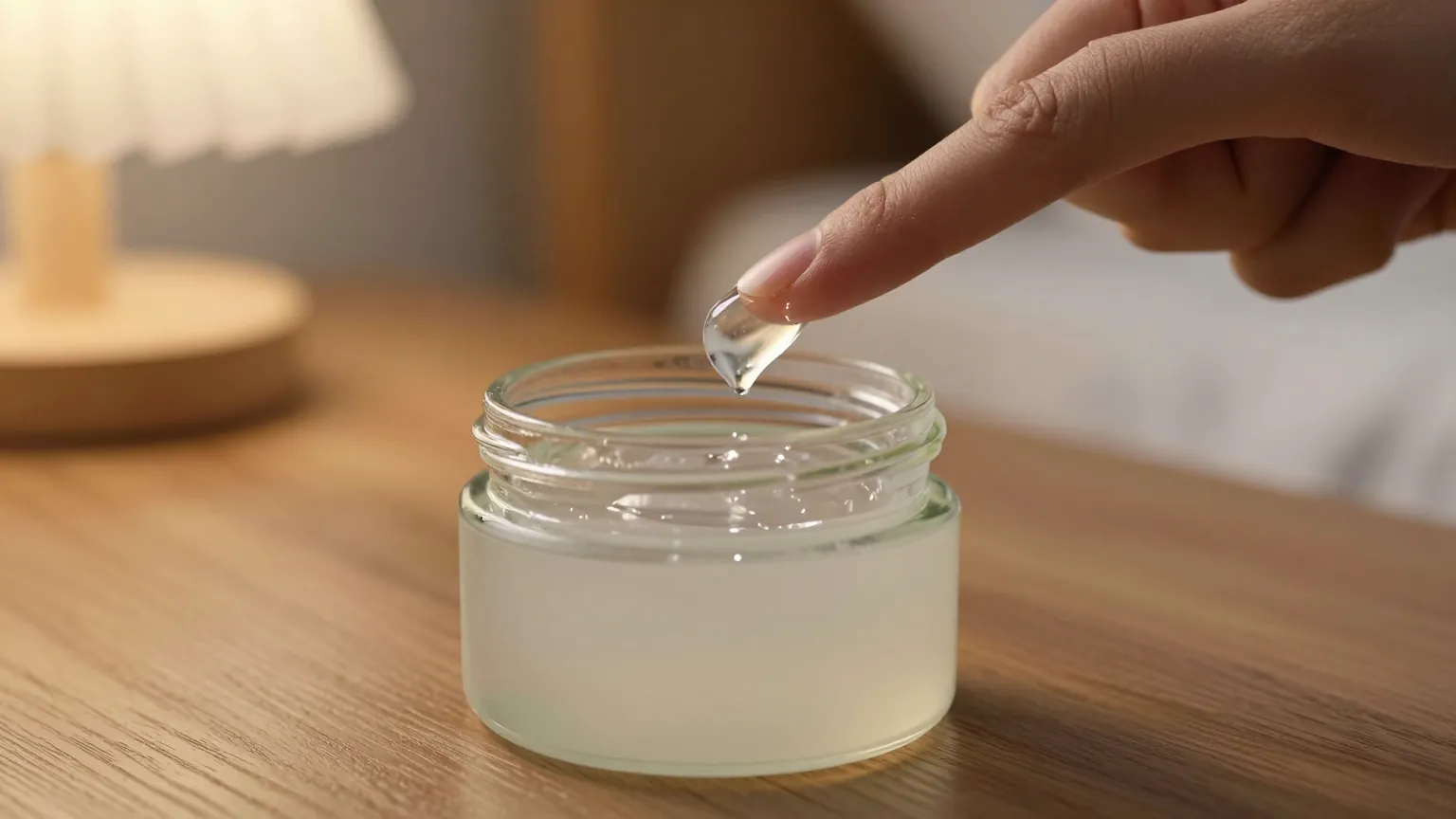
Days 2 to 7: seal. Here’s the catch, and most hydration advice skips it. A humectant pulls water toward the surface, and in dry air that water can simply evaporate: humectants “can also enhance trans-epidermal water loss by increasing water absorption from dermis into epidermis, where it easily evaporates; therefore combination with occlusives is frequently required” (Purnamawati et al. 2017). So put a cream over the serum, and on the tightest nights a thin layer of petroleum jelly over that. The same review says petrolatum at “a minimum concentration of 5%, can reduce trans-epidermal water loss by more than 98%” (Purnamawati et al. 2017), and a 1992 experiment on human volunteers found it “accelerated, rather than impeded, barrier recovery” (Ghadially et al. 1992). Ninety-eight percent. The jug cannot do that. The jug can barely do stairs.
Add a humidifier by the bed if the air is dry; Cleveland Clinic’s prevention list includes “Using a humidifier to add moisture to your home’s air” (Cleveland Clinic). On day 7, check: tightness gone, crinkles softer, makeup sitting better? If yes, keep the gentle routine and bring actives back one at a time; if you want the full dewy look, our glass skin guide is mostly this routine with better lighting. The jug now lives next to the humidifier, and I fill the humidifier from it, which is the first time it has hydrated anything.
When is it a damaged skin barrier instead?
If your skin stings when you apply plain moisturizer, looks red or shiny-tight, flakes in patches, or stays tight after a week of the stop, add, seal plan, the problem is a damaged barrier, not just low water. Dehydration and barrier damage feed each other, but a damaged barrier needs ceramides, rest from actives, and time.
The two are linked both ways: CeraVe notes that water loss “can disrupt your skin’s protective barrier function” (CeraVe), and DermNet pins dry skin itself on a faulty barrier in the stratum corneum (DermNet). Leslie Baumann, MD, describes the extreme version after a burn or a peel, where the top layer gives the skin “a wrinkled tissue paper look” (Skin Type Solutions). If that’s you, keep the humectant light, lean on the seal step, and follow our skin barrier repair guide: ceramides, rest and patience. Rough patches that outlast everything belong in the skin texture guide. I could recite both from memory, which is a strange flex, but it is mine.
Age slows the repair: in a 1995 study, after the barrier was deliberately stripped, young volunteers were half recovered at 24 hours while people over 80 were at 15% (Ghadially et al. 1995), so past 40, give every step more time. Anything that outlasts all of this gets a board-certified dermatologist, because the AAD says overly dry skin “may be due to an underlying medical condition” such as eczema, psoriasis or kidney disease (AAD tips for dry skin). No bit here. This paragraph gets to be serious.
Frequently asked questions
Is dehydrated skin the same as dry skin?
No. Dry skin is a skin type that makes less oil. Dehydrated skin is a temporary state where the outer layer lacks water. Any skin type, including dry and oily, can be dehydrated.
How long does dehydrated skin take to fix?
Most people feel less tightness within a few days of stopping hot showers and acids and adding a humectant plus a moisturizer. Give the full plan a week. Lines that remain after that are fine lines or a barrier problem.
Can dehydrated skin cause wrinkles?
It makes fine lines look deeper for a while, and those dehydration lines fade when the skin is rehydrated. Lasting wrinkles come from sun, age and repeated expression, not from a dehydrated week.
Is hyaluronic acid or glycerin better for dehydrated skin?
Both hold water in the outer layer and both work best on damp skin, sealed with a moisturizer. Glycerin has more placebo-controlled trial evidence and costs less. Hyaluronic acid feels lighter. Many products contain both.
Should I exfoliate dehydrated skin to remove the flakes?
Not during the fix. Exfoliating is drying, and over-exfoliating leaves skin red and irritated, according to the American Academy of Dermatology. Hydrate and seal for a week first, then bring back a gentle exfoliant once or twice a week.
Your next step
Tonight, skip the acids, shower warm instead of hot, and put a glycerin or hyaluronic acid serum on damp skin with a moisturizer over it. Keep that up for seven days before you judge anything. For the exact layering order, read our skin flooding guide.

Written by the Trusted Skincare Editorial Team
We research at-home beauty devices and skin treatments and link every claim to a published study, a regulator or a named expert. Last updated Wednesday 7 October 2026.
Sources
- Healthline: Is my skin dehydrated?
- CeraVe: Dry skin tips, is my skin dry or dehydrated?
- American Academy of Dermatology: Dermatologists’ top tips for relieving dry skin
- American Academy of Dermatology: Dry skin, causes
- American Academy of Dermatology: How to safely exfoliate at home
- DermNet: Dry skin
- Cleveland Clinic: Dry skin
- MedlinePlus: Skin turgor
- Palma et al. 2015, dietary water and skin hydration (Clinical, Cosmetic and Investigational Dermatology)
- Purnamawati et al. 2017, the role of moisturizers in addressing various kinds of dermatitis (Clinical Medicine and Research)
- Breternitz et al. 2008, glycerol-based emollient in atopic dermatitis (Skin Pharmacology and Physiology)
- Ghadially et al. 1992, effects of petrolatum on stratum corneum structure and function (Journal of the American Academy of Dermatology)