
On this page
- Dermaplaning at home vs in a clinic vs an acid exfoliant
- What is dermaplaning?
- What are the benefits of dermaplaning?
- How do you dermaplane at home, step by step?
- What kind of dermaplaning tool should you use?
- How often should you dermaplane?
- Does hair grow back thicker after dermaplaning?
- Who should not dermaplane at home?
- What should you put on your skin after dermaplaning?
- What does dermaplaning before and after really look like?
- Why do some people regret dermaplaning?
- Your next step
Quick answer: Dermaplaning at home means gliding a clean, single-use blade over clean, fully dry skin at about 45 degrees, in short, light, downward strokes, to lift dead skin and peach fuzz. A Cleveland Clinic dermatologist says no more than once a week. Skip it on active acne, rosacea, eczema, cold sores or broken skin. Hair does not grow back thicker.
We read 15 studies and sources, from a 1928 experiment where four men shaved part of their faces for science to a 2023 lab test on dermaplaned skin, so every claim below links to where it came from. (Before I let a blade anywhere near my own face, I also practiced the 45-degree angle on an actual peach. The Practice Peach survived. It’s on my kitchen counter right now, smoother than I have ever been, quietly judging me.)
Dermaplaning at home vs in a clinic vs an acid exfoliant
| Dermaplaning at home | Dermaplaning in a clinic | Acid exfoliant (AHA or BHA) | |
|---|---|---|---|
| What it is | A small single blade on a plastic handle, glided over dry skin | A straight-edge razor or surgical #10 scalpel, used by a licensed professional | An acid that dissolves dead skin cells instead of scraping them |
| Removes peach fuzz? | Yes, for a while | Yes, for a while | No |
| Cost | Drugstore blade packs; electric kits about $200 | $40 to $150 a session | Depends on the product |
| How often | No more than once a week | Set by your provider | The stronger it is, the less often |
| Main risks | Nicks, irritation, breakouts if used on active acne | Same risks, usually smaller in trained hands | Redness and irritation if overdone |
| Evidence | Dermatologist experience, no face trials | A 2011 review called the data “scarce, anecdotal” | Clinical trials exist, see our AHA vs BHA guide |
Sources: Cleveland Clinic, Allure, Consumer Reports, Healthline, AAD, Pryor 2011.
What is dermaplaning?
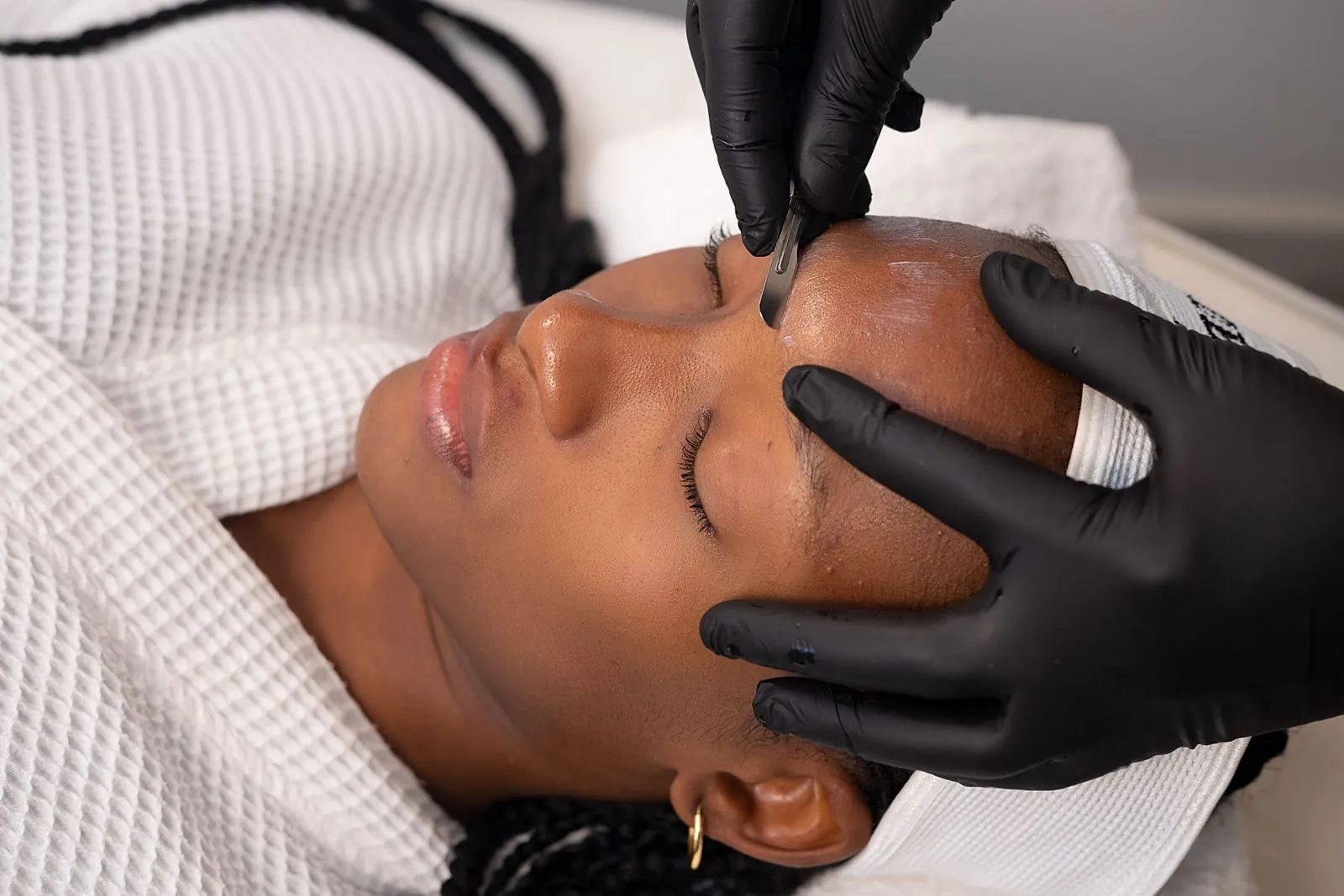
Dermaplaning is a form of physical exfoliation: a small, sharp blade is swept lightly across the skin to lift dead surface cells along with vellus hair, the fine, soft facial hair everyone calls peach fuzz. In a clinic, a trained professional uses a scalpel. At home, you use a small single-edge blade on a plastic handle.
“They’re single blades on a little plastic handle, and you just lightly rub them over your skin.”
Melissa Piliang, MD, Cleveland Clinic
Cleveland Clinic says the name joins derm, meaning skin, and plane, meaning flat surface (Cleveland Clinic). So it translates to “skin, but flatter”, which is also what I whisper to my mirror every morning. In a clinic, Allure reports, a session costs $40 to $150 (Allure). I read that price, opened my banking app, closed my banking app, and walked to the drugstore.
What are the benefits of dermaplaning?
The benefits of dermaplaning are mostly immediate and cosmetic. Skin feels smoother, peach fuzz is gone for a while, makeup goes on more evenly, and skincare may sink in better because the dead surface layer is thinner. Cleveland Clinic adds that exfoliating this way can help keep pores from clogging. These benefits come from dermatologist experience, not large trials.
Dr. Piliang told Cleveland Clinic, “As you’re doing it, you can actually look at the blade and see some of those dead skin cells along with peach fuzzy hair” (Cleveland Clinic). Whether that sounds satisfying or gross says a lot about a person. I said satisfying. I said it far too fast.
[Puts the peach down. Adopts serious voice.] The honest version: a 2011 systematic review of 42 papers on dermaplaning, oxygen and light therapy found the data “scarce, anecdotal, and not well documented” (Pryor 2011). The absorption claim rests on one 2023 lab study, where 4 strokes removed the outer skin layer and test drugs passed through far more easily, with results that varied by who held the device (Tijani 2023). Plausible, not proven. Same blade, different hands, different results. I have exactly this problem with pancakes.
How do you dermaplane at home, step by step?
To dermaplane at home, wash with a gentle oil-free cleanser, pat your skin completely dry, and use a fresh blade. Pull the skin taut with your free hand, hold the blade at about 45 degrees, and use short, light, downward strokes, one pass per area. Skip eyelids, brows, lips and the sides of the nose. Finish with moisturizer and sunscreen.
Dry is the step people skip. Esthetician Kerry Benjamin told Allure, “The dryer your skin, the better the results,” and Consumer Reports’ testers never dermaplaned wet skin (Allure, Consumer Reports). This is the exact opposite of how I shave my legs, so I read it three times.
Next, the angle: most brands and pros recommend 45 degrees, per Consumer Reports (Consumer Reports). This is where the Practice Peach earned its keep. A peach has no eyebrows and no opinions, the perfect student for a nervous beginner. I did six slow strokes. The peach did not flinch. I flinched twice.
Work in small sections, cheek, jaw, chin, upper lip, forehead, with your other hand pulling the skin tight behind the blade (Allure). Keep the pressure featherlight. If you have to press, the blade is dull, not you.
“Do not go over any facial area more than once or use on eyelids, eyebrows, hairlines, sides of nose, or lips.”
Kerry Benjamin, esthetician, in Allure
That’s the most useful sentence in this post, and I didn’t write it. I taped it to the peach, which in hindsight was a cry for help.
What kind of dermaplaning tool should you use?
There are three kinds: disposable single-blade tools sold in drugstore packs, handles that take replaceable blades, and electric tools that vibrate the blade. Disposable blades are the simplest, because each session starts with a fresh, sharp edge. Whatever you pick, the blade needs to be clean and sharp every time, and it should never be shared.
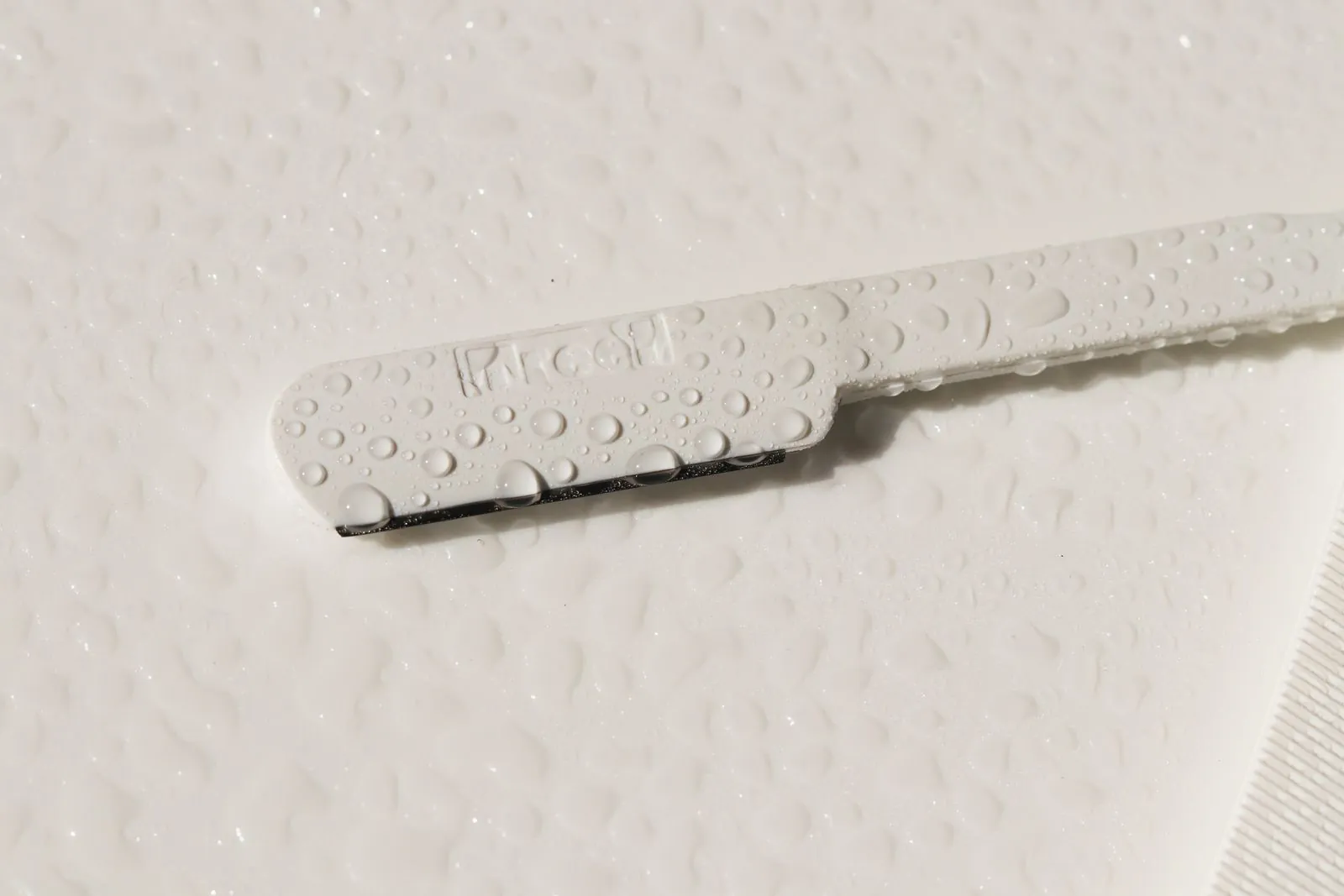
Consumer Reports tested seven tools, five manual and two electric, and found a $200 electric kit powerful but bulky (Consumer Reports). Nobody needs the fancy one to start. My bathroom drawer is a museum of fancy ones.
Hygiene matters more than the brand. Cleveland Clinic says to clean the blade before and after, and reusable ones can be disinfected with rubbing alcohol and warm water (Cleveland Clinic). And keep it to yourself: the AAD lists sharing “silverware, lip balm, or a razor” as a way the cold sore virus spreads (AAD). I already refuse to share my fries, so this rule required no personal growth.
How often should you dermaplane?
No more than once a week, according to Cleveland Clinic dermatologist Melissa Piliang, so your skin has time to recover between sessions. Many people go longer, every two to four weeks, because fine facial hair takes a while to become visible again. If your skin stings, flakes or turns red, space your sessions further apart.
Dr. Piliang told Cleveland Clinic, “I wouldn’t do it more than once a week, just so your skin has time to recover in between,” and PMD’s at-home guide says once a week or every 10 days (Cleveland Clinic, PMD Beauty). Once a week is a ceiling, not a target. I treat my gym schedule the same way, except I have never reached the ceiling.
The two-to-four-week gap is practitioner consensus, not a tested schedule. The AAD’s rule: “Generally, the more aggressive the exfoliation, the less often it needs to be done” (AAD). If you also use an acid or a retinoid, they share one exfoliation budget. Mine is overspent by Tuesday.
Does hair grow back thicker after dermaplaning?
No. Dermaplaning cuts hair at the skin’s surface and never reaches the follicle, the root structure deep in the skin that sets a hair’s thickness, color and growth speed. Small studies from 1928 and 1970 found shaving didn’t change hair width or growth rate. Regrowth can feel coarser at first because the cut end is blunt instead of tapered.
“It’s a very commonly held misconception, but trimming off the hair above the surface of the skin has no effect on how the hair grows,”
Melissa Piliang, MD, Cleveland Clinic
The evidence is old and small, but it all points one way. In 1928, four men shaved part of their faces with fresh razors and water at a constant temperature, “all in the name of science”, and 100-hair comparisons showed no sign that shaving sped up growth (Scientific American, Trotter 1928). I cannot keep my shower at a constant temperature for four minutes.
In 1970, five men shaved one leg weekly for several months and left the other alone, and hair width, coarseness and growth rate showed no significant differences (Lynfield and Macwilliams 1970). Scientific American suspects they wore long pants the whole time. Science is sacrifice.
Dermatology resident Taylor Bullock, MD, explains why it feels thicker: “Instead of seeing the thinner and often lighter ends of longer hairs, you see the darker and thicker bases of the hair shafts” (Cleveland Clinic). [Nods like I knew what a hair shaft was before today.] Dermatologist Amy McMichael is blunter: “People are just not very good observers, but there’s just no science behind hair growing back thicker” (Scientific American). Correct. I once spent ten minutes looking for my phone while using it as a flashlight.
I checked the Practice Peach a week later. Its fuzz had not grown back thicker. It had not grown back at all, because it is a peach, and I worry about how much I talk to it.
One straight note. If your facial hair is getting darker or coarser on its own, that’s not regrowth. Healthline notes that “Vellus hair can become denser with age or as a result of conditions like polycystic ovary syndrome” (Healthline). A blade won’t touch the cause, so mention it to your doctor.
Who should not dermaplane at home?
Skip dermaplaning at home if you have active acne, a rosacea or eczema flare, a cold sore, sunburn, cuts, or raised moles in the area. Pause retinoids for a few days first, and ask your prescriber if you take or recently took isotretinoin. If you have a darker skin tone, go gently, because aggressive exfoliation can leave dark spots.
This is the list I wish came printed on every blade pack, in a font bigger than the barcode. [Puts the blade down. Puts the peach down too, for dignity.]
- Active acne: trainer Maja Swierczynska told Healthline, “Dermaplaning shouldn’t be performed on active acne, as it can easily spread the bacteria and cause another flare-up” (Healthline).
- Rosacea: the AAD’s rosacea advice is short: “If you exfoliate your skin, stop.” (AAD).
- Eczema flares: Cleveland Clinic says skip it during a flare and see a dermatologist (Cleveland Clinic).
- Cold sores: keep the blade away from an active sore, and never share it (AAD).
- Sunburn or cuts: “Never exfoliate if you have open cuts or wounds or if your skin is sunburned.” (AAD).
- Raised moles: go around them. Healthline reports a person who tried to dermaplane off her own moles and needed stitches (Healthline).
- Retinoids or benzoyl peroxide: the AAD warns that “Exfoliating while using these products may worsen dry skin or even cause acne breakouts.” (AAD). If you use a retinol or retinal, one facialist suggests pausing it 3 to 5 days before (Healthline).
- Isotretinoin: the US label says to avoid skin-smoothing procedures like waxing, dermabrasion and laser during treatment “and for at least 6 months after you stop” (DailyMed). It doesn’t name dermaplaning, so ask your prescriber.
- Darker skin tones: the AAD says aggressive exfoliation can cause dark spots, especially on darker skin (AAD). Light pressure, one pass, no stacking with acids.
What should you put on your skin after dermaplaning?
After dermaplaning, apply a plain, gentle moisturizer right away and wear sunscreen every day. Skip retinoids and scrubs for 2 to 3 days and makeup for about 24 hours, because the outer layer of skin is thinner for a while. Mild irritation for about a day is common. Burning or redness that keeps going means stop.
Dr. Piliang says, “Your skin may feel a little irritated for a day or so after you do it,” so moisturize well and keep wearing sunscreen (Cleveland Clinic). Boring products win here. This is the one night my twelve-step routine gets demoted to two steps, and it sulks.
Facialist Nicola Russell’s list, via Healthline, is the most specific we found: no retinoids or physical scrubs for 2 to 3 days after, no makeup for 24 hours, and SPF (Healthline). Waiting on AHA and BHA acids too is practitioner consensus, not a tested rule. If your skin stings for days, our skin barrier repair guide has the calm-down routine, which is less dramatic than I am.
What does dermaplaning before and after really look like?
Right after dermaplaning, skin usually feels very smooth, looks a little brighter, and makeup blends more evenly. The fine hair starts growing back within days to a few weeks. Dermaplaning only works on the top layers of skin, so it won’t change deep wrinkles, acne scars or dark spots. Judge it as a short-term smoothing step, not a treatment.
Allure’s beauty editor gave the most honest before-and-after we found. Right after, “my skin felt like silk” and her makeup blended better than ever, but by midday it itched, and the hair “started growing back after four days” (Allure). My own before-and-after photos would be this honest, except my phone’s beauty filter turns itself on and I don’t know how to stop it.
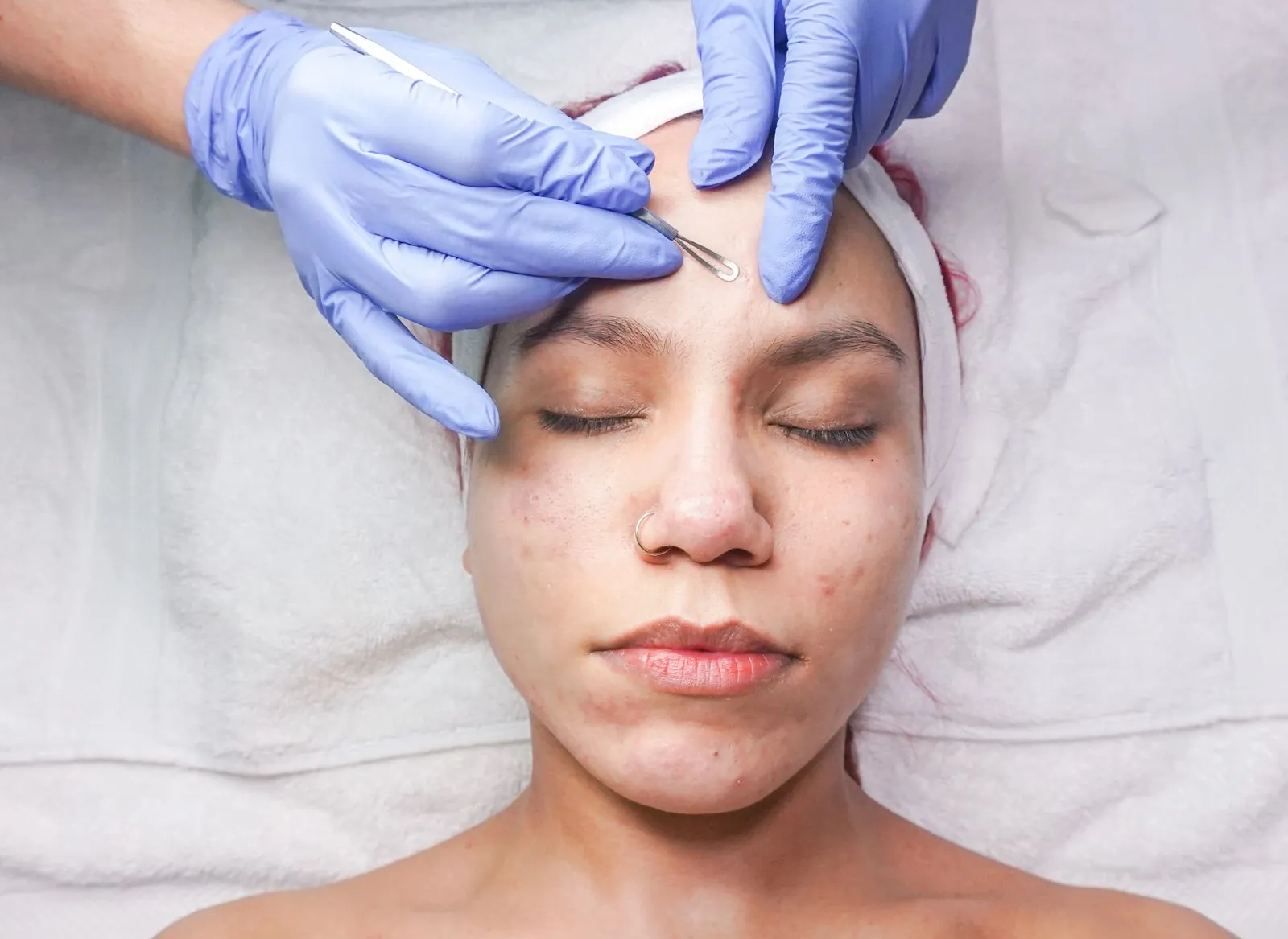
Healthline puts the limit plainly: it “only affects the top layers of your skin, so it isn’t as effective as more intensive exfoliation treatments” (Healthline). Tiny skin-colored bumps that never come to a head are usually closed comedones, which need a retinoid or an acid, not a haircut. For all-over roughness, our skin texture guide sorts out which kind you have.
Chasing that reflective K-beauty finish? Dermaplaning smooths the canvas for makeup, but the rest lives in our glass skin routine. I have read it. My skin remains matte, like a very committed potato.
Why do some people regret dermaplaning?
Most dermaplaning regret comes from four things: blading over active acne and getting a breakout, going over the same area too often, nicks from the wrong angle or too much pressure, and the itchy, stubbly feeling as hair grows in. Redness or itch for a day or two is common. Cuts, burning or dark marks mean stop and see a dermatologist.
“At-home dermaplaning looks simple, but it’s actually very technique-dependent,”
Jessie Cheung, MD, in Consumer Reports
Dr. Cheung’s warning: “Less is more, and overdoing it can make your skin more sensitive or cause pigmentation problems,” so stop at any redness or burning (Consumer Reports). Healthline adds that skin may be red, discolored or itchy for 1 or 2 days, and a little dry at first (Healthline). “Less is more” is also my official position on group chats.
That’s the whole lesson of the Practice Peach. One gentle pass, no pressure, no second go, and it’s still the smoothest thing in my kitchen. [Places peach back on the counter. Nods at it. The peach does not nod back.]
Frequently asked questions
Is dermaplaning the same as shaving your face?
Close. Both cut hair at the surface, but dermaplaning uses a single straight blade on dry skin and also lifts dead skin. Neither makes hair grow back thicker.
Should you dermaplane wet or dry skin?
Dry. Clean, completely dry skin gives better results.
Can you use an eyebrow razor to dermaplane?
Yes. Most at-home dermaplaning tools are small single-blade razors on a plastic handle. Use a fresh, clean one and never share it.
Does dermaplaning cause breakouts?
It can, especially over active acne or with a dirty blade. Skip breakouts and clean the tool before and after.
How long do dermaplaning results last?
Days to a few weeks. Fine hair can start growing back within days.
Can you dermaplane if you use retinol?
Yes, with a pause of 3 to 5 days before and 2 to 3 days after. On prescription tretinoin or isotretinoin, ask your prescriber first.
Your next step
Buy a pack of single-use dermaplaning blades, wash and fully dry your face, and do one slow pass at about 45 degrees, no more than once a week. If you have active acne, rosacea, eczema or a cold sore, wait until it settles or ask a dermatologist first. If rough skin is your real problem, start with our skin texture guide.

Written by the Trusted Skincare Editorial Team
We research at-home beauty devices and skin treatments and link every claim to a published study, a regulator or a named expert. Last updated Tuesday 29 September 2026.
Sources
- Cleveland Clinic: Is it OK to try dermaplaning at home?
- Cleveland Clinic: Will shaving make your hair grow back thicker?
- Scientific American: Fact or fiction, if you shave your hair will come back thicker
- Trotter 1928, Hair growth and shaving (The Anatomical Record)
- Lynfield and Macwilliams 1970, Shaving and hair growth (Journal of Investigative Dermatology)
- Pryor et al. 2011, dermaplaning, topical oxygen and photodynamic therapy: a systematic review (Aesthetic Plastic Surgery)
- Tijani et al. 2023, dermaplaning and skin permeation (AAPS PharmSciTech)
- American Academy of Dermatology: How to safely exfoliate at home
- American Academy of Dermatology: Rosacea skin care tips
- DailyMed: Isotretinoin capsules label
- Consumer Reports: Best dermaplaning tools
- Allure: An editor’s experience with at-home dermaplaning