
On this page
- Toner types at a glance
- What is toner?
- What does toner do for your face?
- Do you still need toner to balance your skin’s pH?
- Toner vs essence: what’s the difference?
- What is an exfoliating toner, and how often should you use it?
- Which toner should you use for your skin type?
- How do you use toner?
- Do you actually need a toner?
- Your next step
Quick answer: What does toner do? It depends on the formula. Toner is a watery liquid used after cleansing and before serum: hydrating toners add water with glycerin or hyaluronic acid, exfoliating toners use glycolic, lactic or salicylic acid, and old-school astringents strip oil. With a gentle cleanser, toner is optional for most people.
We read 19 studies and sources on what toner does, from a 1987 trial where 10 people washed their foreheads with soap for a month to a 2024 lab test of 33 hand washes, so every claim below links to where it came from. (Confession: for years I applied toner like a drum solo. Both hands, full speed, a cymbal crash on the forehead to finish. Hold that thought.)
Toner types at a glance
| Hydrating toner | Exfoliating toner | Astringent (old-school) toner | Essence | |
|---|---|---|---|---|
| Main job | Adds water to the skin’s outer layer | Loosens dead surface cells | Removes oil and residue | Hydrates and carries ingredients |
| Key ingredients | Glycerin, hyaluronic acid, aloe | Glycolic or lactic acid (AHA), salicylic acid (BHA) | Alcohol, witch hazel | Glycerin, hyaluronic acid, niacinamide, ferments |
| Best for | Dry, dehydrated or most skin types | Dull, rough or clogged skin | Very oily skin only | Dry skin, layered routines |
| How often | Once or twice a day | Start every other night | Sparingly, if at all | Once or twice a day |
| Watch out for | Fragrance if you’re sensitive | Sun sensitivity, retinoid nights | Dryness and irritation | Price, overlap with your toner |
Sources: Cleveland Clinic, FDA on alpha hydroxy acids, American Academy of Dermatology, PureWow, NewBeauty.
What is toner?
Toner is a thin, watery liquid you apply after washing your face and before serums and moisturizer. The word used to mean an alcohol-heavy astringent that stripped oil. Today it covers hydrating waters, acid exfoliants and soothing mists, so what a toner does depends almost entirely on its ingredient list, not the name on the bottle.
Cleveland Clinic says a toner “may also be called a tonic, exfoliating acid or an essence” (Cleveland Clinic), which is a lot of names for one bottle of what looks like water. I have one name and I still mumble it at the pharmacy counter. Dermatology resident Angela Wei, MD, explains the big change.
“Unlike old-school toners that had high alcohol content designed to remove oil on the skin and were often drying and irritating, modern-day toners are much more moisturizing and soothing,”
Angela Wei, MD, Cleveland Clinic
So if your memory of toner is a sting and a smell like a hospital hallway, that toner still exists. It just has quieter cousins now. (I own two of the cousins and one of the hallways. Nobody’s perfect.)
What does toner do for your face?
Depending on the formula, toner can do four things: lift off leftover cleanser, makeup or sunscreen; add water to the skin’s outer layer with humectants like glycerin; exfoliate dead cells with an AHA or BHA; and, if it contains acid, nudge skin pH lower. It cannot permanently shrink pores, and it does not replace a cleanser or a moisturizer.
Here’s each claim, with its evidence attached. (I first sorted them by bottle color. That was not useful.)
- Removes leftovers. Cleveland Clinic says toners remove “dirt or grime or leftover makeup that remains after cleansing” (Cleveland Clinic). True, though a good cleanser should leave very little behind. If your cotton pad comes back gray every night, the cleanser is the one that needs the talk.
- Hydrates. Toners with glycerin pull water into the skin’s outer layer, and glycerin has real research behind it: a review found it improves the outer layer’s hydration and barrier function (Fluhr 2008). This is the honest, boring superpower of the category. Boring superpowers are my favorite kind, because they show up.
- Helps the next product. Dr. Wei says toner on freshly cleansed skin works “like a sponge” for what comes next (Cleveland Clinic). Dermatologist Heather D. Rogers, MD, disagrees, and says plain water softens skin just as well (Doctor Rogers). Nobody has run a trial on this, so treat it as practitioner opinion on both sides.
- Makes pores look smaller, for a while. Acid toners can clear the gunk that makes pores look bigger. But Dr. Wei is blunt about the limit: “since pore size is largely genetic, it’s pretty difficult to actually reduce the size of pores” (Cleveland Clinic). Our guide on how to minimize pores covers what does move the needle.
Notice what’s missing from that list: “tightens”, “closes pores” and “detoxes”. Those are vibes, not mechanisms. I checked, the way I check a fridge I already know is empty.
Do you still need toner to balance your skin’s pH?
Mostly no. Toner was invented when people washed with lye soap and hard water, which left residue and pushed skin pH up. Bar soap still tests around pH 10, but liquid soaps and syndet (soap-free) cleansers average about 6, and healthy skin pulls its own pH back down within a few hours on its own.
Dermatologist Zoe Draelos, MD, says the whole category started as a cleanup job.
“Toners were originally developed to remove soap scum from the face when lye-based soaps combined with hard water left a sticky residue post cleansing.”
Zoe Draelos, MD, Dermatology Times
So toner began life as a squeegee. (I find this deeply relatable. I also began life doing one small job and somehow got a whole aisle.) The pH part is real too. Healthy skin is acidic: a 330-person study put its natural surface pH at about 4.7, found that skin below pH 5 had better barrier function and moisture, and showed that even plain tap water raised skin pH for up to 6 hours (Lambers 2006).
Here’s what changed. In a 2024 test of 33 hand-wash products, bar soaps averaged pH 10.3, while liquid soaps averaged 5.9 and syndets 6.0 (Alsalhi 2024). If you wash your face with a bar of body soap, I’m not judging. My bathroom has judged enough for both of us.
And skin fixes its own pH anyway. One study summed it up plainly: “Cleansing the skin with soap increases the pH of the skin, which then returns to a more acidic pH within a few hours” (Takagi 2015). Habit still matters, though: when 10 people washed their forehead with soap twice a day for four weeks, their skin pH ran higher than with a syndet cleanser (Korting 1987). The fix there is a gentler cleanser, not an extra bottle. (Ten foreheads, one month, twice a day. Science is not always glamorous, but it is very committed.)
Board-certified dermatologist Mansha Thacker, MD, gave USA TODAY the modern version.
“Originally, toners were invented to balance the pH of our skin. But now we have a lot of other products, like face washes or serums that do the pH balancing. So toner is not 100% essential.”
Mansha Thacker, MD, in USA TODAY via AOL
Toner vs essence: what’s the difference?
A toner is mainly about prep: clearing residue, exfoliating or rebalancing right after cleansing. An essence is about hydration and delivery: a slightly richer, ingredient-heavy liquid patted in after toner and before serum. Brands blur the two, and many hydrating toners behave like essences, so read the ingredients instead of the label.
Dermatologist Raja Sivamani, MD, told PureWow the essence idea comes from Japanese and Korean skincare, and that “it is more about delivering ingredients to the skin rather than cleansing it” (PureWow). Toner is the bouncer. Essence is the waiter. (I would be the guy who wanders in through the kitchen.)
Aesthetician Samantha Susca describes the essence side well: “Essences are designed to rehydrate the surface layers and prepare the skin for ultimate penetration of serums and creams” (NewBeauty). In the same piece, dermatologist Anna Chacon, MD, says toners are “typically used to remove impurities, balance the skin’s pH and prepare the skin for subsequent products”. Two sentences, two jobs, one shelf. My shelf has never been that organized.
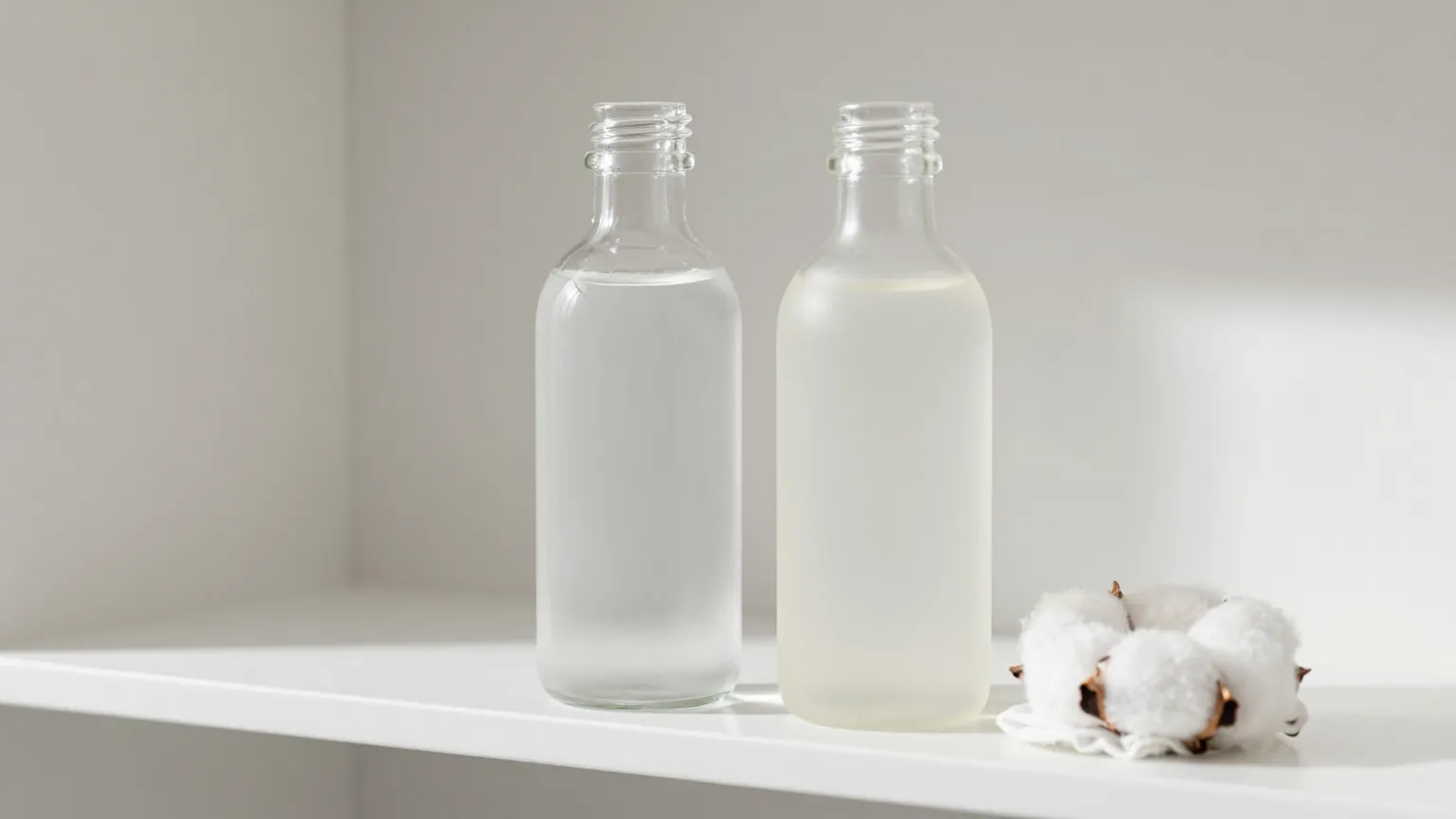
Do you need both? No. Dr. Sivamani’s advice for dry skin is to drop the toner and keep the essence: “People with dry skin do not need to use a toner as that can be too harsh. Instead, this is where an essence can be useful” (PureWow). If you love the layered look, toner then essence is fine, and it’s the backbone of the glass skin routine. If you don’t, one watery step is plenty. Nobody hands out medals for step count. I asked.
What is an exfoliating toner, and how often should you use it?
An exfoliating toner is a leave-on liquid with an acid: glycolic or lactic acid (AHAs) loosen dead cells on the surface, and salicylic acid (BHA) works inside oily pores. Start every other night, wear sunscreen every day, and choose glycolic or lactic products at 10% or less with a pH of 3.5 or higher.
The FDA puts it simply: AHA products “cause exfoliation, or shedding of the surface skin”, and how much depends on the acid, its strength and its pH (FDA). Hydroxy acids have a big research file behind them, with uses from sun-damaged texture to acne (Kornhauser 2010). Our AHA vs BHA guide picks between them. Short version: rough and dull leans AHA, oily and clogged leans BHA, and indecisive leans me.
The sun part is not optional. In FDA research, four weeks of AHA use raised sensitivity to UV reddening by 18%, and it took about a week after stopping to return to normal (FDA). That’s why the FDA recommends a Sunburn Alert on AHA products: “Use a sunscreen, wear protective clothing, and limit sun exposure while using this product and for a week afterwards.” [Takes off the funny hat.] The same page notes the industry’s safety panel considers glycolic and lactic acid safe at 10% or less, at a pH of 3.5 or higher, with sun protection.
The retinoid rule. Don’t stack an acid toner and a retinoid on the same night. Dermatologist Joshua Zeichner, MD, told Women’s Health that combining an AHA with retinol “ultimately may cause more harm than good,” and that glycolic acid is generally considered the most potent AHA (Women’s Health via AOL). Alternate nights instead. An acid toner on a retinoid night is the skincare version of my drum solo: lots of energy, nobody asked for it, and the neighbors hear about it. (The neighbors, in this case, are your cheeks.)
Which toner should you use for your skin type?
Match the toner to what your skin is doing right now. Oily or clogged skin suits a salicylic acid toner. Dull or rough skin suits a glycolic or lactic acid toner. Dry or tight skin suits a hydrating toner with glycerin or hyaluronic acid. Irritated skin, or skin on acne medicine, usually does best with no toner at all.
- Acne-prone. The American Academy of Dermatology says to “Avoid products that can irritate your skin, including astringents, toners, and exfoliants” because they can make acne look worse (AAD). Salicylic acid is itself an acne ingredient, so a gentle leave-on is a different case (practitioner consensus, not AAD advice), but on a prescription, ask your dermatologist first. I add things without asking all the time. Look how that’s going.
- Dry or dehydrated. Go hydrating, and skip alcohol near the top of the ingredient list. Ethanol on skin is linked with irritation and contact dermatitis in some people (Lachenmeier 2008). If your skin feels tight but still gets oily, read our guide to dehydrated skin, because that’s a water problem, not an oil one.
- Sensitive or irritated. Dr. Rogers calls toner “a step to SKIP if your skin is irritated” (Doctor Rogers), and Cleveland Clinic advises avoiding heavily fragranced toners and lots of dyes (Cleveland Clinic). If your skin stings at everything, start with skin barrier repair and come back later. The toner will wait. Toners are very patient. It’s the only patient thing in my bathroom.
- Witch hazel fans. The evidence is thinner than the hype. In a 40-person sunburn test, all three witch hazel lotions calmed redness, “as well as for the vehicles” (Hughes-Formella 2002), meaning the plain base lotions helped too. Only one beat its base, at one UV dose. Nice ingredient, not a magic one.
How do you use toner?
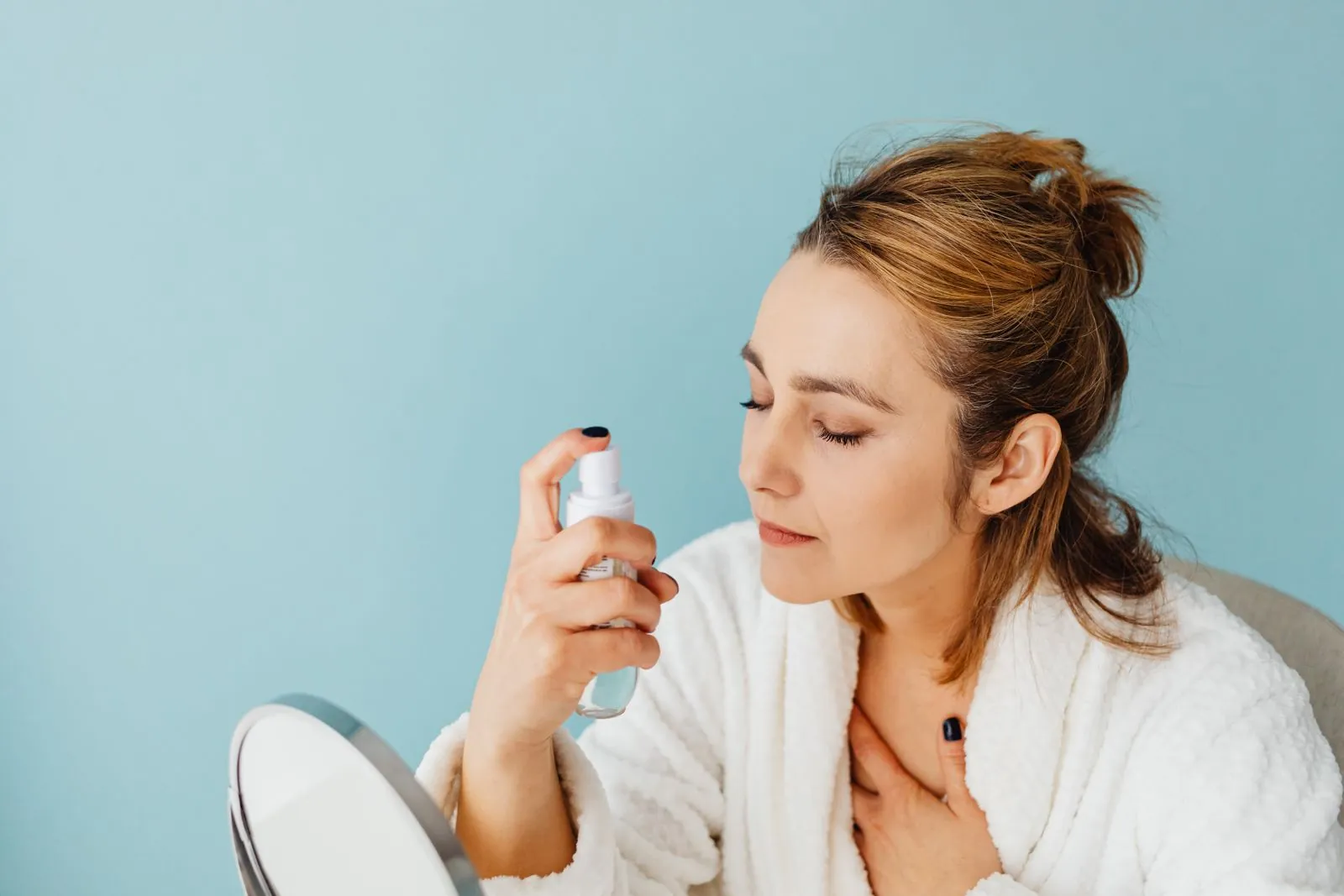
Apply toner right after cleansing, on clean skin, before serum, moisturizer and sunscreen. Pour a few drops into your palms and press them in, swipe gently with a soaked cotton pad, or mist it on. Don’t rinse it off. Hydrating toners can go on morning and night; acid toners start at every other night.
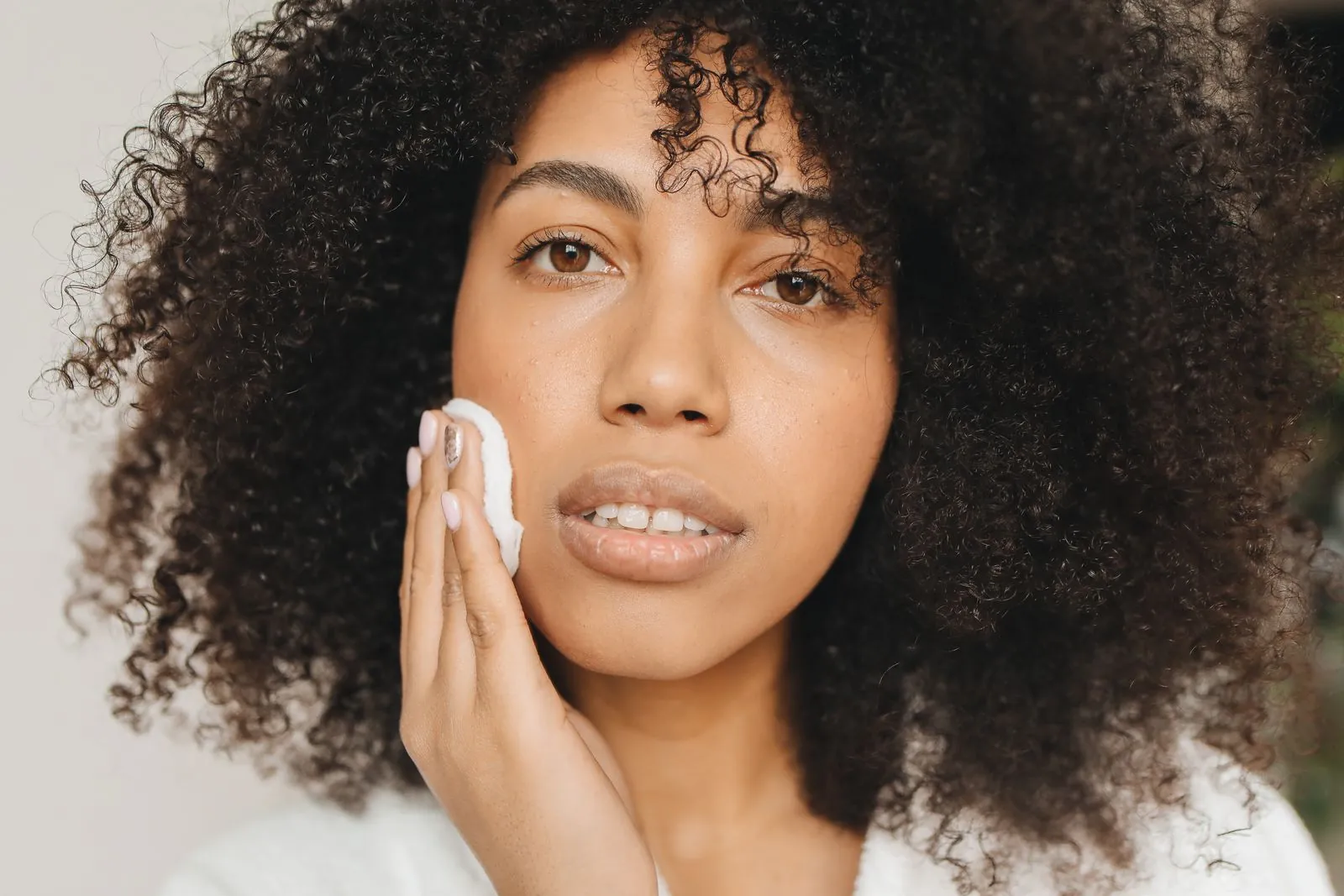
Cleveland Clinic’s instruction is to “gently swipe (or spray) the toner over your face after cleansing” (Cleveland Clinic). Gently. Not a word I had ever applied to my toner technique. [Puts down the drumsticks. Picks up a cotton pad. Feels like an adult.]
So here is the drum solo, retired. Palms together, press onto the cheeks, the forehead and the chin, hold for a second, done. No slapping, no cymbal crash, no rubbing it in like you’re trying to start a fire. That’s practitioner consensus rather than a tested method, but gentle handling is the same rule dermatologists give for cleansing, since the AAD says scrubbing irritates the skin (AAD).
Then give it time. Dr. Wei says “It usually takes between six weeks and three months to see any effect from using a toner” (Cleveland Clinic). Twelve weeks is a long time to wait for a liquid that looks like water, I know. If you want more hydration than one pass gives you, the layering method in our skin flooding guide builds on exactly this step.
Do you actually need a toner?
No, toner is optional for most people. Dermatologists including Zoe Draelos and Heather Rogers say a gentle, pH-balanced cleanser does the original job, so the step isn’t necessary for healthy skin. A toner earns its place when it carries something you want, like an acid for clogged pores or extra humectants for dehydrated skin.
Dr. Draelos doesn’t hedge: “No, toning is not necessary for skin health.” She adds that “the original use for toners is gone, but the product persists” (Dermatology Times). Which is also how I’d describe the fondue set in my cupboard. Dr. Rogers agrees that “a well-formulated cleanser eliminates the need for a separate toning step” (Doctor Rogers).
The other side has a fair point too. Dr. Wei’s verdict is that “There’s a toner for almost everybody” (Cleveland Clinic), and both views fit together: you don’t need one, but the right one can be useful. Buy the ingredient, not the step. (And press it in. Gently. The drum kit is in the closet now, where it belongs.)
Frequently asked questions
Can toner replace moisturizer?
No. Toner is mostly water and doesn’t seal moisture in. Use your moisturizer after toner, and sunscreen after that in the morning.
Should you use toner in the morning or at night?
Hydrating toners can be used once or twice a day. Use acid toners at night, start every other night, and wear sunscreen every morning while you use them.
Does toner shrink pores?
No. Pore size is largely genetic. Acid toners can clear the oil and dead skin that make pores look bigger, so they can look smaller for a while.
Can you use toner with retinol?
A hydrating toner, yes. An acid toner, not on the same night, because the combination can irritate. Alternate nights instead.
Is witch hazel a good toner?
It can be fine for oily skin, but the evidence is modest. In one controlled test, plain base lotions calmed redness nearly as well as witch hazel ones. Avoid versions high in alcohol if you’re dry or sensitive.
How long does toner take to work?
Hydrating toners feel different right away. For acne, dark spots or texture, expect six weeks to three months of steady use.
Your next step
Check your cleanser first. If it’s gentle and soap-free, toner is optional, so only add one that carries an ingredient your skin needs: glycerin or hyaluronic acid for dry skin, salicylic acid for clogged pores, or glycolic or lactic acid for rough texture. Start acid toners every other night, keep them off retinoid nights, and wear sunscreen daily.

Written by the Trusted Skincare Editorial Team
We research at-home beauty devices and skin treatments and link every claim to a published study, a regulator or a named expert. Last updated Wednesday 7 October 2026.
Sources
- Cleveland Clinic: Do you need a face toner?
- Dermatology Times: Are facial toners necessary? (Zoe Draelos, MD)
- American Academy of Dermatology: Acne skin care tips
- FDA: Alpha hydroxy acids
- Lambers et al. 2006, natural skin surface pH is on average below 5 (International Journal of Cosmetic Science)
- Takagi et al. 2015, long-term soap use and skin pH (Skin Research and Technology)
- Alsalhi et al. 2024, pH of 33 hand-wash products (Journal of Family Medicine and Primary Care)
- Korting et al. 1987, soap vs synthetic detergents on forehead pH (Acta Dermato-Venereologica)
- Fluhr et al. 2008, glycerol and the skin (British Journal of Dermatology)
- Hughes-Formella et al. 2002, 10% hamamelis lotions in a UV erythema test
- USA TODAY via AOL: Should you be using a toner? (Mansha Thacker, MD)
- PureWow: Essence vs toner (Raja Sivamani, MD)